
Johns defeats Haworth in singles: A match of adjustments
Jim Kloss
Jun 3 2024 9:35 AM ET
At the CIBC Texas Open presented by TIXR, Ben Johns defeated Chris Haworth in three games, 2-11, 11-2, 11-9. Haworth came steaming out of the gate, winning the first game 11-2, and looked ready to sweep to a quick victory. But, Johns came back, turning the tables in game two, 11-3, and then winning a thrilling game three, 11-9. As he so often does, Johns made adjustments after a loss in game one, so let’s examine what he did.
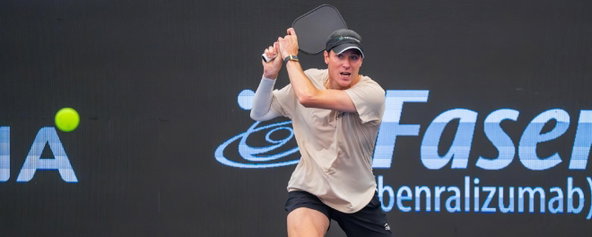
In game one, Haworth did what he is best at, playing a tennis-like game on the pickleball court. His goal when returning was to return deep, getting to the line and dominating with his size and length to control the point with his volleying. When serving, Haworth exclusively drove his third shots, going for passing shots each time. His backhand is especially effective, as he can disguise the point of attack till the last second. He perhaps surprised Johns by returning serve almost exclusively to Johns’ forehand.
Game two was almost the complete reverse of game one, with Johns turning an 11-2 loss into an 11-3 win. How? Haworth continued to play his same tennis-like style. He continued to hit his serve returns primarily if not exclusively to Johns’ forehand. Haworth returned to Johns’ forehand because Haworth wanted to play all power points. He wanted to avoid cat and mouse points, points that play like a pickleball doubles point. When Johns has a backhand third shot, he will often hit a crosscourt drop, looking to initiate a cat and mouse point. When they played a cat and mouse point, Johns won the rally almost every time. Haworth, to his credit, clearly recognized that the cat and mouse game is not to his benefit, so he initiated no soft points the entire match.
Having the information in hand from game one, Johns adjusted in game two. Knowing that Haworth would return serve to his forehand, Johns was ready with the answer. Johns would, when serving on the right side (even numbered score), serve wide to Haworth’s forehand. This forced Haworth, in order to get it to Johns’ forehand, to return sharply crosscourt. Haworth then had a longer run to get into position at the line. This gave Johns better options on his forehand third shot. He primarily drove down the line, which was now more open. Haworth started to adjust by running harder to his left, but Johns again adjusted, tossing in some crosscourt drives, causing Haworth to be wrong-footed.
Another big difference in game two was that Haworth simply made more mistakes. He missed a few serve returns, giving Johns free points. Haworth also was not as effective with his passing shots.
Game three was a mix of what we saw in the first two games. Johns continued to serve Haworth wide, to make him move more and open the court. Haworth made a few mistakes, but also started to connect on his passing shots, especially once he was down 10-5. Haworth had a run to close to 10-9. But, Haworth missed a serve return on match point to end the match.
This was an excellent tournament for Haworth, a #22 seed. His biggest challenge, before the final, was actually his first round match against #42 seed Noe Khlif. That was the only match where Haworth lost a game before the final. Khlif plays singles almost exclusively with the soft game, so it’s not surprising Haworth had trouble with Khlif.
As to Johns, he benefitted from a draw that did not require him to play power players until the final. Johns always has the most trouble in singles against power players who play tennis-like points. When the point is cat and mouse style, emphasizing touch and placement, Johns is at his best. In the end, Haworth game Johns a lot of trouble but Johns made adjustments in game two and emerged the winner.
Follow me on Twitter/x @pickleball_jim
Related articles
Mojo Energy Pouches Virginia Beach Open: Everything you need to know
With several star players heading overseas, a big opportunity awaits for other players to claim a title.
3 hours ago
-Pickleball.com Staff
Virginia Beach features wide open draws
No Anna Leigh Waters and no Ben Johns means it is anyone’s tournament to make a mark.
1 day ago
-Jim Kloss
Anna Leigh Waters notches 200th title at Veolia Chicago Cup
The milestones just keep piling up for the young superstar.
1 day ago
-Jim Kloss
Bellamy powers past Haworth for first 2026 title as Waters earns Triple Crown
Roscoe Bellamy earned his second career PPA Tour title in the Windy City. He'll look to replicate this week's success at next week's event in Virginia Beach.
2 days ago
-Pickleball.com Staff