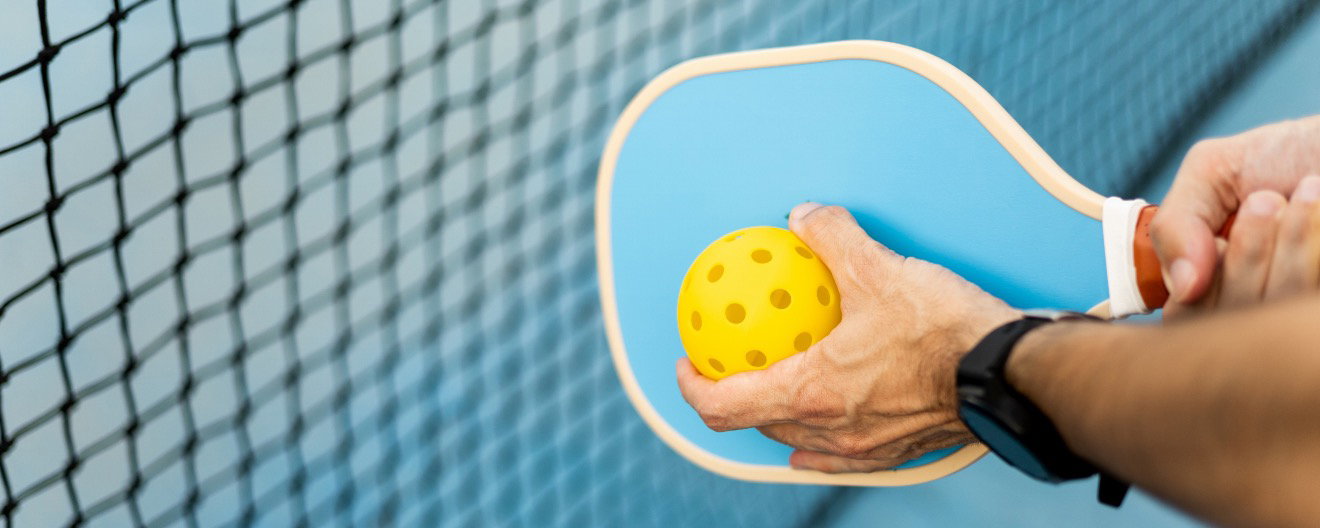
How to spot a dead paddle
A dead pickleball paddle is one that no longer returns energy consistently when the ball strikes the face. Instead of producing a clean rebound, certain areas absorb impact, causing shots to lose power, spin, or control. Identifying the signs early can help players decide whether a paddle needs repair or replacement.
What Is a Dead Pickleball Paddle?
A dead paddle refers to a paddle that has lost its ability to rebound energy evenly across the paddle face.
This typically happens when the paddle face partially separates from the internal core, a condition commonly known as delamination.
When this separation occurs:
• The paddle and ball no longer act as a single spring-like unit
• Energy is absorbed instead of returned to the ball
• Shots may lose power or feel inconsistent depending on where the ball hits
In many cases—especially with some Gen 1 and Gen 2 paddles—this structural separation is the primary cause of dead spots.
For players, the result is simple: the paddle stops performing the way it used to.
How Does a Paddle Become “Dead”?
A paddle becomes dead when the internal structure stops transferring energy efficiently from paddle to ball.
Step 1: Internal Separation Occurs
Most dead paddles develop when the paddle face begins separating from the core.
This separation disrupts the paddle’s ability to flex and rebound properly.
Step 2: Energy Transfer Breaks Down
Instead of returning energy to the ball:
• The separated area absorbs the impact
• Shots lose speed and responsiveness
• The ball may feel like it “dies” on contact
Step 3: Performance Becomes Inconsistent
Once separation spreads, the paddle face may behave differently across various areas.
Players often notice that:
• Some zones still feel lively
• Other areas feel dull or powerless
This inconsistency is one of the clearest indicators of a dead paddle.
Why Do Pickleball Paddles Develop Dead Spots?
Several factors can cause a paddle to lose structural integrity over time.
Common causes include:
• Impact damage – hitting the paddle against the court, frame, or hard objects
• Age and wear – adhesives and materials naturally degrade with heavy use
• Temperature and moisture – extreme heat or humidity can weaken bonding materials
• Manufacturing limitations – some earlier Gen 1 or Gen 2 paddles are more prone to delamination
Over time, these factors weaken the bond between the paddle face and the core, leading to inconsistent rebound.
What Are the Key Signs of a Dead Paddle?
Dead spot on contact
A specific area of the paddle causes shots to lose power or feel flat.
Inconsistent performance
Some parts of the paddle feel lively, while others feel dampened or unresponsive.
Audible or tactile differences
A healthy paddle produces a crisp sound, while a dead spot may create a dull thud.
Visible damage
Bubbling, lifting, or separation near the edge guard or paddle face can signal delamination.
Playable but weaker response
The paddle may still function, but shots lack the original energy and control.
Common Questions About Dead Pickleball Paddles
How can I test if my paddle has a dead spot?
Several quick tests can help identify paddle performance issues.
• Bounce test – Bounce a ball across the paddle face and watch for areas where the ball loses energy.
• Tapping test – Tap the face with your knuckle and listen for dull or flat sounds.
• Hit test – Hit controlled shots at different paddle zones and notice where power or spin disappears.
• Visual inspection – Check for bubbles, lifting, or gaps along the paddle surface.
These simple checks usually reveal whether a paddle has developed dead zones.
Can a dead paddle be repaired?
In some cases, yes.
Small delaminated areas may be repairable through careful re-gluing or professional repair. However, repairs may not fully restore the paddle to factory performance.
If the damaged area is large or the internal core is compromised, replacement is usually the better solution.
When should I repair vs replace a paddle?
Repair may make sense when:
• Delamination is small and localized
• The paddle still performs well overall
• Repair cost is significantly lower than replacement
Replacement is usually better when:
• Large dead zones exist
• Multiple areas are affected
• Structural damage impacts overall play
How can I prevent dead spots in my paddle?
Proper care can extend the life of a pickleball paddle.
• Use a paddle cover to protect against damage
• Avoid leaving paddles in hot cars or extreme temperatures
• Handle the paddle carefully and avoid striking hard surfaces
• Inspect the paddle regularly for early signs of wear or lifting
Preventative care reduces the chances of delamination and performance loss.
Key Takeaways
• A dead paddle loses the ability to return energy consistently across its face.
• Delamination between the paddle face and core is the most common cause.
• Signs include dead spots, dull sounds, inconsistent rebound, and visible lifting.
• Bounce tests and tapping tests can quickly confirm paddle performance issues.
• Small problems may be repairable, but larger structural damage usually requires replacement.
Want to See How to Test Your Paddle?
Want to see a live explanation and step-by-step checks?
Check out the full video for a quick, hands-on guide that shows exactly how to perform the bounce test, recognize delamination, and decide whether to repair or replace your paddle.
Related articles
.png?width=592&height=237&optimizer=image)
Five ways to elevate your dink game like a pro
These strategies can help you make smarter decisions and gain the upper hand in kitchen line battles.
15 hours ago
-Pickleball.com Staff

Five mindset shifts every pickleball player should know
Michael Lloyd shares lessons that changed the way he approaches the game, from redefining aggression to letting the ball dictate every shot.
1 day ago
-Pickleball.com Staff
Want to improve fast? Start with these 5 priorities
Build a smarter game with these must-practice fundamentals alongside coach Jordan Briones.
5 days ago
-Pickleball.com Staff
Stuck in a pickleball rut? Ava Ignatowich shares 3 ways to break through
Think you’ve plateaued? You definitely haven’t.
8 days ago
-Pickleball.com Staff