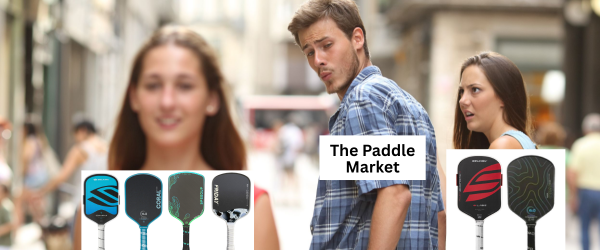
The rise of the all-court paddle
Is your paddle's high pop holding your game back? For many players, the answer is yes. After three years of power wars fueled by innovation, new regulations, and honestly some happenstance paddle core breakdown, the dust is settling and players are finding that more is not always better when it comes to their own performance. The all-court paddle, which used to be the safe recommendation for players who could not decide what they wanted, is becoming the category with the best paddles for player progression.
The shift in the market
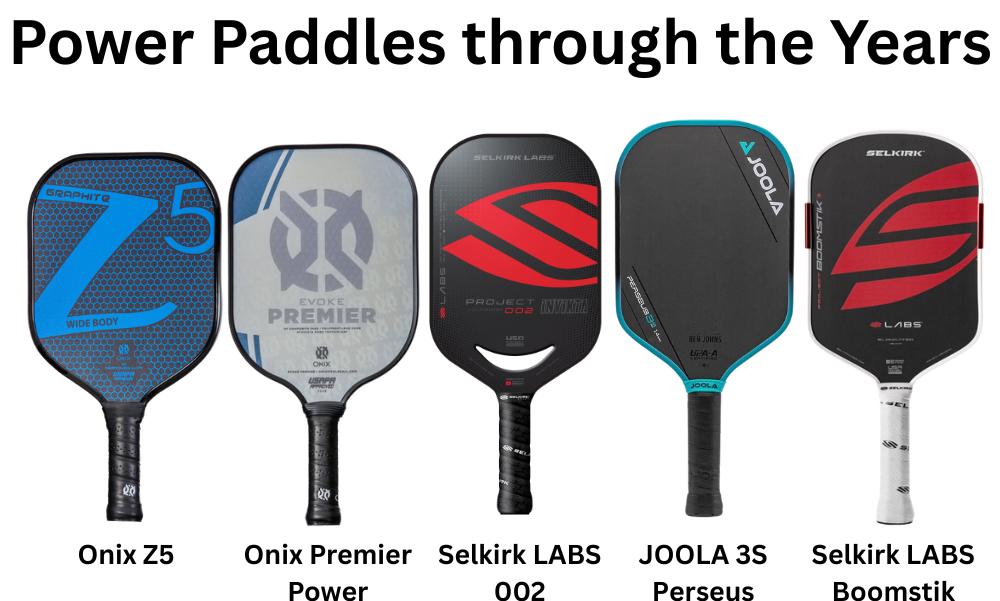
There is some nuance here. The all-court paddles of today would have been considered power paddles in 2020, but with the advances in forgiveness and spin that come from modern construction, they are far easier to control. Look at some of the top power paddles of 2020 like the ONIX Premier Power, the Electrum Pro, and the Diadem Icon. All three were power paddles by the market's standards, but that power came with smaller sweet spots and demanded more touch to rein in, especially paired with the extra firm Dura Fast 40, the competitive ball of choice for most of pickleball's history. In that era players had to run a thinner core to get more power, and that came with real tradeoffs.
That strategy changed with the arrival of heat-molded paddles built around a carbon fiber perimeter, the thermoformed paddles, like the original Joola Hyperion CFS and the CRBN X Power Series. These still sell today thanks to their legacy as pioneers in the power-with-forgiveness-and-spin category.
The payoff was a bigger, more usable hitting area. A paddle that rewards contact across more of its face can carry real power without punishing the off-center touch shots that control players depend on, and raw carbon surfaces and foam-filled edges let designers add spin and pop in specific zones instead of across the whole paddle. Core thickness used to settle the question on its own, with 16mm meaning control and 14mm meaning power, but the newer builds tune around that number rather than be ruled by it. A 16mm paddle today can hit harder than a 14mm did a few years ago, and the middle ground that results is genuinely wider, not just a marketing label.
The newest paddles push it further with propulsion cores, gel layers behind the face, and surfaces that blend carbon with aramid fibers. Some deliver and some are louder in the marketing than on the court, but the floor keeps climbing. A paddle like the Honolulu J6FC+ offers a blend that a top control paddle and a top power paddle from a few seasons back could not have managed between them.
The game itself has changed too. The pace at the kitchen line has climbed, hand battles come faster and more often, and a single point can ask you to reset a hard drive, flick a counter, then finish an overhead within a few seconds. A paddle built only to bang struggles in the soft exchanges that set those moments up, and a paddle built only for touch has no answer when the ball speeds up. The all-court paddle fits the rhythm of the modern point better than either specialist, not because it is best at any one phase but because the point rarely sits in one phase long enough for one to take over.
The real on-court results
I can say all of this from the inside, because I spent a few years living the other version. As a paddle nerd I was always chomping at the bit to get my hands on the latest tech, and for a stretch that meant playing the Gearbox Pro Power, the JOOLA 3S, the Paddletek Bantam ALW-C, and the Selkirk Boomstik. My rating kept ticking up on paper, but the parts of my game that actually decide matches against better players were not climbing with it. My consistency, my ability to fight my way to the net, and my shot making all flattened out, and the extra power was not what was missing.
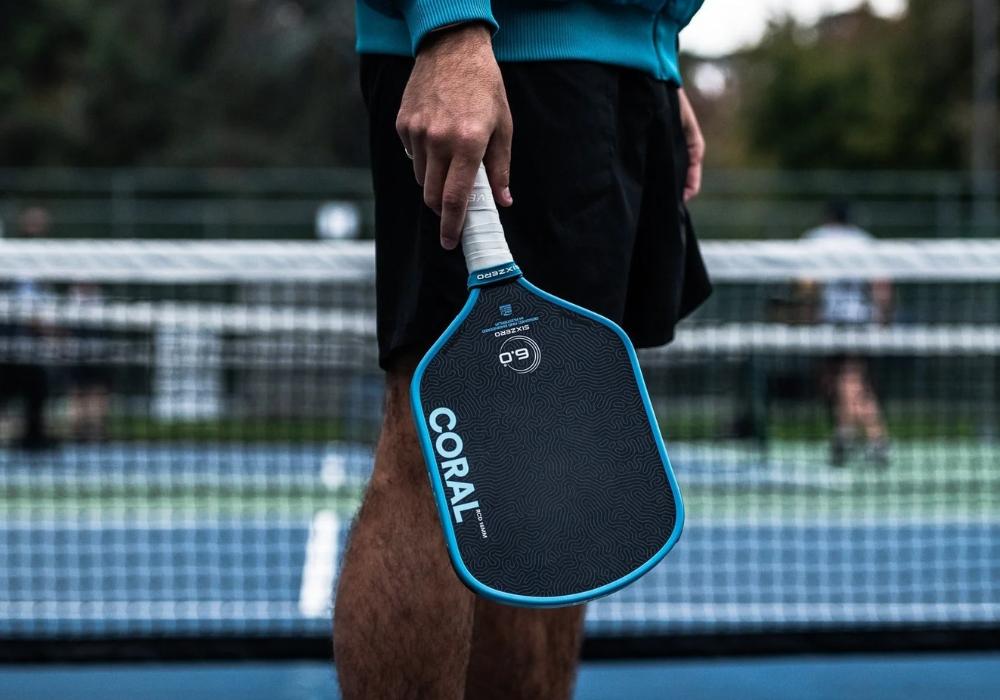
Right before I tore my Achilles this April, I switched to a Six Zero Coral, a launch that slipped under the radar next to the louder, ultra powerful Six Zero Black Opal. It reminded me how good it feels to confidently shape the ball where I want it and reset my way up to the kitchen. Was I winning as many free points? Absolutely not, but the points were longer, they were more fun, and I was shaping shots again instead of just hitting them hard. I do not think I am alone in that.
The same pull shows up at the top of the sport. Chris at Pickleball Studio, about as trusted as paddle reviewers get, recently moved back to a Vatic Prism, which leans closer to a control paddle by today's standard, and he has been competing and winning at the 5.0 level with it.
None of which makes the all-court paddle a free lunch. It is still a compromise, at least in part, and that is what the category's biggest fans skip over. A true power paddle like a Boomstik still out-hits a good all-court paddle at the top of the game, where half a step of extra pace decides points. A dedicated control paddle like the 11Six24 Jellybean still makes for an effortless soft reset or a low dink off a fast ball. The all-court paddle gets close to both and matches neither, and for a player with a settled style and the level to use it, the specialist usually wins.
.jpeg)
There is a flip side at the other end of the ladder. At the lower levels raw power genuinely wins, because a hard flat drive is a problem most 2.5 and 3.0 players simply cannot solve. They cannot reset it, and a lot of the time they cannot get it back at all, so a player swinging a true power paddle can overwhelm a whole bracket on pace alone. That works, it is fun, and there is nothing wrong with riding it for a while. The catch is the one I ran into, which is that the pace stops winning the moment your opponents can handle it, and by then you have spent your development leaning on the paddle instead of building the hands and shot making that get you past them.
That is why the category's rise says more about who is buying than about the paddles. Most players are not at the top of the game with one settled weapon and a plan to use it. They sit somewhere between 3.0 and 4.0, their game is still moving, and the shot they lean on changes from point to point and month to month as they develop. For that player, who is most of the market, a paddle that does everything at eighty-five percent beats one that does a single thing at a hundred and leaves them exposed everywhere else.
Final thoughts
Which brings it back to the question at the top. If your paddle's pop is outrunning your control, the fix is not more power, it is a paddle that lets you actually place the ball while you build the rest of your game. For most players climbing through the ratings right now, that paddle is an all-court one. The power wars gave us better construction than the sport has ever had, and the most useful place that progress landed was not at the top of the pace chart but in the middle, where the paddles that help you get better now live.
Related articles
.jpg?width=592&height=237&optimizer=image)
Which Honolulu paddle should you buy? A guide to the lineup
We break down the paddles by shape, core, and surface so you can find the one that fits your game.
5 hours ago
-Joseph Sutton
.jpg?width=592&height=237&optimizer=image)
Gearbox Pressure X MPP vs. EPP: Which one should you play?
Gearbox built two Pressure X paddles on the same core system and frame, then tuned one for a fast release and the other for longer dwell.
6 hours ago
-Joseph Sutton
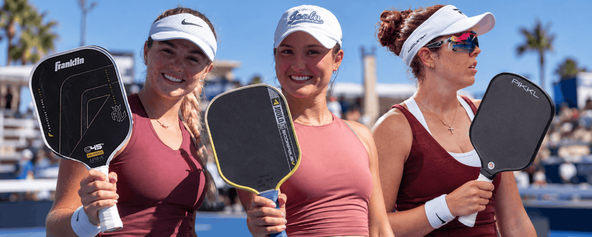
Best pickleball paddles for women 2026
Discover our top 7 best picks for every playing style, including pro favorites from Anna Leigh Waters and Anna Bright.
4 days ago
-Hannah Johns
The top 5 paddles for power and forgiveness
These paddles give you real pace on drives and put-aways while staying stable and predictable when you miss the sweet spot.
4 days ago
-Joseph Sutton