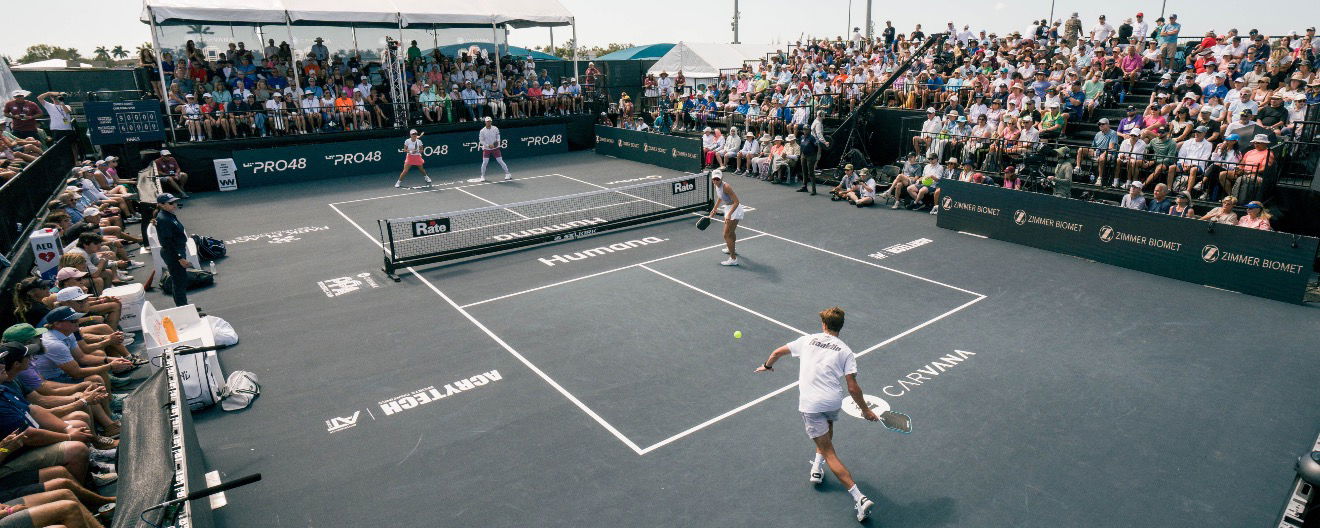
Five pickleball habits that could be holding your game back
We all pick up little quirks and habits on the pickleball court, and some of them may be quietly limiting our potential.
Pickleball coach Jess Improta recently highlighted several common bad habits that could be holding your game back.
1. Passive predictable dinking
The first issue Improta often notices is players becoming too comfortable and complacent with their dinks.
“They want to dink to the same spot because it feels more comfortable to them,” she said. “It’s almost like dinking anesthesia where you’re going back and forth with your opponent and it feels second nature, but it’s not actually creating anything.”
When players fall into that pattern, they stop controlling the rally and fail to apply meaningful pressure on their opponents.
“When you step up to the line, I want you to think about moving your dinks around. Hit no place more than twice,” she advised. “The stubborn habit is that players think their dinks have no purpose. Find those aggressive points into the kitchen line that create the pop up that you’re looking for.”
2. Driving low balls through transition
Coach Jess explained that when you drive the ball at an opponent standing in the transition zone, it often rises to shoulder height for them, an ideal contact point.
From there, they can send the ball back down at your feet, making it far tougher for you to advance to the kitchen line.
“The solution is in transition, especially with low balls, you drop it into the kitchen,” she suggested.
3. Lazy dinking
One of the most frequent mistakes Coach Jess notices is players failing to move their feet.
Strong, active footwork is essential in pickleball if you want to take your game to the next level.
“I see players reach for the ball, and the problem with that is that it starts to involve our wrist. As a general rule, we want to hit balls in front of our body and between our feet as much as possible,” she demonstrated. “If a ball is over to the left, I have to move to get my foot out to the left and keep my paddle in front of my body instead of reaching and flipping my wrist. I have a lot less control. If you want to stop popping up balls, it starts with your footwork.”
4. Return and run
This is a foundational tip for beginners, yet Coach Jess has observed that many players still hesitate to move forward, choosing to hang back instead of advancing to the net after their return.
“When we’re returning serves, this is where we get an advantage. We have an advantage over the server because we get to the kitchen line first. We don’t want to squander that,” she mentioned. “You won’t always make it to the kitchen line, but we want to get as close as possible.”
5. Unbalanced aggression
The last piece of advice from Coach Jess addresses players who try to drive or speed up the ball even when they’re out of position and off balance.
“When we’re off balance, we want to be thinking about neutralizing the ball and getting it back in the kitchen so that we can get back into the point,” she noted. “Instead, think about when we’re hitting that, I’m going to soften up my hand and I’m going to put a much softer dink into the kitchen somewhere in the middle of the court. That will give me time to get back into a neutralized position and on par with my opponents.”
By dialing in these small adjustments, you’ll put yourself in a strong position to improve.
To keep up to date on all things pickleball, follow us on Instagram or X (formerly Twitter).
Related articles
How to completely change your pickleball serve in 10 minutes
A few simple adjustments could help you add power, improve accuracy and eliminate the yips.
3 days ago
-Pickleball.com Staff
.png?width=592&height=237&optimizer=image)
Five ways to elevate your dink game like a pro
These strategies can help you make smarter decisions and gain the upper hand in kitchen line battles.
3 days ago
-Pickleball.com Staff
Five mindset shifts every pickleball player should know
Michael Lloyd shares lessons that changed the way he approaches the game, from redefining aggression to letting the ball dictate every shot.
4 days ago
-Pickleball.com Staff
Want to improve fast? Start with these 5 priorities
Build a smarter game with these must-practice fundamentals alongside coach Jordan Briones.
8 days ago
-Pickleball.com Staff