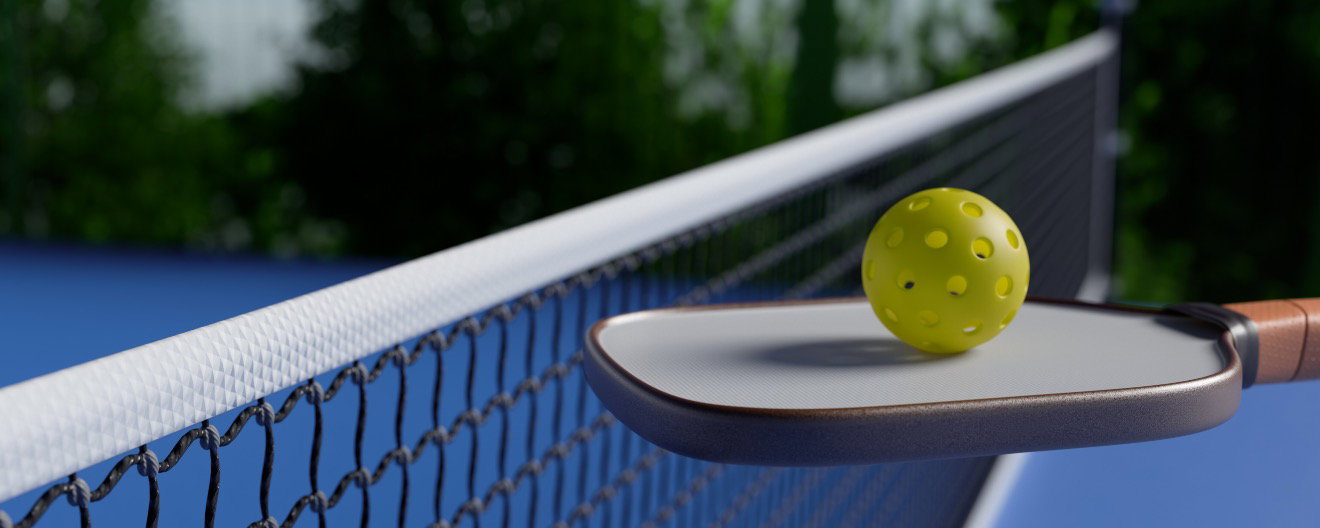
Getting targeted? Here’s how to flip the script
Being targeted on the pickleball court can be frustrating. When your opponents consistently hit every ball to you, it often feels like you are stuck in a pattern with no way out. However, getting isolated does not have to put you at a disadvantage. With the right strategy and guidance from Zane Navratil, you can break the pattern and even turn the situation in your favor.
Targeting is a common tactic in doubles play. Opponents may choose to avoid your partner, pressure what they perceive as a weakness, or simply try to control the rally by limiting where the ball goes. While you cannot control where your opponents hit, you can control how you respond.
If you are being isolated on the right side, one of the most important adjustments is to stop playing passively. Simply exchanging soft crosscourt dinks will keep you locked in the pattern. Instead, you should look to mix in more aggressive crosscourt dinks. By adding pace or angle, you increase the chances of forcing a pop-up, which can bring your partner into the point.
Another option is to hit directly at the player in front of you. Although this does not immediately break the isolation, it takes away angles and allows your partner to shift toward the middle of the court. This positioning gives your partner a better opportunity to poach and get involved in the rally.
Targeting your opponent’s backhand is another effective tactic. While this shot may still come back to you, it can produce a weaker reply and open up opportunities to attack on the next ball. The goal is not always to escape the pattern immediately, but to create a sequence that leads to a better opportunity.
One of the most effective ways to break out of isolation is by attacking the middle. When you force your opponent to move toward the center of the court, their natural return often goes toward your partner. This can quickly shift the dynamic of the rally. However, this shot must be executed carefully. A poorly placed dink in the middle can be attacked, so it is important to choose the right moment and maintain good control.
Hitting down the line is another option, but it must be done on your terms. If you attempt this shot while off balance or under pressure, your opponent may counter with an aggressive play, such as an Erne. When executed correctly on a neutral or offensive ball, a down-the-line dink can pull you out of isolation and allow your partner to take over the middle of the court.
When your opponents are consistently targeting you, their predictability becomes an advantage. You can adjust your positioning slightly toward the direction of the incoming ball, which helps you stay balanced and prepared. There is also no need to fully recover to the middle after every shot if you know the ball is coming back to you. In addition, you can look for opportunities to initiate offense, since you can anticipate where the next shot will go.
Ultimately, your goal is not always to escape isolation immediately. Instead, you should focus on making your opponents hit difficult and uncomfortable shots. By moving them around the court, changing direction, and varying pace, you increase the likelihood of errors or weak returns. Even if they continue to target you, they will be doing so under pressure.
If you are still struggling to break the pattern, there are a few additional strategies to consider. One option is stacking, which allows you and your partner to switch sides and disrupt the targeting pattern. Another approach is to play more aggressively overall. By using third-shot drives and attacking earlier in the rally, you can avoid getting stuck in long dinking exchanges.
A helpful way to practice these concepts is through a dedicated drill. In this drill, four players are on the court, and one team intentionally targets a single player. The isolated player works on using different patterns to either involve their partner or force an error. This type of repetition builds confidence and improves decision-making under pressure.
Being targeted is never easy, but it does not have to be a weakness. When you stay proactive, vary your shots, and make your opponents uncomfortable, you can turn isolation into an opportunity to take control of the rally.
Related articles
Five pickleball tips to improve your game from beginner to 4.0
Coach Jess breaks down concepts that can help players win more points, improve consistency, and avoid common mistakes on the court.
5 hours ago
-Pickleball.com Staff
How to completely change your pickleball serve in 10 minutes
A few simple adjustments could help you add power, improve accuracy and eliminate the yips.
6 days ago
-Pickleball.com Staff
.png?width=592&height=237&optimizer=image)
Five ways to elevate your dink game like a pro
These strategies can help you make smarter decisions and gain the upper hand in kitchen line battles.
6 days ago
-Pickleball.com Staff
Five mindset shifts every pickleball player should know
Michael Lloyd shares lessons that changed the way he approaches the game, from redefining aggression to letting the ball dictate every shot.
7 days ago
-Pickleball.com Staff