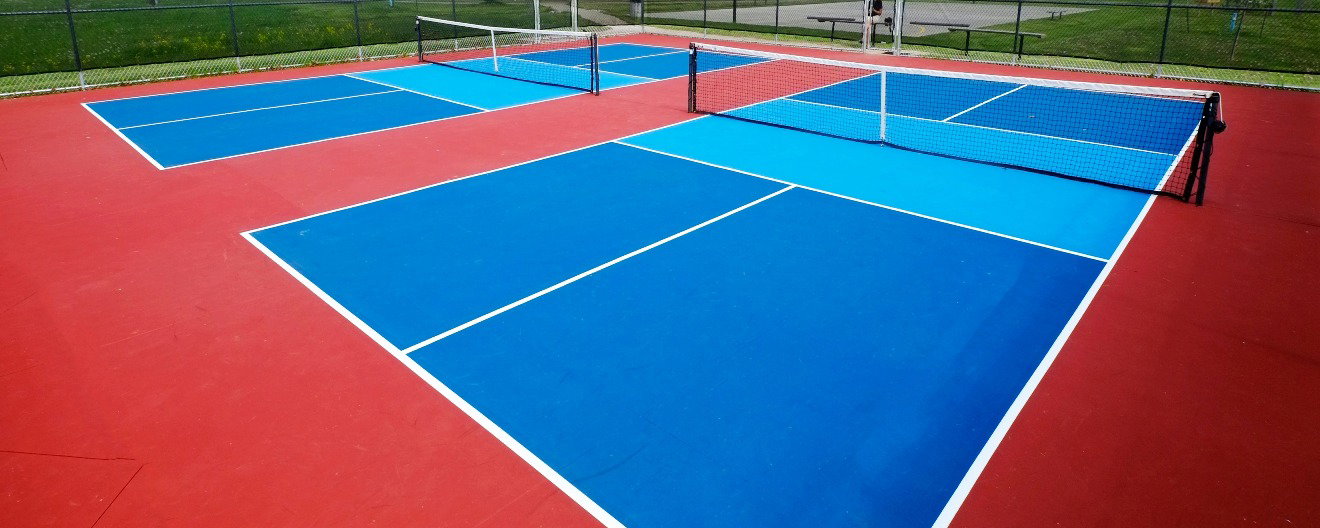
Pickleball court dimensions explained: Everything you need to know
Pickleball has surged in popularity over the past decade, attracting players of all ages with its accessible gameplay and social appeal.
Whether you’re setting up a court at home, lining one at a community center, or just trying to better understand the game, knowing the exact dimensions of a pickleball court is essential.
Let’s break it down in a clear and practical way.
Official court size
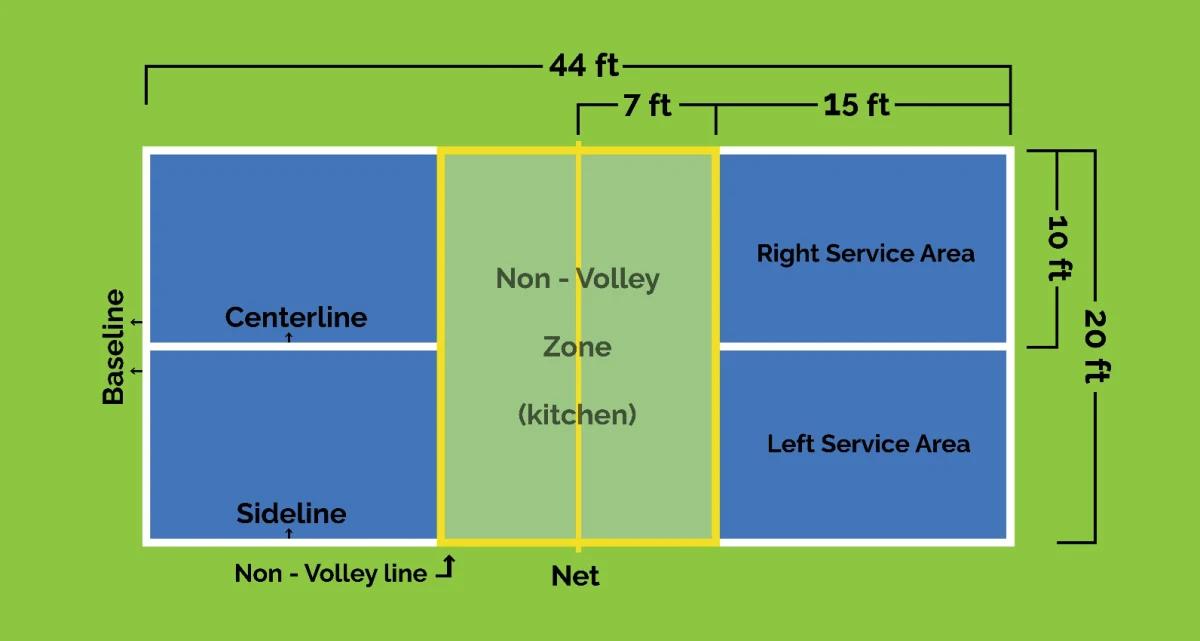
A standard pickleball court is 20 feet wide and 44 feet long. This size is the same for both singles and doubles play, which makes it simpler compared to sports like tennis that use different dimensions depending on the format.
Interestingly, these measurements mirror the size of a doubles badminton court, which is why many existing badminton courts are easily converted for pickleball use.
The net and its placement
The net runs across the width of the court, dividing it into two equal halves of 22 feet each. The height of the net is: 36 inches at the sidelines and 34 inches at the center.
This slight dip in the middle encourages strategic, low shots and contributes to the unique pace of the game.
The non-volley zone (kitchen)
One of the most distinctive features of a pickleball court is the non-volley zone, commonly referred to as “the kitchen.”
It extends 7 feet from the net on both sides and spans the entire width of the court (20 feet).
Players are not allowed to volley (hit the ball out of the air) while standing in this zone. This rule prevents aggressive net play and promotes longer rallies and finesse.
Service areas
Beyond the kitchen on each side are the service areas, divided into left service court and right service court.
Each service area is 10 feet wide and 15 feet long (from the kitchen line to the baseline).
Serves must be made diagonally, landing in the opposite service box.
Baselines and sidelines
Baselines mark the back boundary of the court (44 feet apart).
Sidelines run the length of the court (20 feet apart).
Keeping shots within these boundaries is crucial, as any ball landing outside results in a fault.
Recommended playing space
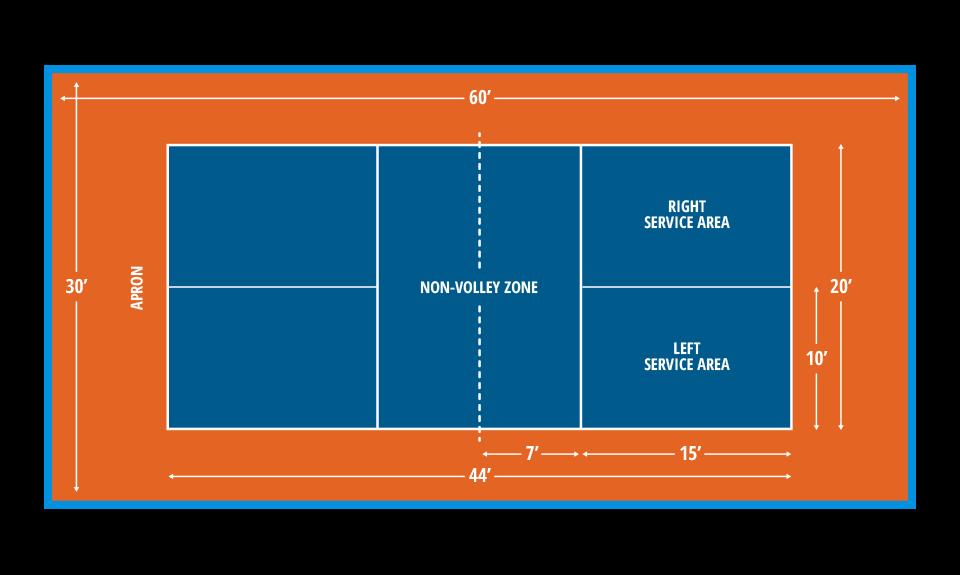
While the court itself is relatively compact, you’ll want extra space around it for safe and comfortable play. The recommended total area is 30 feet wide by 60 feet long.
This buffer allows players to move freely, chase balls, and avoid collisions.
Why dimensions matter
The standardized size of a pickleball court is a big part of what makes the sport so accessible. It’s smaller than a tennis court, which reduces the physical strain and makes it easier for beginners to pick up the game quickly. At the same time, the layout, with its kitchen and compact service zones, adds a layer of strategy that keeps experienced players engaged.
Understanding pickleball court dimensions isn’t just for builders or facility managers. It can actually improve your game. Knowing where you are in relation to the kitchen, baseline, or service areas helps with positioning, shot selection, and overall strategy.
Whether you’re marking out a driveway court or stepping onto one for the first time, these measurements are the foundation of the game. Get them right, and you’re already one step closer to playing like a pro.
Related articles
Five pickleball tips to improve your game from beginner to 4.0
Coach Jess breaks down concepts that can help players win more points, improve consistency, and avoid common mistakes on the court.
5 hours ago
-Pickleball.com Staff
How to completely change your pickleball serve in 10 minutes
A few simple adjustments could help you add power, improve accuracy and eliminate the yips.
6 days ago
-Pickleball.com Staff
.png?width=592&height=237&optimizer=image)
Five ways to elevate your dink game like a pro
These strategies can help you make smarter decisions and gain the upper hand in kitchen line battles.
6 days ago
-Pickleball.com Staff

Five mindset shifts every pickleball player should know
Michael Lloyd shares lessons that changed the way he approaches the game, from redefining aggression to letting the ball dictate every shot.
7 days ago
-Pickleball.com Staff