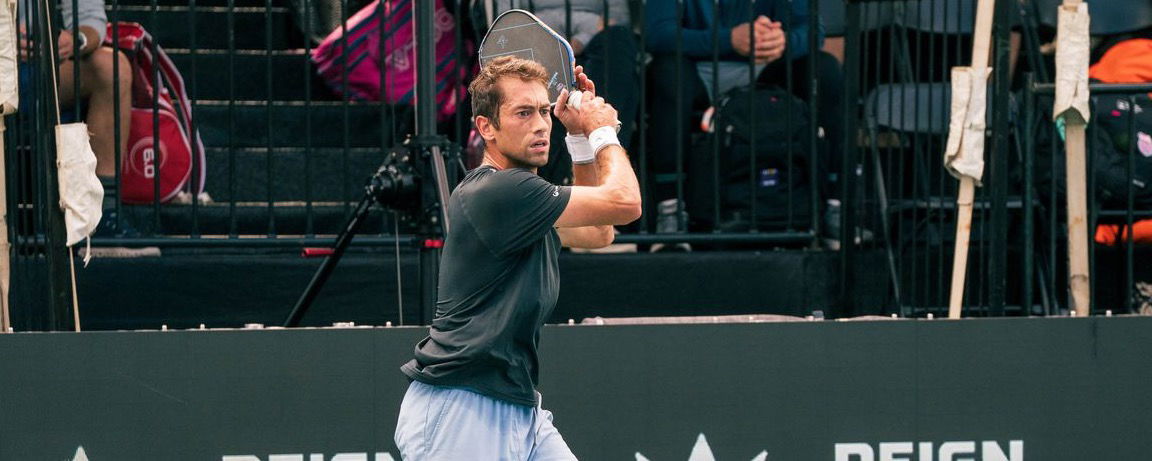
Zane Navratil teaches wrist lag to generate power in pickleball
How do pro pickleball players generate so much power in their forehand drives?
Some believe it’s the paddle, some believe it’s the player, but Zane Navratil insists that power comes from wrist lag.
“Wrist lag is a little known secret that pros like me use to generate more power, more spin, and even control on serves, returns, drives, and speedups,” he explained.
In order to use this concept to your advantage on the court, preparation is everything.
“We need a unit turn, which means our entire body is coiling and rotating into position. I try to accomplish this by keeping my non-dominant hand near the paddle head during my preparation,” he said. “As the ball gets closer to me, I’m going to let gravity drop my paddle slightly below the level of the ball. It’s important to let gravity do this, rather than manually moving my arm into place because it allows my arm to stay loose during that backswing.”
Once you’ve prepared well with a loose grip and allow gravity to drop your paddle below the level of the ball, quickly accelerate your paddle towards the ball.
“If I keep my arm and grip loose during the preparation, the wrist lag should take care of itself here, and you shouldn’t be thinking about it whatsoever,” emphasized Navratil.
The veteran pro believes that power isn't strictly limited to players with big muscles.
Wrist lag can make a world of difference in that department, and there are several key tips and concepts to keep in mind in that regard.
Firstly, don't snap your wrist towards the ball.
“With good preparation, the wrist lag and snap should happen naturally,” he said.
Secondly, avoid allowing your elbow to open up.
If your elbow is open, it causes your paddle face to open, and you won’t get any topspin on the ball, which makes it impossible to keep your shot in the court.
“At the contact point, think about having your hand in a handshake position, rather than having your hand in a low-five position,” mentioned Navratil.
Thirdly, Navratil recommended making contact in front of the body.
“If we make contact late, our wrist doesn’t have time to naturally lag and snap through the shot. I think about making contact with the ball about a forearm’s length in front of my body, or near my front leg,” he explained. “Wrist lag is applicable to any shot where we want to quickly accelerate, whether it’s a serve, return, drive, or attack. If you take nothing away, wrist lag is a passive activity brought about by good preparation and nothing else. Wrist lag is something to add to your game.”
For more tips from the best in the game, follow us on Instagram or X (formerly Twitter).
Related articles
Five pickleball tips to improve your game from beginner to 4.0
Coach Jess breaks down concepts that can help players win more points, improve consistency, and avoid common mistakes on the court.
5 hours ago
-Pickleball.com Staff
How to completely change your pickleball serve in 10 minutes
A few simple adjustments could help you add power, improve accuracy and eliminate the yips.
6 days ago
-Pickleball.com Staff
.png?width=592&height=237&optimizer=image)
Five ways to elevate your dink game like a pro
These strategies can help you make smarter decisions and gain the upper hand in kitchen line battles.
6 days ago
-Pickleball.com Staff
Five mindset shifts every pickleball player should know
Michael Lloyd shares lessons that changed the way he approaches the game, from redefining aggression to letting the ball dictate every shot.
7 days ago
-Pickleball.com Staff