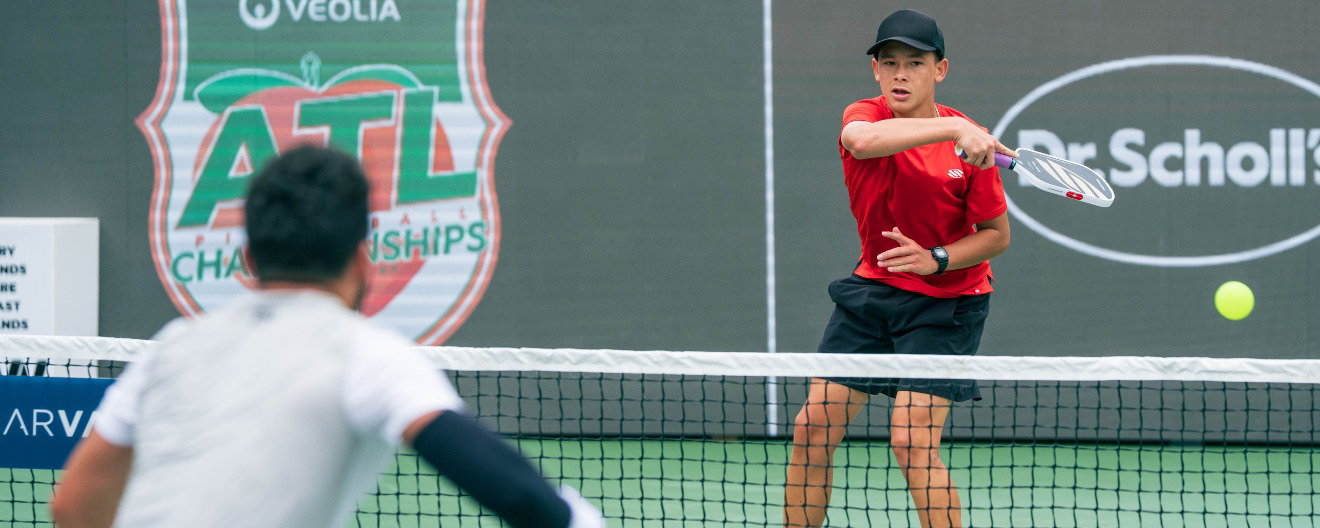
Tama Shimabukuro is built different, and so is his game
At just 15 years old, Tama Shimabukuro is quickly becoming one of the most exciting young talents in pickleball. With a game built on instinct rather than tradition, the Hawaii native is turning heads on the Carvana PPA Tour—and doing it his own way.
His journey into the sport didn’t begin with a carefully planned path or years of structured training. Instead, it started almost by accident.
“We were on a trip. I used to be a skateboarder. I was doing tournaments for that and trying to go pro in that at first,” Shimabukuro told broadcaster Dave Fleming in the inaugural episode of the YouTube series Fans Want To Know. “We saw people playing. My family thought it looked fun. Went back home, went to Target, got some wooden paddles and a net, put in the garage, and just started hitting around. And eventually now we're here.”
That casual introduction in California quickly turned into something more serious back home in Hawaii. Early on, he found himself battling older, more experienced players—and losing.
“I was actually getting destroyed,” Shimabukuro noted. “I was pretty bad.”
But that didn’t slow his progress. Instead, it fueled it.
“It kind of went in phases. We eventually were able to play with them and it just kept moving up,” Shimabukuro recalled. “And then just kept getting better and better and better.”
No tennis background, no problem
Unlike many top pickleball pros, Shimabukuro didn’t come from tennis. In fact, he had virtually no racquet sport background at all.
That absence of traditional fundamentals may actually be his greatest advantage. Without preconceived technique, he built a style entirely his own, one that often leaves opponents guessing.
His grip alone challenges conventional coaching.
“I started like that. People were telling me it's a bad habit and I tried taking it off for a little bit,” Shimabukuro admitted. “Didn't work for me, so I just put it back on.”
Even he isn’t entirely sure why it works.
“I honestly don't know,” Shimabukuro mentioned. “It just felt the most comfortable, and I was like I'm not going to change it.”
The same goes for his two-handed backhand, which evolved organically over time.
“When I first started, it was zero on the paddle actually, and eventually it went from one and then two,” Shimabukuro said. “I don't know how the second one got there. It's just there now.”
The result? A style that prioritizes feel, control, and creativity over textbook form.
Built on feel, and a little mystery
Shimabukuro’s shot-making has quickly earned a reputation for deception. Opponents struggle to read where the ball is going, often caught off guard by his ability to disguise direction at the last second.
Ironically, it’s not something he consciously works on.
“I don't even feel like I'm hitting deception like that,” Shimabukuro said. “It almost kind of feels natural at this point. When I see it on video, it just looks crazy.”
That natural unpredictability is part of what makes his game so difficult and so entertaining.
Choosing the court over the skate park
Before pickleball, Shimabukuro was all-in on skateboarding, dedicating hours every day to improving and competing.
“I was skateboarding a lot. I love skateboarding so much,” he praised. “I would do it every day, couple hours a day.”
But once pickleball entered the picture, priorities shifted.
“I was at the courts like way longer. Sometimes I was at the courts for like 10 hours,” Shimabukuro explained. “I just thought pickleball is way more fun.”
What started as a casual garage activity quickly became a full-time passion, and ultimately a career path.
Thriving under the spotlight
Shimabukuro’s breakout performances, particularly in recent Carvana PPA Tour events, have drawn massive fan support. Crowds have embraced him, chanting his name and fueling his momentum.
“The support I got there was insane,” he remembered. “It was just something else.”
Yet despite the growing attention, he remains calm and composed on court, a mindset he credits to his upbringing.
“I think coming from Hawaii, we're already a little bit laid-back,” Shimabukuro noted. “It's more chill there. I was just trying to stay calm on the court.”
In fact, he believes the energy helps elevate his play.
“I think they're making me play better probably.”
A simple goal, a bright future
While many are already projecting a long and successful career, Shimabukuro is keeping his focus grounded in the present.
“I haven't really thought about it like 20 years ahead, but right now I'm trying to be one of the top players in the world,” he concluded. “I'm just going to keep pushing towards it.”
If his rapid rise is any indication, that goal may be closer than it seems.
In a sport that continues to evolve, Shimabukuro represents a new wave of talent, one that proves there’s no single blueprint for success in pickleball.
Related articles
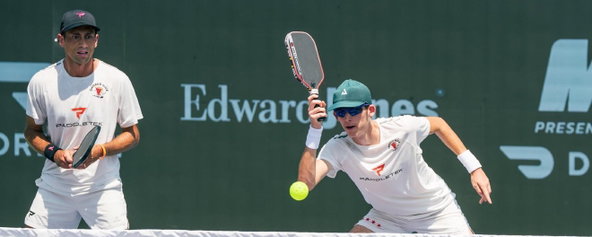
Let them play: The case for teenagers in MLP
Zane Navratil isn’t holding back on this one.
96 days ago
-Victoria Radnothy

Tama Shimabukuro was a Skateboard PHENOM — Learn About His Goals, Crazy Grip, and Life in Hawaii
113 days ago
-Pickleball.com Staff
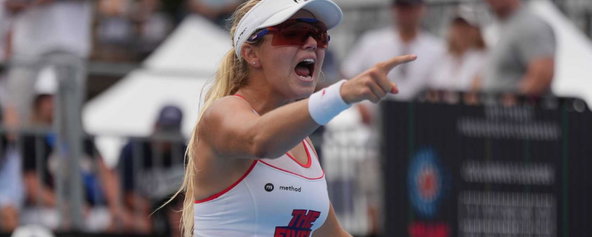
Waters, Kunimoto, Shimabukuro gearing up for MLP season
The pros are ready for a change of pace.
155 days ago
-Victoria Radnothy
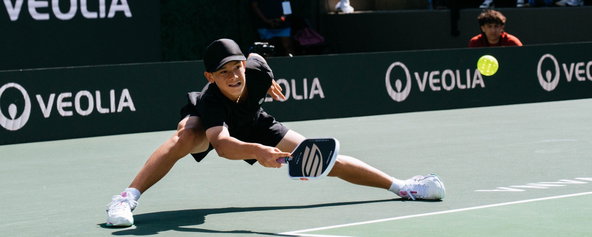
Veterans praise Tama Shimabukuro’s breakout run in Atlanta
Chris Haworth, Anna Leigh Waters, and Roscoe Bellamy discuss the youngster's game.
162 days ago
-Victoria Radnothy