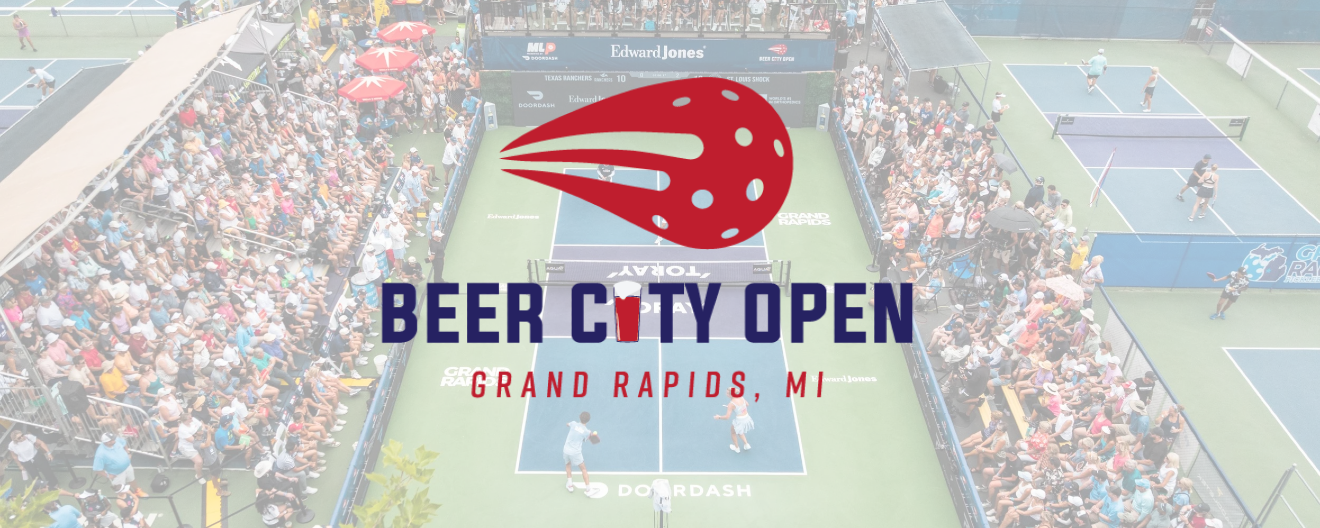
Behind the Schedule: Beer City Open
Behind the Schedule: Beer City OpenRunning a tournament on time isn't luck — it's math. How does Beer City Open keep courts full and wait times short across a 1,200-player event? BCO tournament director Brandon breaks down the exact approach — from scoring format math to a 4-step facility test every TD should run before locking in a start time. The framework works at any size.
How do you determine how many players you can fit into a tournament?
Rather than starting with total participants, a director should start with total playable matches per day measured against total court capacity. Work backward from there.
Scoring format is a big lever. Every format carries a projected match length, and that number drives everything else. A 2/3 to 11 format runs about 50 minutes on average — roughly 1 match per court, per hour. A 1 to 15 format runs closer to 30 minutes — roughly 2 matches per court, per hour.
Facility size and layout play a big factor as well. If your tournament desk isn't centrally located and the site is large, how long does it actually take a player to get from the desk to their court? At some venues, that walk alone can take 5 minutes each way. Without monitors on-site, players will also tend to take extra warm-up time once they arrive — and that adds up fast across a full bracket.
Before you lock in a schedule, test it:
- Have someone walk from the farthest point of the facility to the tournament desk.
- Have them wait there for 1 minute (simulating a real check-in).
- Have them walk to the farthest court.
- Stop the timer, then add a few minutes for the return trip after the match, plus at least 5 minutes for player warm-up.
Add that total to your scoring-format time above, and that's your real projected match time for scheduling purposes — not just the on-court playing time.
Pro tip: You can cut these buffer times down significantly by using referees or match starters. A match starter walks to the court with a stopwatch, confirms both players are present, gives them a short, defined warm-up window, and leaves once play begins. This keeps things on schedule and eliminates the "extra 10 minutes of warm-up" problem entirely.
When you're building the actual schedule, what are you looking for?
The top priority is minimizing waiting matches at the start of the day. Nothing frustrates a player more than warming up on an open court for 30 minutes, only to find they're still in the queue with no court to walk onto right at start time. One way to solve this: start a small bracket 30 minutes after the initial start of the day. This gives waiting matches a court to walk directly onto as early matches complete — keeping things moving from the first minute.
From there, your approach depends on whether you're at full capacity.
If you're not at full capacity: Assign each division to specific, dedicated courts. Teams set up near "their" courts and stay there for the entire event — cutting down desk traffic and travel time significantly. Empty court time between rounds doesn't really cost you anything here, since you're not competing for court space.
If you're at full capacity: Run one central desk with a 25% overlap rule on waiting matches. At Beer City, I run the amateur tournament across 15 courts — my target is to never have more than 4 matches waiting at any given time. That's the sweet spot: enough of a buffer that a court is never sitting empty, but tight enough that players are only waiting 10–15 minutes between matches on average.
No player wants to sit around for an hour between matches. Keeping wait times short is one of the most impactful things you can do for the player experience — and it's entirely within your control.

Related articles

In defense of pros wearing jewelry on the court
Pickleball's top athletes love to add a little extra shine.
25 days ago
-Victoria Radnothy
20 things pros wish they knew earlier in pickleball
These quick tips can help you level up your game fast.
25 days ago
-Victoria Radnothy
Must-try singles pickleball drills, straight from the pros
Take your game to the next level with practice tips from the world’s top players.
35 days ago
-Victoria Radnothy
How to build a powerful pickleball serve: Tips from the pros
Here are some simple adjustments to add pace, consistency, and control.
41 days ago
-Victoria Radnothy