Foam core paddles explained
Joseph Sutton
Feb 20 2026 1:30 PM ET
2
Foam core pickleball paddles use engineered polymer foams like EPP or MPP instead of traditional honeycomb cores to improve durability, consistency, and feel. Compared to Gen 3 honeycomb builds, full foam paddles reduce the risk of core crush while allowing brands to fine-tune power, control, and forgiveness more precisely.
What Is a Foam Core Pickleball Paddle?
A foam core paddle replaces the traditional polypropylene or Nomex honeycomb interior with a molded or expanded foam structure designed to handle repeated impact more consistently.
In simple terms:
-
Traditional paddles use a hollow honeycomb grid.
-
Foam paddles use engineered polymer materials instead.
-
Density, layering, and perimeter design determine power and feel.
For nearly 50 years (1972–2022), the honeycomb sandwich construction was the standard. It helped transform pickleball from backyard pastime to global sport, but as paddles became more power driven and heat molded, that structure started to show strain.
That’s when we entered what many players remember as the era of core crush — internal breakdown of the honeycomb core itself that led to dead spots, hot spots, and sometimes unpredictable rebound.
Foam cores weren’t introduced as a gimmick. They were introduced as a solution.
How Did the Industry Move From Honeycomb to Full Foam?
The shift didn’t happen overnight — it happened in waves.
Step 1: Perimeter Foam Era
Brands began adding expanding foam around the paddle frame to increase stability and sweet spot size. This was seen in early thermoformed builds and popularized in power-focused models.
Step 2: Gen 3 Internal Foam Layers
Manufacturers experimented with adding foam inside the frame itself to boost rebound and power. These paddles played hot — sometimes very hot — and performance jumped dramatically. So did warranty claims.
Step 3: The Full Foam Era
Instead of reinforcing honeycomb, brands began replacing it entirely with engineered foam cores that could withstand repeated impact without collapsing.
If the Gen 3 period sped up the game, full foam stabilized it.
What Materials Are Used in Foam Core Paddles?
Expanded Polypropylene (EPP)
-
Made from expandable beads heated in a mold
-
Density can be tuned by bead volume
-
Extremely durable and flexible
-
Often paired with perimeter foam rings
EPP has become the backbone of the full foam movement. By adjusting bead density or creating internal voids, manufacturers can fine-tune feel and performance without sacrificing structural integrity.
Microcellular Polypropylene (MPP)
-
Produced by injecting gas into polypropylene
-
Forms microscopic air pockets within a single structure
-
Strong strength-to-weight ratio
-
Naturally dampens vibration
MPP behaves more like a unified plastic structure than bead-expanded foam. It allows thinner cores and more perimeter weighting flexibility.
Ethylene-Vinyl Acetate (EVA)
-
Soft, compressible, shock-absorbing
-
Great for cushioning
-
Too elastic for full-core use alone
EVA was one of the first materials explored for foam builds, but by itself it created paddles that felt like rocket launchers. Today, it’s typically used as a perimeter support material paired with a stiffer core.
Why Are Foam Core Paddles Important?
Foam cores directly address durability under high-impact play.
Industry context:
As thermoforming increased paddle stiffness and power, honeycomb cores were pushed beyond their original design limits. Players loved the pop — until cores started collapsing.
What changed:
Full foam cores maintain structural integrity far longer under competitive play, especially at higher swing speeds.
Real-world impact:
Instead of replacing paddles due to core failure, players are now choosing between foam builds based on feel preference, not structural risk.
How Should You Choose a Foam Core Paddle?
1. Start With Shape
Core material won’t override shape preference.
-
Elongated: More reach and leverage, often preferred by former tennis players or singles specialists.
-
Standard: Wider sweet spot, defensive stability.
-
Hybrid: Balanced option that transitions well between styles.
If you already know your shape, stick with it. Foam technology works across all formats.
2. Decide on Control vs. Power
Foam does not automatically mean power.
-
Control-Oriented Builds: Softer feel, lower pop, excellent for resets and dinks.
-
Balanced / All-Court: Moderate pop with controlled rebound.
-
Power-Focused: Higher rebound and pace, requires adjustment in the soft game.
If you’re newer to the game, mid-range pop is often the most forgiving place to start. If you’re coming from a high-powered Gen 3 paddle, don’t overcorrect into the softest foam build on the market — the adjustment can feel drastic.
3. Consider Budget
Foam tech spans every tier.
-
Budget (~$100 range): Performance-focused builds without premium branding.
-
Mid-Range ($150–$220): Balanced performance with unique feel tuning.
-
Premium ($250–$300+): Latest density engineering, surface durability innovations, and advanced weighting systems.
Price no longer determines whether a paddle uses foam — it determines refinement and feature depth.
Do Foam Core Paddles Produce More Spin?
Not inherently.
Spin is still driven primarily by surface texture and friction. Foam can influence dwell time slightly, but grit durability and face material matter far more.
If spin is your priority, evaluate surface technology first — then core material.
Are Honeycomb and Gen 3 Paddles Obsolete?
No.
Modern honeycomb builds are improving in durability and still offer the crisp feedback many players prefer. Some of the highest-level tournament wins are still happening with reinforced honeycomb cores.
Foam cores currently offer more long-term structural stability, but the choice often comes down to feel preference.
Common Questions About Foam Core Paddles
How long does it take to adjust to a foam core paddle?
Most players feel the difference immediately. Full adjustment — especially moving from high-pop builds to softer foam — typically takes one to three weeks of consistent play.
Do foam paddles last longer?
Generally, yes. Full foam builds are less susceptible to internal collapse than traditional thermoformed honeycomb cores under repeated high-impact play.
What specs matter most when comparing foam paddles?
Focus on:
-
Core material (EPP vs MPP)
-
Thickness
-
Swingweight
-
Surface texture durability
-
Warranty policy
Is foam just a trend?
No. Foam cores emerged to solve durability issues, not to create marketing buzz. Continued R&D and widespread adoption across brands suggest this is a long-term structural shift in paddle design.
Key Takeaways
-
Foam core paddles replace traditional honeycomb with engineered polymers for increased durability and consistency.
-
EPP is currently the most widely used full foam material.
-
MPP offers strength-to-weight advantages and vibration dampening.
-
EVA is typically used for perimeter support rather than full-core construction.
-
Shape and power profile still matter more than core material alone.
The foam era isn’t about abandoning what worked. It’s about refining performance so players can choose power, control, or balance — without worrying about what’s happening inside the paddle after a few hard sessions.
Related articles
Best pickleball paddles for women 2026
Discover our top 7 best picks for every playing style, including pro favorites from Anna Leigh Waters and Anna Bright.
1 day ago
-Hannah Johns
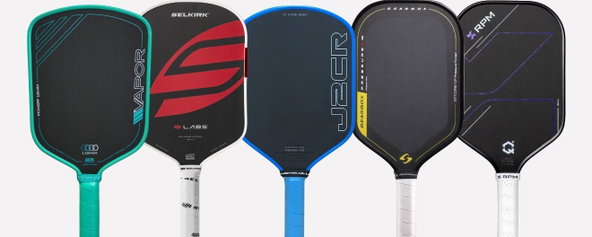
The top 5 paddles for power and forgiveness
These paddles give you real pace on drives and put-aways while staying stable and predictable when you miss the sweet spot.
1 day ago
-Joseph Sutton
.jpg?width=592&height=237&optimizer=image)
Gearbox Pressure X MPP vs. EPP: Which One Should You Play?
Gearbox built two Pressure X paddles on the same core system and frame, then tuned one for a fast release and the other for longer dwell. We played them head to head.
1 day ago
-Joseph Sutton
.jpg?width=592&height=237&optimizer=image)
Which Honolulu Paddle Should You Buy? A Guide to the Lineup
All five of the Honolulu paddles we cover sell for $195, so price won't make the decision for you. We break down the paddles by shape, core, and surface so you can find the one that fits your game.
1 day ago
-Joseph Sutton