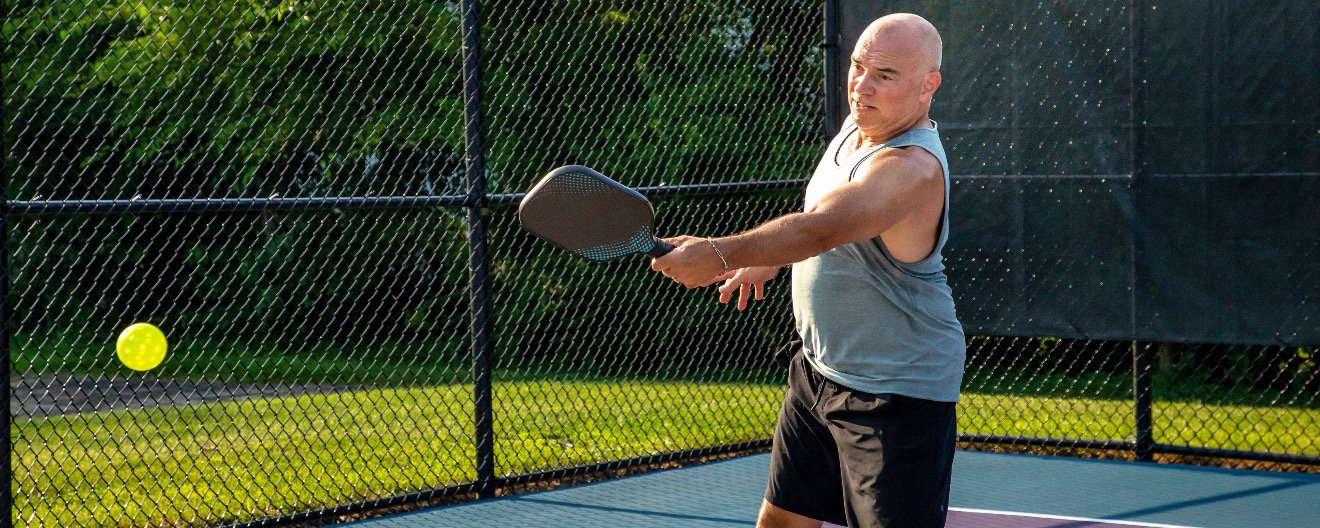
The fear of being the worst player on the court... and why it doesn't matter
There are so many reasons our brain keeps us from pushing our comfort zone, and whether it's the fear of stacking with strangers at a local park, feeling like you're not good enough to compete in a tournament, or even fear to sign up for a league at the next skill level, the feeling that you don't belong or aren't good enough can hold us back.
This is pickleball imposter syndrome, and it's keeping more people away from one of the best communities in sports than bad knees, busy schedules, or any other excuse you want to name.
I clearly remember the nerves I felt stacking my paddle at "Green Lake Park" — the hub for pickleball in Seattle, WA — when I had only just learned the rules. Did I get my butt whooped by senior citizens? You bet your bottom dollar! But I also joined an incredibly welcoming community of players, kickstarted my skill progression, and realized that the only thing standing in the way of me and all that fun was unnecessary fear.
That said, it would be dishonest to pretend there are no exceptions. Some players will unstack with you in the queue, visibly sigh at a missed shot, or make it quietly but unmistakably clear that they'd rather you weren't there. It's worth naming because if it's happened to you, it probably made you feel like the problem was you and it wasn't. There's nothing wrong with wanting to play with people at or above your skill level; plenty of competitive players feel that way, and that's their right. But there's a difference between having a preference and being a jerk about it in a public setting, and most players in the pickleball community will tell you the same thing: people who make newcomers feel unwelcome are a small minority, and they're not exactly beloved for it. If you've run into one of them, that was bad luck, not a preview of what pickleball is actually like.
What imposter syndrome is actually costing you
Staying comfortable feels safe, but comfort has a cost that's easy to miss because it shows up as absence: all the progress you didn't make, the people you didn't meet, the games you didn't play.
The fastest way to improve at pickleball isn't drilling the same shots against players who are at your level or below it. It's playing up. Better opponents force you to speed up your reactions, tighten your decision-making, and fix the bad habits that weaker players let you get away with indefinitely. Every match against someone better is a compressed lesson in what your game is actually missing. And every session you skip out of fear isn't just a few hours lost, it's the feedback and the reps and the growth that only come from being in the game.
There's something else, too, that's harder to quantify. The best parts of pickleball, the leagues, the open play regulars who become your people, the tournaments where you're terrified going in and weirdly exhilarated coming out, none of that happens from the sideline. Community only works if you show up, and the longer you wait until you feel ready, the more of it passes you by.
Ways to push past it (start wherever you are)
There's no single right entry point, and you don't have to take the biggest leap available to you. The goal is just to get on the court, and there's a version of that for wherever you're starting from.
Open play is the lowest-stakes option there is: no teams, no commitment, no score that anyone's tracking beyond the game in front of them. You drop in, you play whoever's there, you leave when you want. It's forgiving by design, and it's how most people get their first real reps.
Beginner or mixed leagues add just enough structure to make things feel less random. You see the same people week after week, which builds familiarity faster than you'd think. The pressure stays low, but you start to feel like you belong somewhere specific rather than just floating through open play.
Drilling groups and clinics take scoring out of the equation entirely, which is a relief if match play feels too exposed right now. It's all skill work, no winning or losing, just repetition in an environment where everyone is there to get better, not to judge.
One more thing that sounds counterintuitive but works: just tell the better players you're still learning. Most of them genuinely enjoy coaching someone mid-game, and when you take the pressure off yourself to perform, you usually play better anyway. And if you eventually want the most structured option available, beginner tournament brackets exist specifically for players who are stepping into competition for the first time, and everyone in that division is working through the same nerves you are.
What actually happens when you show up
The fear has a very specific story it tells you: you'll mishit easy shots, people will notice, someone will sigh or roll their eyes, and you'll wish you'd stayed home. It's a convincing story, and it feels true enough that a lot of people never test it.
But here's what actually tends to happen. Nobody laughs. People encourage you on bad shots, not out of pity, but because they remember what it felt like to be new, and most of them liked having someone root for them back then. You get better faster than you expected because playing with people who are better than you actually makes you better. You find yourself looking forward to the same Wednesday evening open play every week, then feeling weirdly off on the weeks you can't make it. You make friends with people you would never have otherwise crossed paths with, over a sport you almost talked yourself out of trying.
And then, a few months later, you'll be the one on the court watching someone hesitate on the sideline, and without even thinking about it, you'll wave them over.
Get on the court
The only way to find out you belong out there is to actually go find out. You don't need more practice first, or a better paddle, or a rating that makes you feel legitimate. You just need to show up once, feel a little awkward for the first twenty minutes, and then notice that none of the things you were afraid of actually happened.
Find an open play near you at Pickleball.com, or sign up for a local league and see what happens. The game you've been waiting to feel good enough for has been waiting for you, too, and it's a lot more fun than standing on the sideline.
Related articles
I said it once and I’ll say it again – pro pickleball needs a villain
"Every great sport has villains. People tuned in just to watch John McEnroe lose," said Zane Navratil.
1 day ago
-Victoria Radnothy
What makes Ben Johns so good at pickleball?
Zane Navratil breaks down the G.O.A.T.'s game to identify exactly what makes Ben Johns so tough to beat.
3 days ago
-Pickleball.com Staff

Ready for her close-up: Anna Leigh Waters partners with L'Oreal Paris
ALW is only getting more iconic.
4 days ago
-Victoria Radnothy
Best dressed at the Veolia Chicago Cup
The fashion competition was fierce in the Windy City.
11 days ago
-Victoria Radnothy