The Community That Refused to Pay to Play
How One Pickleball Community Fought a Court Fee and Won
In April, Tucson Parks and Recreation proposed charging players $3.50 for every 90 minutes of court time at Morris K. Udall Park. The courts had been free since they opened five years earlier, and in that time they had become the busiest pickleball location in the city. The department's reasoning was maintenance. Court surfaces last about a decade, Udall was five years in, the asphalt was already breaking down, and a managed location with an outside operator would generate money to put back into the courts.
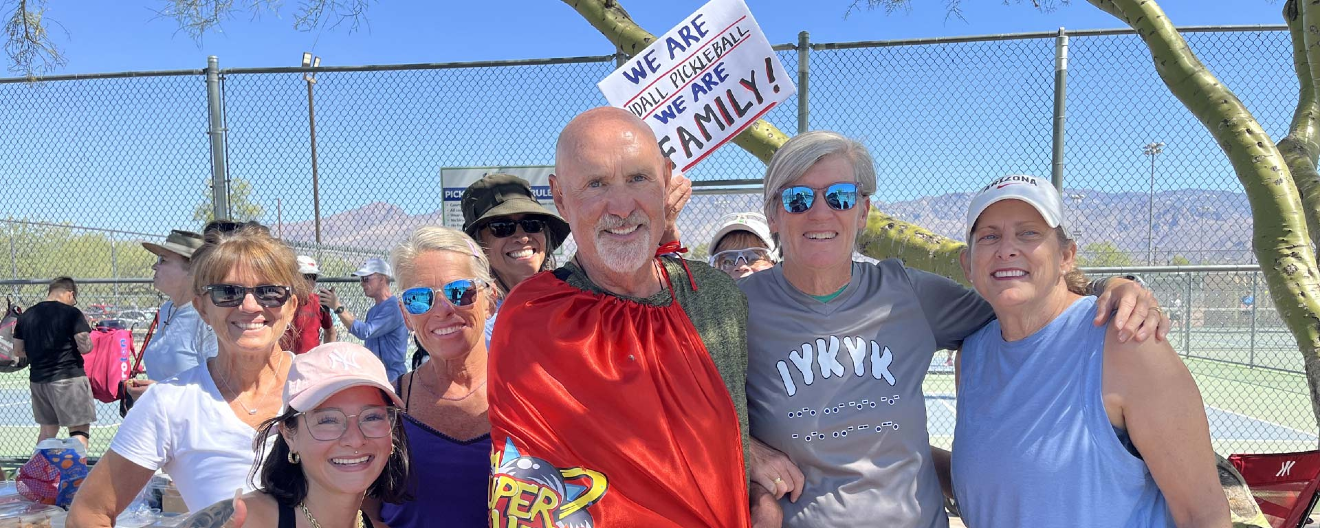
By May 5, the proposal was dead. The Tucson City Council voted unanimously to hand maintenance of the Udall courts to a local nonprofit instead, and the courts stayed free.
Last month we asked whether open play is dying. Leonard Finkel read that piece and reached out with a story that runs the other way. Finkel is a board member with Tucson Area Pickleball, and he plays at Udall every day. His community was facing something that would have gutted open play at their home courts, and they organized and stopped it. Here is how they did it, and what to take from it if your courts are heading toward the same conversation.
What was actually at stake
.jpg)
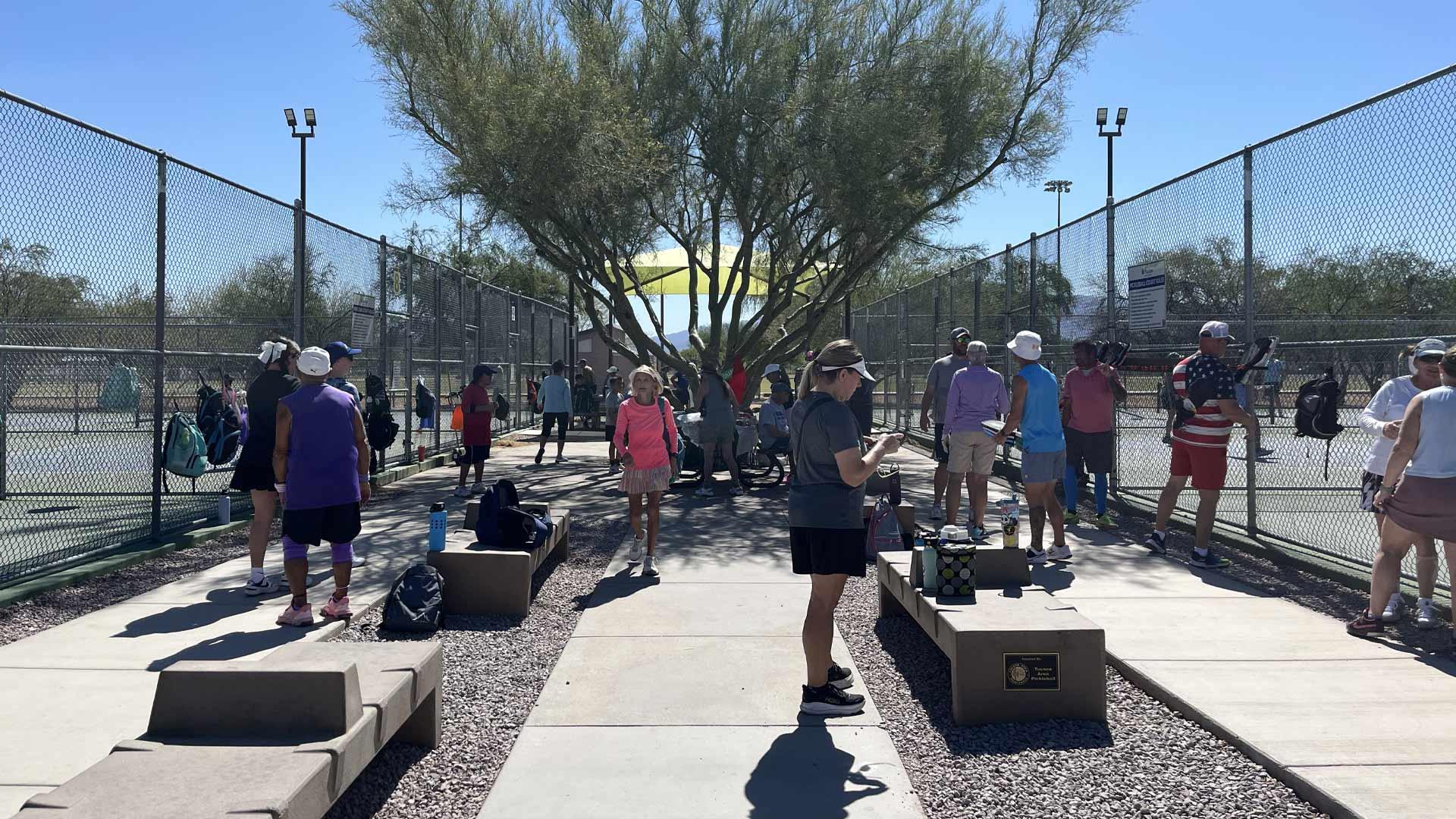
Udall runs on a paddle rack. You hang your paddle on the fence when you arrive, and when your turn comes up someone calls you out to play with whoever else is next in line. Nobody reserves a court. Nobody checks in. You show up alone and you get a game.
That system is why Dainah Graham, who learned to play in her neighborhood and could never find a fourth, kept coming back after she handed in her retirement paperwork. It is why Chloe Fuchser, a homeschooled 13-year-old, gets her physical education there and her coaching from a retired teacher named Hank Greenberg who is one of the better players on the property. It is why the group celebrates birthdays and rallies around players who get sick.
The $3.50 itself was never the real issue. What worried players was what a fee does to a paddle rack. Megan Hughes, the president of TAP, laid out the mechanics plainly when the proposal surfaced. Charging for play means controlling access, controlling access means gates, and gates mean the walk-on game disappears. Finkel pointed at Kino Sports Complex, where the courts carry a fee and sit empty most of the time, while Udall stays packed from morning to night.
What they did about it
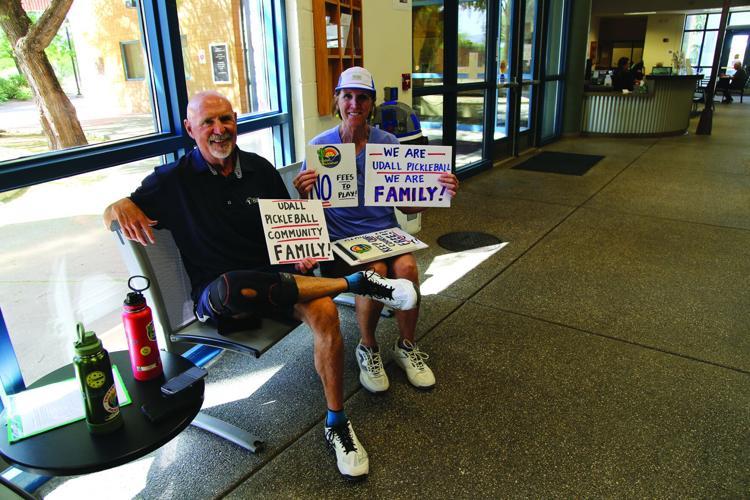
The first thing TAP did was show up in numbers at the April 21 council meeting, and the testimony was personal rather than procedural. High schooler Henry Gummerson talked about the friends from school and work who join him for big rounds. Construction worker Juan Romero said a fee would feel like a separation of everything the courts had built. Parks and Recreation Director Lara Hamwey later said she was struck less by the volume of the response than by the weight of it, that she heard story after story about people who ended up at Udall by accident and now organize their lives around it.
The second thing they did was challenge the numbers instead of just objecting to them. Finkel argued the fee structure would lose the city money rather than make it, and he had a specific reason. Udall has 14 entry points, and closing them off would take somewhere between $50,000 and $100,000 in fencing before the city collected a dollar. Hughes made a parallel argument about fairness, pointing out that the dog park, the splash pad, the bocce courts, the playground and the walking paths at that same park are all free, and asking why pickleball players would be the ones funding amenities in other parks they never use.
The third thing, and the one that mattered most, is that TAP arrived with an alternative rather than a complaint. The organization had already spent roughly $55,000 on shade structures, benches, water stations, nets and other improvements, and had been in conversation with Parks and Recreation about resuming maintenance duties before the fee proposal ever came up. So the offer was concrete. Keep Udall free and TAP will carry the cost and the labor of keeping it in shape.
They also had a councilmember who understood the room. Paul Cunningham represents Ward 2, where Udall sits, and he plays. He said early that he opposed the flat fee and that the paddle rack was worth protecting on its own terms, and he spent April and May working with TAP on a version the city could actually approve.
What they won
Cunningham brought the partnership to the council on May 5 and it passed unanimously. Under the five-year agreement, TAP takes over cleaning, upkeep and resurfacing, and commits to raising the money for three new courts. The city keeps the benches, the shade structure, the water fountain and the grounds. Udall stays free.
Three days later, more than 80 people gathered at the courts to celebrate. Finkel stopped play in the middle of the afternoon, stood on a bench and thanked the council. Grayson Festerling, a Sabino High School student who had been playing about six months, put it about as simply as it can be put. TAP fought, stood up, and won. About 30 new people joined the organization in the weeks after.
What to take from it
It is worth being honest that Tucson had advantages. TAP already existed as a 501(c)(4) with a bank account, a track record and $55,000 of proven investment in the property, and the ward councilmember was a player. Most open play groups have none of that when the notice goes up.
But the parts that can be copied are the parts that did the work. Organize before you need to, because a group that already maintains the courts has standing that a group of upset players does not. Learn the actual budget argument well enough to dispute it, since a fee proposal is a math problem before it is a values problem. Bring an offer to the table rather than only an objection, because a council that has to choose between charging players and doing nothing will usually charge players. And when you testify, talk about the 13-year-old and the retiree and the guy who found the courts by accident, because that is the part nobody in the room can argue with.
Last month I wrote that the community bond in pickleball still exists, just in more places than it used to, and that you will find it if you keep looking. Tucson is a reminder that once you find it, it is worth defending.
You can read more about the story here: https://news.azpm.org/p/azpmnews/2026/5/11/229715-a-vibrant-community-tucson-pickleball-players-celebrate-udall-fee-reversal/
Related articles
.jpg?width=592&height=237&optimizer=image)
How to Build a Pickleball Group that Lasts
A practical look at skill range, roster size, court access, and the organizing work nobody signed up for.
16 hours ago
-Joseph Sutton
Why is Anna Leigh Waters so dominant? Zane Navratil explains
There are countless factors that separate her from the rest of the field.
3 days ago
-Pickleball.com Staff
The myth of “having fun” on the court
Do the best players in the world actually enjoy playing? Kate Fahey and Anna Bright provide insight.
4 days ago
-Victoria Radnothy
The best beginner pickleball paddles
Just getting into pickleball? These paddles are worth every dollar.
5 days ago
-Victoria Radnothy