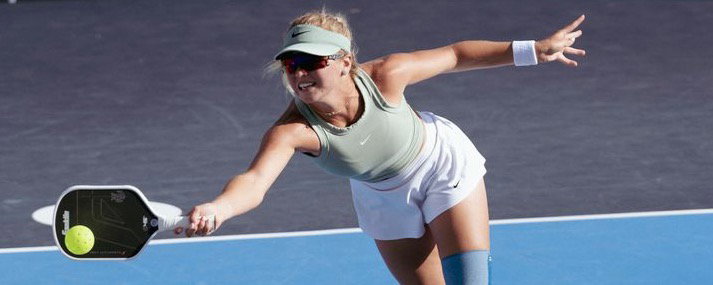
Why is Anna Leigh Waters so dominant? Zane Navratil explains
Pickleball may still be in its early stages, but Anna Leigh Waters has already put together a resume that feels nearly untouchable.
At just 19, Waters has racked up 44 triple crowns and 192 gold medals, along with dominant runs across singles, women’s doubles, and mixed doubles. At the time of this analysis, she was riding a 25-tournament singles gold streak and a staggering 125-match singles win streak, with her last loss dating back to June 2, 2024—more than two years ago.
So what exactly sets her apart? Pro player and former New Jersey 5s teammate Zane Navratil took a closer look at what makes Waters so difficult to beat.
1. Elite Anticipation
One of Waters’ greatest strengths isn’t something you’ll find in the box score—it’s her anticipation.
After competing at a high level since age 12, Waters has developed an advanced feel for the game. She picks up on subtle cues in an opponent’s motion and often appears to read shots before they’re even struck.
That early read gives her a crucial edge, allowing her to get set sooner and dictate points. It also amplifies her already elite hand speed. She’s not just reacting in fast exchanges, she’s ready for them before they happen.
2. Her Two-Handed Backhand
Waters’ two-handed backhand might be the most defining shot in her arsenal.
While many players look to step around their backhand and favor a forehand, Waters flips that script—she’ll occasionally run around her forehand just to unleash her backhand instead.
With her grip and compact swing, she’s able to produce a rare blend of spin, pace, and disguise, turning what’s typically a neutral shot into a true point-ending weapon.
She plays with a grip just past continental, leaning toward eastern, which helps her open the paddle face and get under low dinks. The slightly shorter grip also adds stability and quick maneuverability in tight exchanges.
More importantly, her setup looks nearly identical whether she’s about to speed the ball up or roll a heavy topspin dink. That disguise makes it incredibly tough for opponents to anticipate what’s coming next.
3. Efficient Movement
Waters may not be the fastest player on tour in terms of raw speed, but her movement is remarkably efficient.
She excels at:
- Reaching top speed quickly
- Maintaining balance while hitting
- Recovering quickly after each shot
- Staying in position for the next ball
Efficient movement is essential in pickleball—simply reaching the ball isn’t enough. Players need to arrive balanced and in control, ready for the next shot.
Waters does exactly that, consistently putting herself in position with poise and precision.
4. Elite Returns, Drops and Hands
Waters' return is one of the most dangerous shots in her arsenal. She blends pace, spin, and precision to apply pressure right from the start of the point.
Her drop shots are just as impactful. She’s able to hit them with aggression and intent without giving up consistency, which lets her take control of rallies and dictate the tempo early.
Then there are her hands. At the net, Waters is incredibly quick and composed in fast-paced exchanges. Combined with her anticipation, those rapid reactions make her one of the most dangerous counterattackers in the women’s game.
5. Court IQ and Mental Toughness
If Waters has one trait that brings everything together, it’s her pickleball IQ. She’s constantly thinking a few shots ahead, reading patterns and positioning herself based on what her opponent is most likely to do next.
That awareness allows her to make even the toughest shots look routine.
Her mental toughness is just as important. Waters competes with relentless focus and discipline, supported by a deep commitment to training and recovery.
And it all connects—each part of her game elevates the rest, making her skill set even more dangerous as a whole.
Her anticipation gets her set early. Her positioning creates cleaner contact points. Her backhand lets her attack from spots where most players would be on defense. Her hands fuel lightning-fast counters, and her movement keeps her prepared for whatever comes next.
That’s what makes Waters so tough to beat.
To keep up to date on all things pickleball, follow us on Instagram.
Related articles

Mojo Energy Pouches Virginia Beach Open: Everything you need to know
With several star players heading overseas, a big opportunity awaits for other players to claim a title.
2 hours ago
-Pickleball.com Staff
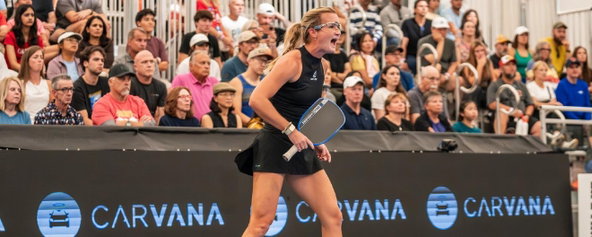
Virginia Beach features wide open draws
No Anna Leigh Waters and no Ben Johns means it is anyone’s tournament to make a mark.
1 day ago
-Jim Kloss
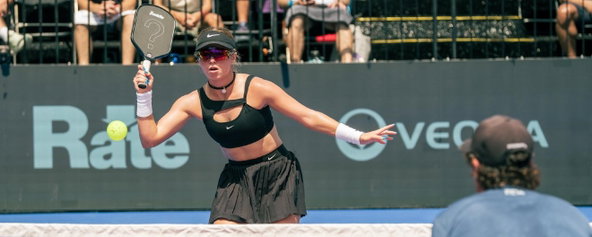
Anna Leigh Waters' most iconic on-court looks
From vintage FILA fits to iconic Nike gear, she has served up plenty of memorable styles throughout her career.
1 day ago
-Victoria Radnothy
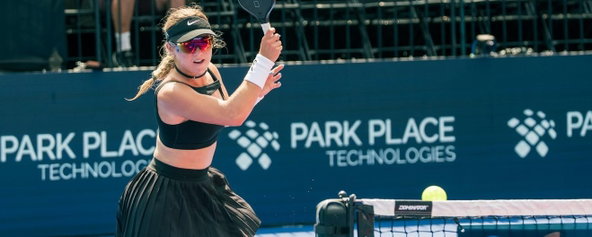
Beyond the court: The moments that shaped Anna Leigh Waters' journey to 200 titles
From welcoming Archer into her life to walking the red carpet at the ESPYs, she has accomplished so much at such a young age.
1 day ago
-Victoria Radnothy