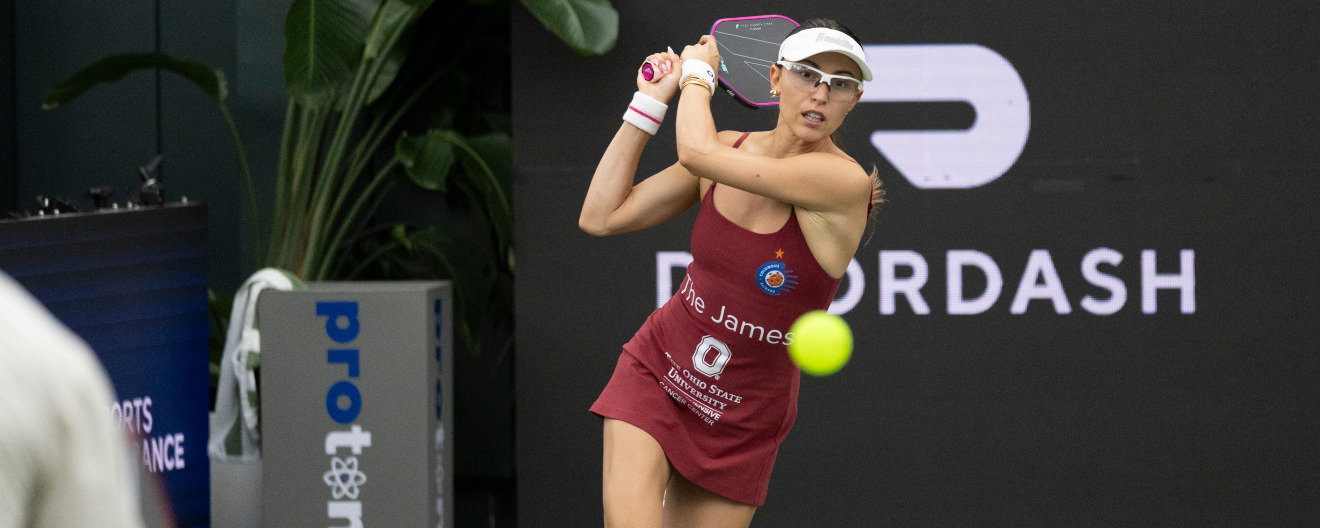
Drop or drive? Mastering the third shot decision
If there’s one decision in pickleball that separates experienced players from everyone else, it’s knowing whether to drop or drive your third shot. It sounds simple when you’re standing on the baseline thinking about it, but in the heat of a rally, the wrong choice can hand your opponents a putaway on a silver platter. Learning the feel of this decision—the read, the intention, the purpose—changes everything.
Let’s break this down the way players actually experience it on court.
When you should drop
A good drop is all about neutralizing a tough situation. If the return comes back deep—landing near the baseline, pushing you backward, or getting on you fast—that’s your green light for a third shot drop. Don’t try to muscle a drive from a defensive position. You’ll just feed your opponents a high, attackable ball.
Instead, soften your hands. Your job is to take pace off the ball and float it into the kitchen. Literally “drop the ball in the kitchen” so your opponents are forced to hit up. That one move buys you and your partner the real estate you need to close the gap and work your way to the kitchen line.
A drop is more than a shot—it’s a reset to get yourself into the point.
How to execute a solid drop
• Start with a low-to-high motion — a gentle lift.
• Keep your paddle face slightly open.
• Let your legs do the work instead of slapping with your wrist.
• Aim for a soft arc clearing the net by no more than a foot.
• Don’t rush forward until you KNOW you’ve hit a quality drop.
When you should drive
A drive sends a different message: “You gave me something attackable, and I’m going to make you uncomfortable.”
Drive when:
• The return is short (mid-court or earlier)
• The ball sits high enough for you to get on top of it
• Your opponents are unwinding a stack
• You’re balanced and stepping into the shot
A drive doesn’t need to be a winner. A good, heavy drive sets up the fifth shot, forces popups, and opens up the court.
Where to aim your drive
Don’t aim at shoulders like it’s tennis. Aim at the hip area. It jams players, limits leverage, and forces weak blocks while keeping the ball low.
The real art is in the read
Your decision depends on:
• Return depth
• Balance
• Contact point
• Ball speed
• Your positioning
If you’re falling backward: drop.
If the ball is begging for a swing: drive.
Mix it up. Keep opponents guessing. The best players don’t just hit shots—they choose the right ones.
Related articles
What makes Ben Johns so good at pickleball?
Zane Navratil breaks down the G.O.A.T.'s game to identify exactly what makes Ben Johns so tough to beat.
4 days ago
-Pickleball.com Staff
Who is Elliott Schupp? The next up-and-comer pickleball athlete you need to watch
He just won his first title on the PPA Tour, here's how he got there.
5 days ago
-Victoria Radnothy
Five ways to add power and consistency to your pickleball drives
Ashley Griffith explains how better spacing, body rotation and topspin can help players attack with confidence without sacrificing control.
6 days ago
-Pickleball.com Staff
Best dressed at the Mojo Energy Pouches Virginia Beach Open
The chilly conditions inspired a fresh wave of cold-weather looks from the pros.
6 days ago
-Victoria Radnothy