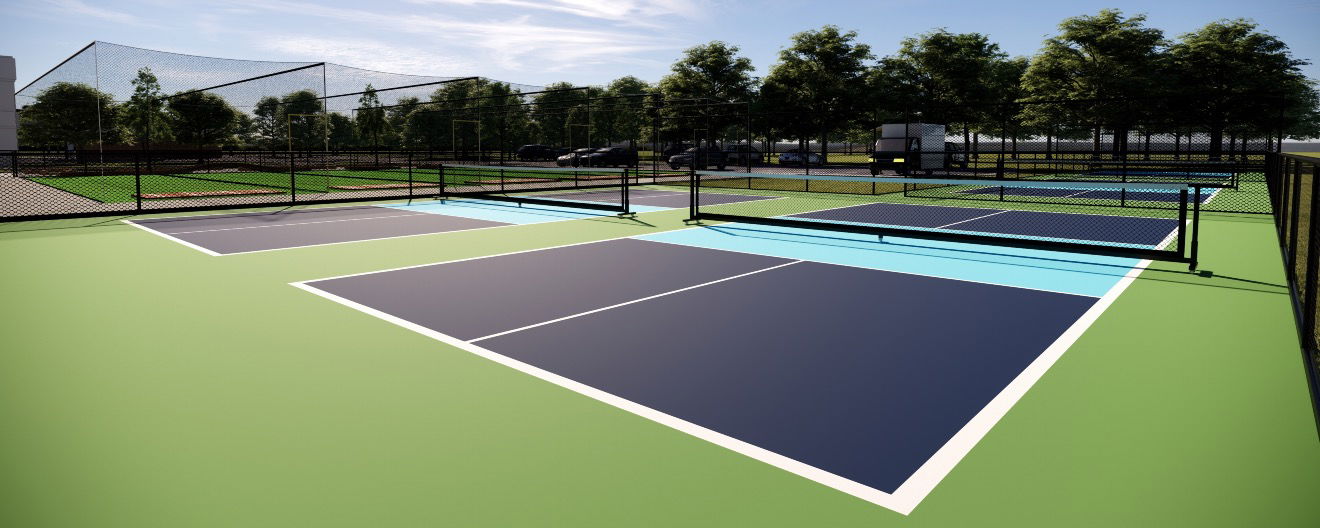
Planning to build a pickleball court? Consider this first
Thinking about building your very own pickleball court? You’re not alone, and you’ve come to the right place.
Pickleball is one of the fastest-growing sports in the world. It’s easy to learn, social, and a ton of fun. It’s also a great way to stay active, whether you’re playing indoors or outdoors. Best of all, it’s suitable for all ages—young kids, grandparents, and everyone in between can play together on the same court.
As public courts become increasingly crowded, more and more players are turning to private court construction to get their pickleball fix. Building a court at home has quickly become a popular and practical solution.
If you're considering creating your own backyard pickleball court, there are a few key factors to plan for. Let’s walk through the full breakdown.
Court construction costs
The average cost to build a private pickleball court ranges from $30,000 to $50,000. Your biggest expenses will be site preparation, framing, and pouring the base surface (either concrete or asphalt). The more extras you add, like lighting, fencing, or premium surfacing, the higher your budget will climb.
Court surface materials: Asphalt vs. concrete
Asphalt is quicker to install and cheaper up front, but it may require more frequent maintenance. Concrete, on the other hand, is more durable and less likely to crack over time. Most professional-level courts cost around $5 per square foot for the playing surface alone.
Before installing asphalt or concrete, your contractor will need to level the ground and lay a gravel base. This part of the job can be relatively affordable if your site is flat, or significantly more expensive if your property has slopes, trees, or other obstacles.
Net options: Permanent or portable
Permanent pickleball nets start around $1,000 and offer long-term durability, especially for outdoor courts. The PPA Tour often uses semi-permanent nets from Selkirk.
Portable nets, on the other hand, are easy to assemble and disassemble, and cost as little as $100. While they aren’t as sleek, high-quality portable nets still perform well, especially for casual play or if you’re working with a tighter budget.
Fencing: Is it necessary?
If you're building an outdoor court, fencing can help keep the ball in play and add a polished look. A basic 4-foot chain-link fence runs around $5,000, while professional-style 10-foot fencing will cost more.
That said, if your court is surrounded by open grass or natural barriers, fencing may not be necessary. For safety, it's a good idea to add padding to the top of any fence you install.
Surfacing: For performance and aesthetics
Professional surfacing not only makes your court look official, it also ensures consistent ball bounce and better traction. The most common choice is acrylic hard court surfacing, which is durable and cost-effective.
The PPA Tour uses Acrytech sport surfacing, known for its vibrant color options and reliable performance. Snap-together plastic tiles are also available, but tend to be more expensive.
Plan to spend around $7,000 for surfacing, including materials and labor.
Labor Costs and Installation
While DIY court construction is possible with enough research and effort, hiring professionals will give you better results and fewer headaches. Expect to pay about $7,000 for labor related to surfacing alone, and more if you're outsourcing the entire project.
Lighting for night play
Planning to play in the evenings? Don’t forget about lighting. Installing LED court lighting costs around $7,000, not including any extra expenses for electrical wiring or trenching. You’ll need to hire a licensed electrician for this step.
Pickleball court dimensions
A standard pickleball court measures 20 feet wide by 44 feet long, including boundary lines. For safety and comfort, you’ll need additional space around the court.
-
Minimum recommended play area: 30 feet x 60 feet
Tournament-ready court: 34 feet x 64 feet
These dimensions accommodate all disciplines: singles, doubles, and mixed doubles.
Indoor court roofing requirements
If you're building an indoor court, the ceiling should be at least 18 to 20 feet high.
This helps prevent interference from high balls or lobs during play.
Net dimensions and setup
Regulation pickleball nets measure 36 inches high at the sidelines and 34 inches in the center. If your net tends to sag in the middle, a center support pole will help maintain proper tension and height.
Avoid using badminton nets for official play—they’re set at 60 inches and don’t meet pickleball standards.
Court orientation matters
When building an outdoor court, orientation is key. To avoid harsh sunlight in players’ eyes, aim to position your court on a north-south axis. This reduces glare from the rising or setting sun during morning or evening matches.
Estimated costs at a glance
| Item | Estimated Cost |
|---|---|
| Concrete court (30×60 ft) | $9,000 |
| Permanent net | $1,000 |
| Fencing | $5,000 |
| Surfacing | $7,000 |
| Lighting | $7,000 |
| Total | $30,000+ |
Quick checklist for building your court
✅ Evaluate your space – Do you have 30x60 feet (or more)?
✅ Choose your materials – Concrete, asphalt, or tiles?
✅ Select a net – Permanent or portable?
✅ Decide on fencing – Optional, but helpful for outdoor courts
✅ Add lighting – For night matches, LED is your best option
✅ Hire help if needed – Don’t go full DIY unless you’re confident
✅ Position the court – North-south orientation is best
✅ Get ready to play – You're almost there!
✅ 0-0-2 – Serve it up!
Related articles
How a birthday gift sparked Allyce Jones’ pickleball rise
It all started with a private lesson from Callie Smith.
186 days ago
-Victoria Radnothy
Inside Callie Smith’s home: Pickleball paddles galore and a hidden talent
Get to know one of pro pickleball's top athletes with a visit to her Utah residence.
315 days ago
-Victoria Radnothy

Former Dayton church being converted into indoor pickleball facility
Pickleball enthusiasts are getting creative with business ventures.
634 days ago
-Victoria Radnothy

Which pros will have a Thanksgiving pickleball tournament?
Allyce Jones, Jack Sock, and Ben and Collin Johns will be playing a lot of pickleball later this week.
693 days ago
-Victoria Radnothy