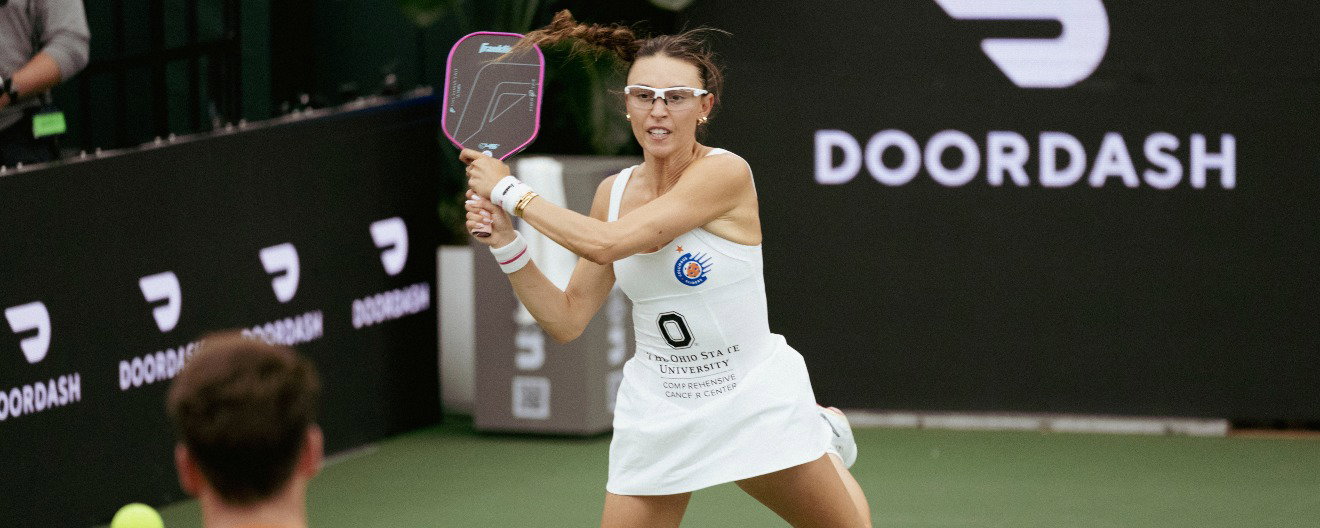
The 5 most essential shots in pickleball (In no real order because they're all important)
Pickleball has gotten so wild the last couple years that sometimes it feels like there’s a new “must have” shot every week. One person says drop shots win titles, another says drives are everything, someone else is convinced it’s all hand speed now. But if you strip it down and actually look at what separates people who win consistently from the folks who are kind of just hitting balls and hoping for the best, there are five shots that matter more than the rest. Not like “only these matter,” but these are the backbone of the modern game.
And yes, this is a little messy because pickleball isn’t some clean, perfect sport. It’s chaotic, fun, and honestly half the time we’re all just reacting.
1. The Serve
People love to say “The serve doesn’t matter in pickleball.” Well, sorry, but that’s just not true anymore. The serve is your first chance to be on offense. If you float in some short, happy little serve, you basically donate control of the point. A deep serve pushes your opponent back, pins them behind the baseline, and buys you time to move up to the kitchen. It doesn’t have to be a missile, but it can be, and a heavy, deep serve forces weaker returns or even shanks. It’s simple math: deeper serve = weaker return = easier third. And the easier your third is, the faster you’re up at the kitchen dictating the point.
2. The Return
The return is just as important. Honestly, maybe more. People underestimate how brutal a deep return can be. If you can hit it hard, deep, and when you’re feeling brave, into their weaker side, you’ve already turned the point in your favor. A deep return gives your opponent a tougher third shot (and trust me, most people don’t love hitting thirds under pressure). They dump it into the net, pop it up, or frame it, all because you hit a deep return, and it sets you up for a better or probably higher third shot from your opponent.
3. The Third Shot
This is the shot that separates the pros from the amateurs, for real. You can’t miss thirds. Like… ever. Okay, not “ever,” but it should feel like you barely miss them. This one shot completely determines whether you get to the kitchen, or spend the entire rally getting bullied from mid-court. You can drop it, you can drive it, but you’ve got to be consistent. And if you’re dropping, get under it and send it low so it lands at your opponent’s feet. Make them hit up. Make them uncomfortable. If you control this shot, you control the game.
4. The Flick / Speed-Up
This shot has become a monster the last few years. The game used to be slower, more patient, more “Let’s dink forever.” Now? Nope. People flick off anything, off dinks, off-balance, from low balls, whatever. And because the game has become faster, you need to be able to create offense, too. A good flick surprises your opponent, puts pressure on them instantly, and forces them to respect you. They can’t camp in a comfy dink pattern thinking you’ll never attack. Hit this well, and they start guessing—and guessing is how they lose.
5. The Counter
Welcome to modern pickleball where everyone is trying to take your head off. Counters are no longer optional. If you don’t have a strong counter, you’re toast. People speed up from places they shouldn’t even be swinging, and the ball comes at your body before your brain even processes what’s happening. A good counter absorbs that pace and sends it right back faster. It tells your opponent, “Go ahead. Try me! But you’re not getting away with junk.” Great counters shut down reckless speed-ups and force your opponent to actually think about their attack instead of just sending it wherever or
whenever they want.
Pickleball isn’t about having 50 shots. It’s about having the right few and really focusing on five main things. Nail these—serve, return, third, flick, and counter—and suddenly the game feels way easier, way more controllable. You stop reacting and start creating. And honestly? That’s when pickleball gets really fun.
Related articles
Five pickleball tips to improve your game from beginner to 4.0
Coach Jess breaks down concepts that can help players win more points, improve consistency, and avoid common mistakes on the court.
5 hours ago
-Pickleball.com Staff
How to completely change your pickleball serve in 10 minutes
A few simple adjustments could help you add power, improve accuracy and eliminate the yips.
6 days ago
-Pickleball.com Staff
.png?width=592&height=237&optimizer=image)
Five ways to elevate your dink game like a pro
These strategies can help you make smarter decisions and gain the upper hand in kitchen line battles.
6 days ago
-Pickleball.com Staff
Five mindset shifts every pickleball player should know
Michael Lloyd shares lessons that changed the way he approaches the game, from redefining aggression to letting the ball dictate every shot.
7 days ago
-Pickleball.com Staff