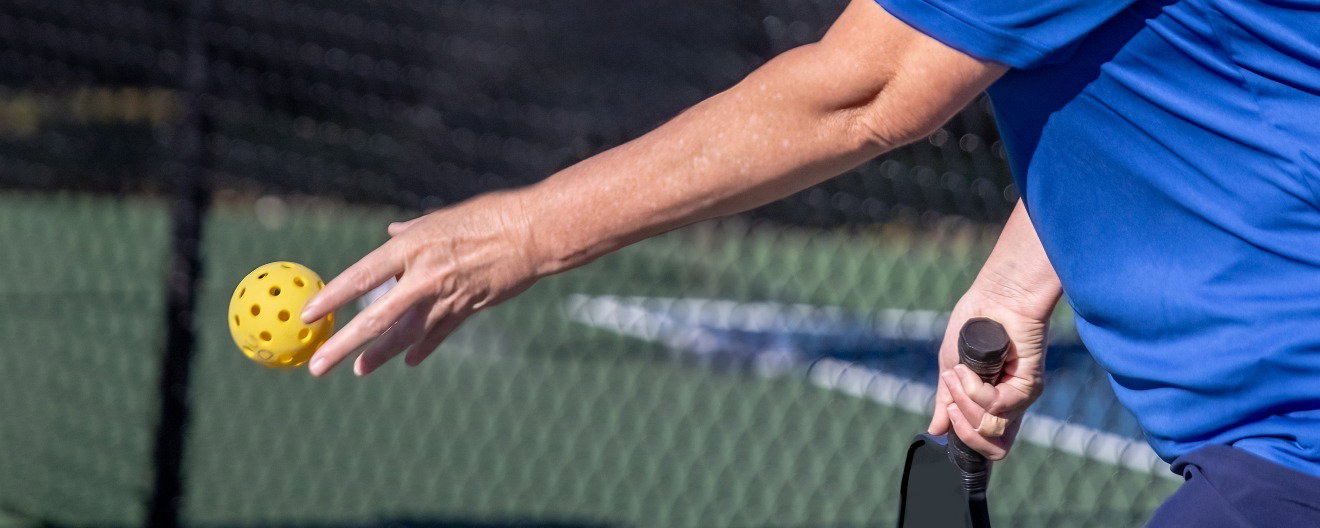
What is an ace in pickleball, and how can you start hitting more of them?
An ace in pickleball is a serve that the receiving team cannot successfully return, resulting in an immediate point (or side out, depending on the scoring format).
Common examples of an ace include:
- The serve lands in bounds and the receiver completely misses it.
- The receiver makes contact but hits the return out or into the net.
- The serve has so much spin, pace, or placement that it forces an unreturnable error.
Because pickleball serves are underhand and more controlled than in tennis, aces are less common at the recreational level, but at the pro level, players can still generate aces with:
- Deep serves to the baseline
- Sharp angles
- Heavy topspin or sidespin
- Surprise pace changes
In singles, aces happen more frequently because players cover more court alone. In doubles, strong positioning usually makes clean aces harder to achieve.
Getting more aces comes down to making your serve tougher to read, tougher to attack, and more precise. Pure power helps, but placement, disguise, and consistency matter more.
Here are the biggest ways to improve your serve:
Target depth
Deep serves are the foundation of effective serving. Aim within a few feet of the baseline to push opponents back and limit aggressive returns.
Good targets:
- Deep backhand corner
- Deep middle seam between partners
- Near the sideline to open angles
Develop spin
Topspin and sidespin can create awkward bounces that force errors.
- Topspin helps the ball dip in while kicking forward after the bounce.
- Sidespin can pull receivers off the court or jam them into their body.
A legal spin serve can still be very effective when used sparingly.
Vary your serve
Predictable serves are easy to return. Mix up:
- Pace
- Height
- Spin
- Placement
Even a slower serve can create an ace if the receiver expects speed.
Attack weaker receivers
Most doubles teams have one weaker returner. Identify:
- Slow footwork
- Weak backhand
- Trouble handling spin
- Difficulty with deep serves
Then keep serving there until they adjust.
Improve disguise
Try to make different serves look similar until contact. If opponents can’t read spin or direction early, they react later.
Use the body serve
Serving directly at the receiver’s torso is underrated. It jams footwork and often causes pop-ups or missed returns.
Practice consistency first
A serve only becomes dangerous if opponents know it’s landing in. Many players chase aces too early and rack up faults instead.
A good benchmark:
- 90%+ legal serves
- Reliable depth
- Controlled spin
- Then add aggression
Drill with purpose
A few effective serve drills:
- Hit 20 serves in a row deep crosscourt
- Alternate wide and middle targets
- Practice serving cones near the baseline
- Record yourself to check consistency and disguise
Watch top servers
Pros like Tyson McGuffin, Ben Johns, and Federico Staksrud are great examples of players who use placement and spin effectively without relying solely on power.
One important mindset shift: in pickleball, the serve’s primary job is usually to create a weak third shot opportunity, not necessarily to hit outright aces every time.
Related articles
Five pickleball tips to improve your game from beginner to 4.0
Coach Jess breaks down concepts that can help players win more points, improve consistency, and avoid common mistakes on the court.
5 hours ago
-Pickleball.com Staff
How to completely change your pickleball serve in 10 minutes
A few simple adjustments could help you add power, improve accuracy and eliminate the yips.
6 days ago
-Pickleball.com Staff
.png?width=592&height=237&optimizer=image)
Five ways to elevate your dink game like a pro
These strategies can help you make smarter decisions and gain the upper hand in kitchen line battles.
6 days ago
-Pickleball.com Staff
Five mindset shifts every pickleball player should know
Michael Lloyd shares lessons that changed the way he approaches the game, from redefining aggression to letting the ball dictate every shot.
7 days ago
-Pickleball.com Staff