Big crowds expected for PPA Mesa
Jim Kloss
Feb 15 2026 4:00 PM ET
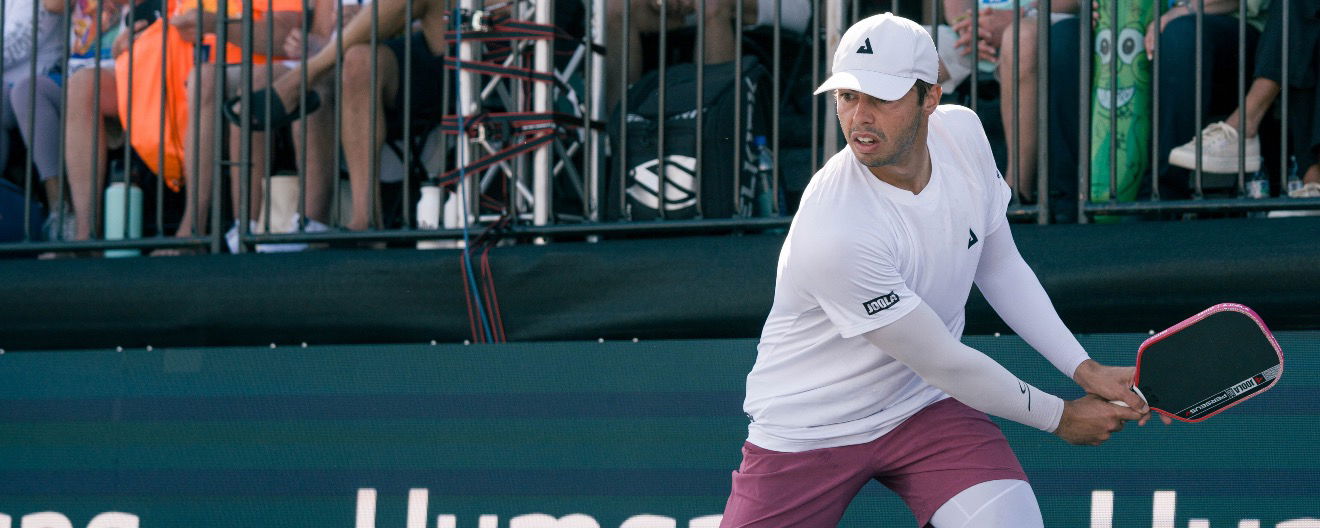
The PPA Tour quickly moves from Cape Coral, Florida across the country to Mesa, Arizona for the Carvana Mesa Cup beginning Monday. The Mesa stop traditionally gives us some of the largest crowds to watch pro pickleball, and ticket sales indicate 2026 will be no different. Expect standing room only crowds with all the top players competing.
1. Ben Johns is back for singles
After skipping singles at the first couple 2026 tournaments, Ben Johns returns to the singles court in Mesa. He has dropped all the way to a #10 seed, although he does have a pretty good draw. If you want to see Johns play singles, Mesa is the time to do it, as I believe he will retire from singles within the year. The singles game has changed a lot in the last year, and the new power style does not fit Johns’ play style. He still has great skills, and thus a run to a medal is possible, but unlikely.
The top spot goes to Hunter Johnson, whose play style exactly fits with the current power game. But he faces a likely Round of 32 matchup with teenage phenom Tama Shimabukuro. I would not say an upset is likely, but if it happens, it will not be a big surprise. That is a must-see early round matchup.
Speaking of teenage phenoms, the best match in the Round of 64 features #51 Cam Chaffin (14 years old) against #11 John Lucian Goins (age 17). Chaffin recently defeated Federico Staksrud, showing off his potential. Goins is a two-time gold medal winner. Talk about a Round of 64 match that you have to see!
The rest of the draw is stacked with talent, including #2 Federico Staksrud, #3 Christian Alshon, and #4 Chris Haworth. Haworth had to pull out of Cape Coral due to illness. If he is back to 100%, he will be looking to prove he is the best singles player in the world. Also watch out for #7 Jack Sock. Sock has a good draw and should be rested after skipping Cape Coral.
2. Can anyone beat ALW?
Anna Leigh Waters guns for yet another Triple Crown and will start as the #1 seed in singles. She faces the usual suspects, such as #2 Kate Fahey, #3 Kaitlyn Christian, #4 Brooke Buckner, and #5 Lea Jansen.
One rising star to watch is #18 Kiora Kunimoto. She has been beating a number of solid veteran players recently on her way to making the quarterfinals of a couple of tournaments. It is only a matter of time before she breaks through with a trip to a Sunday medal match. In Mesa, she will start with a matchup of teenagers when she takes on #44 Ella Cosma in the Round of 64. Kunimoto’s biggest obstacle to making a medal run in Mesa is that she would have to play Waters in the quarterfinals, a matchup that is not likely to end with a win for Kunimoto.
Waters is just so dominant in singles that I rate her as a 60-40 favorite to go undefeated in 2026. Waters has a good draw in Mesa, and I only see the final as her likely challenge against Fahey, Buckner, or Jansen.
3. Waters/Johns remain the mixed team to beat
Cape Coral is ongoing at the time of this writing, and Waters/Johns look their usual dominant selves in Florida. They get the top seed, of course, in Mesa. Their main competition in the top half of the draw is likely to come from either #4 Tyra Black/Andrei Daescu or #5 Rachel Rohrabacher/Christian Alshon. Black and Alshon recently ended their long-time successful partnership. Black is an excellent player, but playing right side in mixed is not her strongest play. A quarterfinal matchup between those #4 and #5 seeds should be an excellent match.
In the bottom half of the draw, Jorja and JW Johnson get the #2 seed. If they get to the final, they have been the one team to present the toughest challenge for the top seed. But, they will have to get past #3 Anna Bright/Hayden Patriquin.
One sneaky good team to watch out for is the #11 seed Alix and Jonathan Truong. They have a very favorable draw, and a run to at least the quarterfinals will not be surprising. Another pair capable of an upset is #12 Meghan Dizon/Eric Oncins. Oncins and Jackie Kawamoto won a game off Waters/Johns in Cape Coral. Oncins has a very high ceiling and can play big enough to threaten any team. Dizon has also been very steady the last six months.
4. Will the Big Four all make the semifinals in men’s doubles?
Men’s doubles has been dominated for the last year by eight players, forming four teams. Some of the teams have changed in 2026, but those same eight players keep making the semifinals in every tournament so far. At Mesa, #1 is Gabe Tardio/Ben Johns, #2 is Hayden Patriquin/Christian Alshon, #3 is Andrei Daescu/Federico Staksrud, and #4 is CJ Klinger/JW Johnson. Mesa will again present the question of whether any other team can break the semifinal monopoly?
The #5 seed is Eric Oncins and Dylan Frazier, and they remain the most likely team to break though. Oncins has cemented himself as a top 10 player. Frazier is back to playing a steady right side, which fits his skill set the best. But is it enough to topple a Big Four team?
The men's doubles draw is filled with interesting early round matches. #34 Luc Pham/Tama Shimabukuro will likely face #4 Klinger/Johnson. Shimabakuro has been looking like he is destined for greatness, but he is lacking that initial breakthrough win that gets him really noticed. Could this be the week?
For a longshot, watch #19 AJ Koller/Yuta Funemizu. They have a good draw and are both capable of high-end play. Koller plays a quirky left side, tossing in far more lobs than the average player. Funemizu has an odd style on the right side, and the role of right side defensive player fits him very well.
5. Waters/Bright is the team to beat in women’s doubles
After a couple of losses in 2025, Anna Leigh Waters and Anna Bright have returned to form in 2026, going without a loss so far. They have a good draw in Mesa, with neither of their top rivals on their side of the draw. The Kawamoto sisters are sitting out Mesa, while #2 Tyra Black/Jorja Johnson are on the other side of the draw. The highest other seed in the top half of the draw is #4 Parris Todd/Kate Fahey, a team not likely to be much of a threat, as both Todd and Fahey are best on the right side. #6 Tina Pisnik/Lacy Schneemann may well take down Todd/Fahey.
In the bottom half of the draw, challenging Black/Johnson will be #3 Rachel Rohrabacher/Catherine Parenteau. Rohrabacher and Parenteau have melded well together, better than I had expected. They have combined solid defense, with good counterattacks. They will present Black/Johnson with a real test.
For a really fun early match to watch, check out the Round of 32 match between #16 Jalina Ingram/Christa Gecheva and #22 Elsie Hendershot/Lina Padegimaite. Ingram is 18 and improving, while Hendershot is only 12. Hendershot in particular shows a very advanced skill set; she will add more power as she gets older. Hendershot is going to be a top 5 player in time, you can book that one.
6. Final thoughts and predictions
Phoenix is the 6th largest city in the country, and the Phoenix Metro area has more pickleball players than any other metro area. Local pickleball clubs with 1,000+ members are common. This ensures huge crowds every time the PPA Tour comes to the Phoenix area. Expect a sold out Humana Championship Court that will be rocking with every match.
Rather than predict winners, this time around I will instead pick one person/pair in each event that is a lower seed that I believe can upset their way into the quarterfinal eight.
Women’s singles: #18 Kiora Kunimoto
Men’s singles: Let’s go with a really fun one and pick #32 Tama Shimabukuro to upset Hunter Johnson and make the quarters
Mixed doubles: #11 Alix and Jonathan Truong
Men’s doubles: #19 AJ Koller/Yuta Funemizu
Women’s doubles: #9 Callie Smith/Lea Jansen
Hope to see you all in Mesa, if not, as always, you can watch it all on Pickleballtv.
Follow me on X @pickleball_jim for updates.
Related articles
Lacy Schneemann talks Texas roots on Pickleballers Podcast
From rodeos to aerospace engineering, Lacy has one of the coolest backstories in pro pickleball.
1 day ago
-Victoria Radnothy
The pros are going on the best side quests in Asia
From celebrating fake birthdays to ancient Chinese rituals, the pros are having a lot of fun abroad.
2 days ago
-Victoria Radnothy
What makes Ben Johns so good at pickleball?
Zane Navratil breaks down the G.O.A.T.'s game to identify exactly what makes Ben Johns so tough to beat.
2 days ago
-Pickleball.com Staff

Ready for her close-up: Anna Leigh Waters partners with L'Oreal Paris
ALW is only getting more iconic.
3 days ago
-Victoria Radnothy