
Highlights from Days 1 and 2 of the Rate Championships presented by Skechers
Jim Kloss
Oct 12 2024 1:30 PM ET
Singles and mixed doubles are in the books at the Rate Championships presented by Skechers, the latest stop on the PPA Tour. It is still warm in Las Vegas in October, and singles saw a number of withdrawals, as well as upsets. Mixed doubles returned to form, with the top seeds dominating. As always, there were a number of highlights to point out.
1. The time out of the year
One of the best tips for tournament play is to use your time outs. You can’t take them with you when the match is over, so make good use of them during the match. In a mixed match between Lea Jansen/Jack Sock v Jessie Irvine/Gabe Tardio, we saw a perfect example of how a timeout can change a match. In game one, Irvine/Tardio were dominating. They lead 8-1, and the match was not as close as the score may indicate. Lea Jansen called a timeout, and it turned into a medical timeout. The match was delayed by about 15 minutes. After the timeout, Jansen/Sock came back to win game one 11-9, and went on to win in three games. Without that timeout, it is highly unlikely Jansen/Sock win game one or the match. Jansen wins for timeout of the year, even with two months left in 2024.
2. Referee discretion is a good thing
The rules are the rules, but having some flexibility is also a good thing. During a singles match between Federico Staksrud and Connor Garnett, a dispute arose relating to a line call and the replay review. Staksrud had already incurred a technical warning, so when he received another technical, it resulted in a point penalty. Staksrud requested the head referee come to the court, which any player has the right to do, requesting a review of the on-court referee’s call. But, that request is not without consequences. If the head referee determines the in-court call was correct, another technical is assessed. If the player has a time out left, they would lose it, for example. But, as Staskrud was out of time outs, appealing to the head referee would result in a disqualification. So, when head referee Don Stanley got to the court, instead of just making a ruling, he first asked Staskrud if he wanted a ruling, explaining the consequences. When Staksrud understood he could be disqualified, he withdrew his objection. Stanley could have just made a ruling and enforced the letter of the rule, but instead he exercised some discretion and a great match played on to an 11-9 score in game three. Rules are there for a purpose, and we should follow the rules, but a little discretion at the right time is a good thing and a smart decision by Don Stanley allowed a great match to finish where it should; on the court.
3. The continued rise of the twoey
I have written before about how the two-handed backhand is becoming more prevalent. It is a shot that was almost unknown five years ago; today is a used by many players. We see that with just about every match. Ben Johns and Federico Staksrud are examples of top players who used to hit all backhands with one hand, who now will employ the twoey at times. Where will the trend lead? More on this in a future column. For now, watch the matches and see how often the twoey is used and how it is used.
For now, back to the courts and men’s and women’s doubles.
Follow me on Twitter/X @pickleball_jim.
Related articles

In defense of the new PPA start times
Late-night matches have frustrated some fans, but the shift serves a bigger purpose.
9 hours ago
-Victoria Radnothy
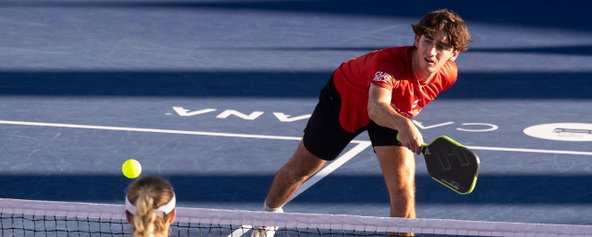
Gabe Tardio: From family backyard games to pro pickleball
His journey has been remarkable, but in many ways, it feels like he’s only getting started.
1 day ago
-Victoria Radnothy
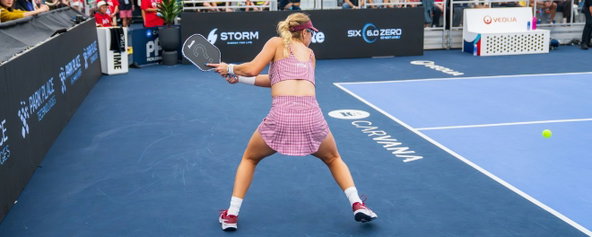
Best dressed at the Veolia Chicago Cup
The fashion competition was fierce in the Windy City.
1 day ago
-Victoria Radnothy
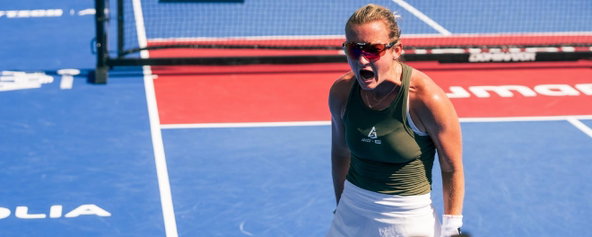
The time has come for PPA to adopt an anti-taunting rule
Constant or frequent screaming does nothing to improve or help the game.
1 day ago
-Jim Kloss