The time has come for PPA to adopt an anti-taunting rule
Jim Kloss
Oct 14 2026 11:30 AM ET
Unsportsmanlike conduct is a common penalty in sports. The UPA official rule book does not include a definition of unsportsmanlike conduct, but Rule 12.3.2 does include certain limited behaviors as constituting unsportsmanlike conduct. The only penalty currently provided for unsportsmanlike conduct is a mark; no warnings, no loss of a timeout or challenge, simply the significant penalty of a mark, and only for certain very limited behaviors.
Taunting, be it verbal or by gesture, is not a prohibited term under UPA rules. Taunting is considered any verbalization or gesture which has a goal of provoking a reaction from an opponent. Often, it takes the form of jeering or an insulting remark.
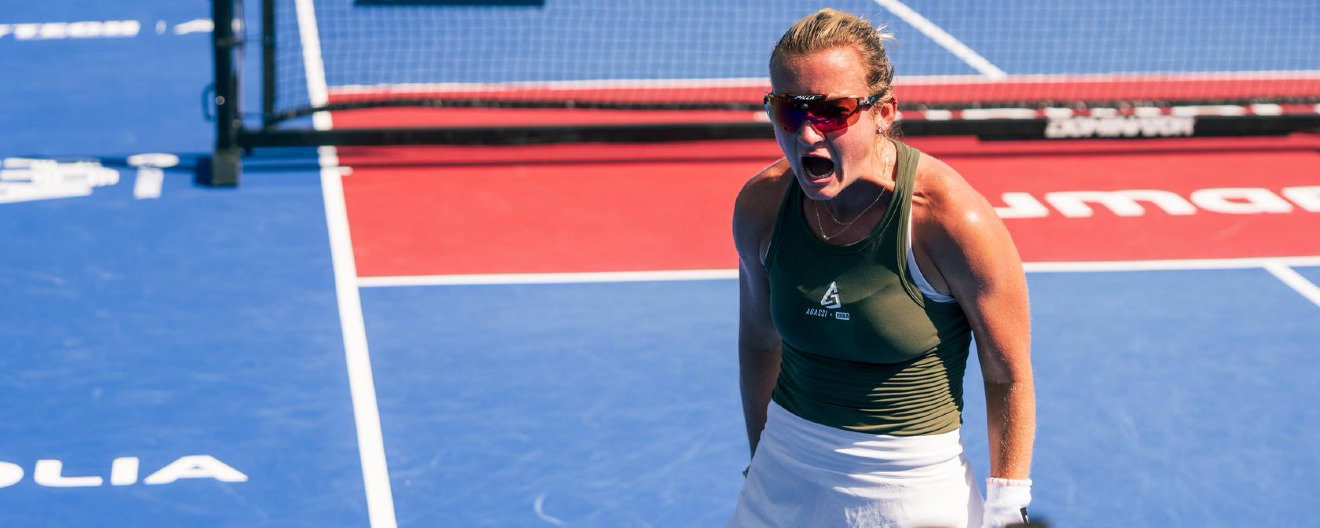
We have recently seen, unfortunately, the growth in pickleball of sounds or gestures that could reasonably be seen as constituting taunting. This has taken the form of loud screams, often without any articulable words behind them, sometimes including a gesture such as leaning at or walking toward an opponent. Victims of this type of taunting have reacted in various ways, such as by screaming back, commenting on the negative behavior, or failing to tap paddles at the end of a match. Many fans comment on the behavior, often by citing it as a reason to want to turn the sound off on the TV.
A good recent example is from the PPA Chicago Cup. Genie Bouchard was playing Maria Ford in singles. Bouchard won the first game, but during the second and third games, Ford kept up a near constant stream of screams basically after every point. The screams did not include any words, and were sometimes directed toward Bouchard, but more often just into the ether. No penalty of any kind was assessed, but Bouchard was clearly rattled by the behavior. Ford went on to win the match, but Bouchard refused to tap paddles at the end.
Was Ford’s behavior something that went too far? If it did, did it get to the point where we need a rule against such behavior? I would assert the answers are clearly yes. The behavior was clearly unprofessional by any reasonable standard and made the sport look silly at best. Various sports outlaw such behavior, so it is hardly groundbreaking to suggest UPA adopt a rule on taunting.
In the NFL, there are clear rules against unsportsmanlike behavior, including taunting. The rules all provide guidelines, with the officials having discretionary authority of when to apply the rules. The conduct is one that we all know it when we see it, so any rule just needs to set guidelines, leaving it to the referees to patrol the matches.
Here is language for a suggested rule: Unsportsmanlike conduct: Taunting
Players shall not engage in excessive and/or inappropriate gestures, yells, screams, or other sounds which are inconsistent with the play, are unsportsmanlike, and thus detrimental to the sport. To determine if the sound or gesture constitutes taunting, a referee shall look at the following factors: (1) the frequency of the sound or gesture; (2) the decibel level of the sound; (3) whether the sound or gesture appears specifically directed at the opponent(s); (4) whether the sound consists of articulated words or is merely an unarticulated noise: (5) whether the sound or gesture follows a missed shot or other error by the opponent(s), and/or, (6) whether profanity or other negatively charged language is used or implied.
If the referee believes that the sound or gesture is unsportsmanlike, the referee shall issue a warning of the infraction. Any infraction shall carry forward throughout the match. A second infraction shall result in loss of a timeout to the offender or, if they do not have a timeout, then loss of a challenge. If no timeout or challenge is possessed at time of infraction, then a mark shall be issued. If a mark had previously been issued, when an infraction occurs, the penalties shall escalate the same as for any other infraction occurring when a mark was already in place.
As you can see from the proposed rule, the referees are provided discretion, just as they are in the NFL with their taunting rule. NFL officials have to use their judgment all the time on similar penalties; such as when a sack uses “excessive force” or when holding involves “materially” restricting an opponent’s movement. And, like the NFL, UPA could at the beginning of the year meet with all referees to discuss when conduct constitutes taunting and what conduct should not be penalized. The rule also provides for the very limited sanction of a warning on a first offense, just like for serving too high. The one warning should be more than sufficient to stop the behavior, and a warning has no effect on the match.
The rule itself distinguishes between proper displays of emotion and improper ones. For example, people will cite when Anna Leigh Waters yells. But, as we all know, she only does so very occasionally, she does not direct the yell at any opponent, and she specifically says “fight” or something similar. No reasonable person sees that as taunting, and the rule very clearly states it does not constitute taunting. Contrast that with the screams we hear from Kate Fahey or Maria Ford. Ford does it constantly. They are inarticulate yells. Fahey leans toward her opponent, often at the kitchen line. Both will do it after an opponent’s missed shot. Anyone who would conflate what Waters does with what Fahey or Ford do is being disingenuous at best.
Constant or frequent screaming does nothing to improve or help the game. At best, it is gamesmanship, designed to rattle an opponent. It has no redeeming qualities. Eliminating the screaming from pro pickleball will improve the fan experience; no one will lament its demise. Let’s do it.
Follow me on X @pickleball_jim.
Related articles
Best dressed at the Veolia Chicago Cup
The fashion competition was fierce in the Windy City.
2 hours ago
-Victoria Radnothy
Mojo Energy Pouches Virginia Beach Open: Everything you need to know
With several star players heading overseas, a big opportunity awaits for other players to claim a title.
23 hours ago
-Pickleball.com Staff
Virginia Beach features wide open draws
No Anna Leigh Waters and no Ben Johns means it is anyone’s tournament to make a mark.
2 days ago
-Jim Kloss
Anna Leigh Waters notches 200th title at Veolia Chicago Cup
The milestones just keep piling up for the young superstar.
2 days ago
-Jim Kloss