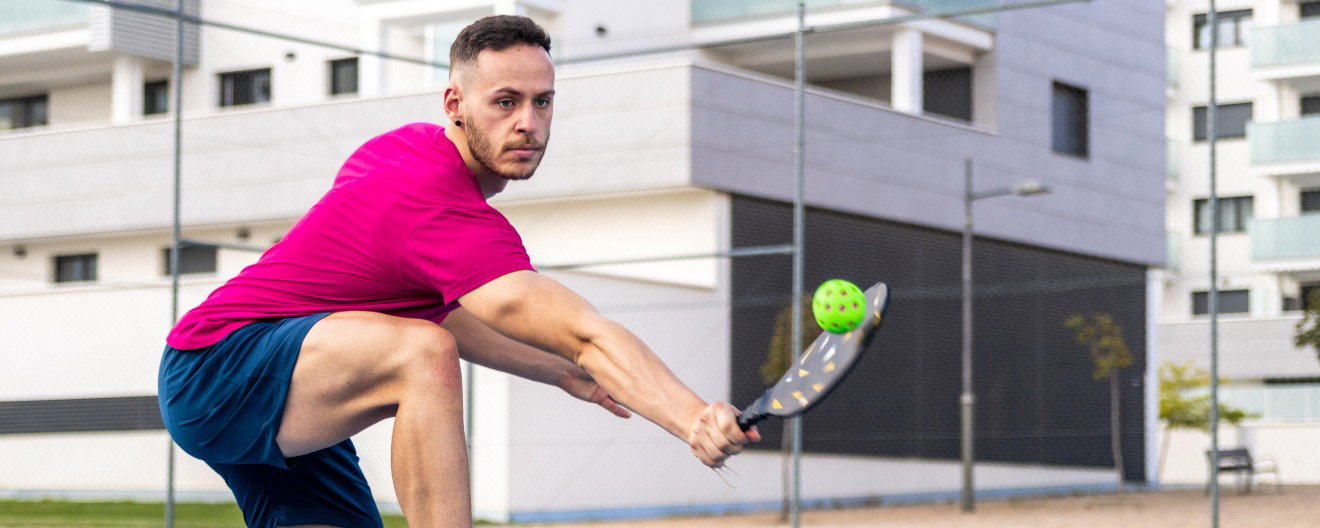
Improving your pickleball game comes down to mastering fundamentals, making smarter shot decisions, and learning when to play patiently versus aggressively. By developing skills like purposeful dinking, reliable drop shots, strategic placement, and reading your opponent’s paddle, you can control rallies more effectively and win more points.
What Does It Mean to Improve Your Pickleball Strategy?
Taking your pickleball game to the next level means moving beyond simply hitting the ball and beginning to play with intention and strategy.
Many players eventually realize that success in pickleball depends on:
• Shot selection
• Court positioning
• Patience during rallies
• Reading opponents
• Consistent execution of fundamental skills
Instead of relying purely on power, experienced players focus on controlling the pace of the rally and forcing opponents into mistakes.
Strategic play often separates casual players from competitive ones.
How Can You Improve Your Pickleball Skills?
Developing stronger pickleball skills requires a combination of technical training and tactical awareness.
Step 1: Learn to Dink with Purpose
Dinking is one of the most important skills in pickleball.
Rather than simply tapping the ball over the net, effective dinking involves:
• Control and patience
• Strategic placement
• Creating attack opportunities
Practice both:
• Cross-court dinks (which provide a larger margin for error)
• Straight-on dinks (which can surprise opponents)
The goal is to keep the ball low and difficult to attack while setting up your next shot.
Step 2: Practice Patience During Rallies
Many points are won by the player who waits for the right opportunity.
Strong players understand that:
• Not every rally needs to end quickly
• Extended dink exchanges can create pressure
• Opponents often make mistakes during longer rallies
Being willing to reset and maintain control often leads to better attacking chances later in the point.
Step 3: Change Pace Between Soft and Hard Shots
Pickleball strategy often revolves around changing the pace of play.
Players should learn when to:
• Slow the rally down with dinks or drop shots
• Speed it up with drives or putaways
A helpful guideline is:
• If the ball is high and you are balanced, attack aggressively
• If the ball is low or you are off-balance, reset with a softer shot
This balance helps reduce unforced errors.
Step 4: Avoid Forcing Winning Shots
Trying to hit a winner too early often leads to mistakes.
Instead:
• Wait for a clearly attackable ball
• Maintain control during neutral rallies
• Strike only when you are in a strong position
Disciplined players win more points by waiting for the right opportunity.
Step 5: Watch the Paddle, Not Just the Ball
Anticipation is a powerful skill in pickleball.
Rather than focusing only on the ball, watch your opponent’s paddle and body positioning.
You can often predict:
• Shot direction
• Ball speed
• Whether a drive, dink, or lob is coming
Recognizing these cues helps you react faster and position yourself correctly.
Why Is Shot Placement More Important Than Power?
Precise placement often wins more points than powerful shots.
Two highly effective targets include:
• The opponent’s feet
• The opponent’s weaker side (often the backhand)
Shots aimed at the feet are especially difficult to return cleanly and frequently produce high balls that can be attacked.
Testing both sides of your opponent helps identify weaknesses you can exploit.
What Are the Key Skills Advanced Players Develop?
Several advanced skills dramatically improve competitive play.
Reliable third-shot drop
A well-executed third-shot drop allows you to move from the baseline to the non-volley zone while neutralizing aggressive opponents.
A strong drop shot should:
• Clear the net by only a few inches
• Land in or near the kitchen
• Give you time to advance to the net
Pattern recognition
Skilled players identify patterns in their opponents’ habits, such as predictable serves or consistent shot placement.
Recognizing patterns allows you to anticipate and counter those tendencies.
Balanced positioning
Stopping and setting your feet before hitting improves accuracy and consistency.
When you are balanced:
• You maintain better control
• You react faster
• You reduce unforced errors
Common Questions About Improving Your Pickleball Game
What is the most important skill for intermediate players?
Dinking and soft control shots are often the most important skills because they help control rallies and create attack opportunities.
How can I improve my reaction time?
Watch your opponent’s paddle and body positioning rather than just the ball. Anticipating shots improves reaction speed significantly.
Should I practice only my strengths?
No. Practicing your weaknesses—such as backhand returns, low balls, or defensive resets—helps you become a more complete player.
Why do experienced players hit fewer hard shots?
Experienced players understand that forcing power often leads to errors. Strategic placement and patience are usually more effective.
Key Takeaways
• Strategic play is more important than raw power in pickleball.
• Purposeful dinking helps control rallies and create scoring opportunities.
• Patience during points often leads to opponent mistakes.
• Shot placement—especially at the feet or weak side—is highly effective.
• Anticipation and pattern recognition improve defensive positioning.
Ready to Put These Tips Into Action?
Find local competitive events near you and start testing your skills on the court.
Visit Pickleball.com to discover leagues, tournaments, and open play opportunities near you. Whether you're looking for casual competition or serious improvement, there’s a match waiting for you.