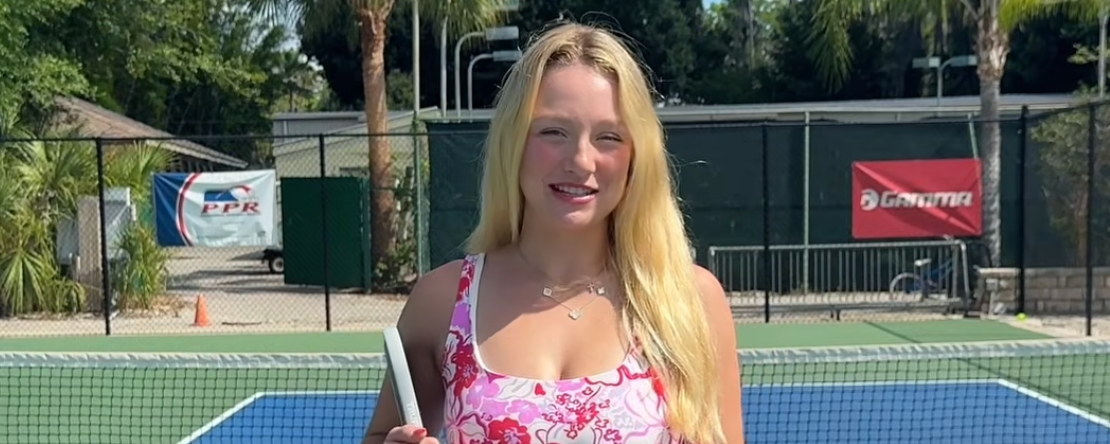
Ashley Griffith reveals 10 pickleball tips to improve faster, without hitting harder
As more players look to level up their pickleball game, Ashley Griffith is offering a reality check: improvement isn’t about power, it’s about control.
Griffith recently shared “10 Things I Wish I Knew When I Started Pickleball” specifically for those individuals stuck between the 3.0 and 4.5 levels.
“When I first started playing pickleball, I honestly thought getting better was about hitting harder, speeding everything up, and trying to win every point immediately,” she said. “After becoming a professional pickleball player, I realized I had so much to learn.”
Why top players “make the game look boring”
One of Griffith’s biggest takeaways is a shift in mindset. At the highest levels, winning doesn’t come from flashy play.
“One of the biggest things I realized after playing professional pickleball is that really good players make the game look boring,” she mentioned. “They're not forcing speed-ups every ball or trying to hit a highlight shot every point. They stay disciplined, make smart decisions, reset well, and break other teams down. And honestly, that's what wins.”
Slowing down is the key to improvement
Rather than speeding up play, Griffith emphasizes the importance of control and patience.
“A lot of improvement in pickleball comes from slowing the game down,” she insisted. “Soft resets, controlled drops, and being able to absorb pace are way more valuable than just trying to hit the ball harder.”
The importance of the transition zone
Griffith also highlighted a commonly overlooked part of the court: the transition zone.
“Most rec players either rush through the transition zone or panic when they're stuck there, but higher level players know how important resets and neutralizing are from this area,” she noted. “If you can survive the transition zone, your level is going to jump fast.”
Fundamentals still matter most
While many players prefer practicing aggressive shots, Griffith pointed to the basics as the true separator.
“Everyone wants to practice hands battles and hitting hard. Nobody wants to practice resets, drops, footwork, or consistency,” she said. “But the boring fundamentals are actually what separates good players from great players.”
Footwork over fast hands
Another misconception? Players often blame slow hands instead of poor positioning.
“A lot of players think they need faster hands, but they really just have bad positioning,” Griffith emphasized. “If your feet are late, everything feels rushed.”
The mental side of pickleball
Griffith also stressed the importance of mindset, including staying relaxed and avoiding perfectionism.
“You don't have to hit the perfect shot every rally,” she said. “A lot of players lose points because they force too much rather than trying to stay solid and just make one more ball.”
Griffith added that tension can quickly derail performance.
“When I get tight, my game gets worse instantly. Tension affects everything. Your grip pressure, your drops, your resets, and your control,” she noted. “The looser and more relaxed you can stay, the better that you're going to play and feel.”
Confidence and competition
Confidence, especially in doubles, is another key factor.
“If you hesitate, second guess yourself, or play scared, your opponent can feel that immediately,” she Griffith.
She also encouraged players to seek out tougher competition.
“Playing better players exposes your weaknesses and really helps you see the areas of your game that you need to improve,” explained Griffith. “It's uncomfortable and can be a little frustrating, but it's definitely one of the fastest ways to improve.”
Why filming your matches matters
Finally, Griffith recommended reviewing your own play to accelerate improvement.
“What you think you're doing on court is actually a lot different than what's happening,” she said. “So, filming yourself, reviewing the matches, and seeing what's really going on is super, super helpful.”
A simpler formula for getting better
For players chasing improvement, Griffith’s message is clear: focus less on power and more on discipline.
“Honestly, becoming a better pickleball player has a lot less to do with hitting hard and hitting flashy shot and way more to do with discipline, consistency, patience, and making smart decisions,” she concluded.
In a sport that continues to grow rapidly, that advice may be exactly what players need to hear.
Related articles
Five pickleball tips to improve your game from beginner to 4.0
Coach Jess breaks down concepts that can help players win more points, improve consistency, and avoid common mistakes on the court.
6 hours ago
-Pickleball.com Staff
How to completely change your pickleball serve in 10 minutes
A few simple adjustments could help you add power, improve accuracy and eliminate the yips.
6 days ago
-Pickleball.com Staff
.png?width=592&height=237&optimizer=image)
Five ways to elevate your dink game like a pro
These strategies can help you make smarter decisions and gain the upper hand in kitchen line battles.
6 days ago
-Pickleball.com Staff
Five mindset shifts every pickleball player should know
Michael Lloyd shares lessons that changed the way he approaches the game, from redefining aggression to letting the ball dictate every shot.
7 days ago
-Pickleball.com Staff