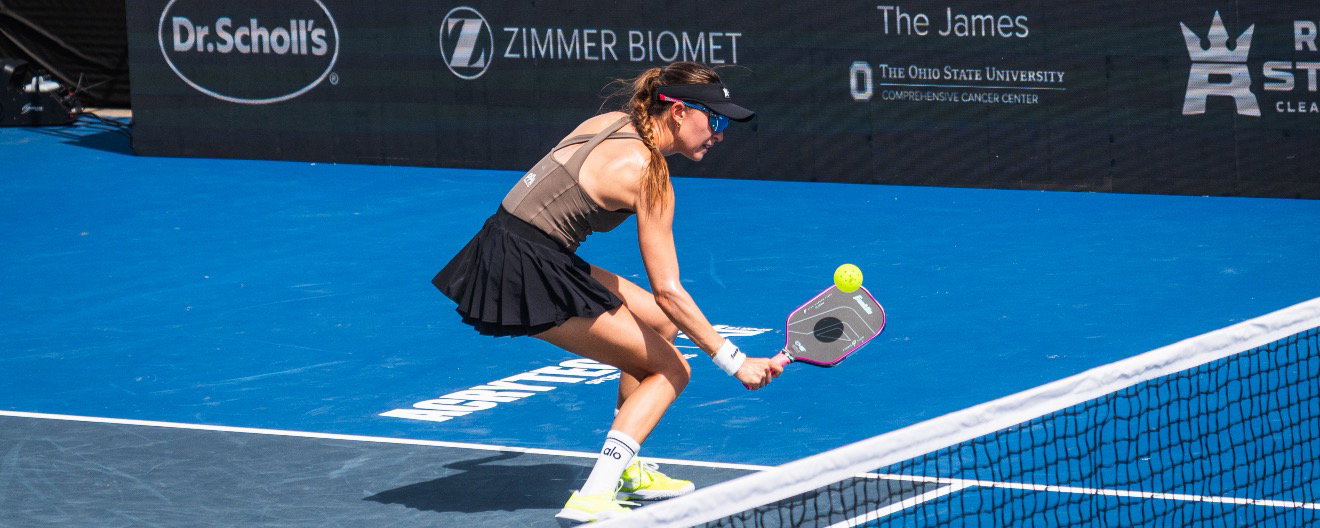
Parris Todd: How to dink in pickleball (without overthinking it)
If you’re serious about improving in pickleball, sooner or later you run straight into the skill everyone talks about, but few actually master: the dink.
It’s not flashy. It’s not loud. It’s not the kind of shot that gets you clipped on social media. But it wins matches. And once you understand how to do it well and why it matters, everything else starts to settle down and you can start to trust your game.
Here’s a clean, honest breakdown of how to actually dink with purpose, control, and confidence.
Start with your stance: Low and balanced
The foundation of a good dink is simple: get low and stay balanced.
Bend your knees more than you think you need to. Keep your paddle out in front. Lean slightly forward, so your weight is ready to move.
If you’re upright or stiff, the ball controls you. When you’re low, you control the ball.
Use a short, calm stroke
Dinking is not a big swing. It’s not a drive. It’s not even half a swing.
Think compact:
• Minimal backswing
• Paddle face steady
• Contact slightly in front of your body
• Smooth follow-through, but small
A good dink feels almost like you’re pushing the ball or guiding it rather than hitting it. Soft hands matter here. The less tension you carry in your grip and shoulders, the more natural the shot becomes. You should really be holding the paddle at a 3/10 with your grip tightness.
Shape the ball over the net
A lot of players simply “tap” the ball, but great dinkers shape the ball.
Your goal is:
• Over the net with margin
• Landing in the kitchen
• Staying low on the opponent’s side
Aim for 6–12 inches over the net.
Move your feet, not your arms
Don’t reach. Move behind the ball with small, controlled steps.
Use cross-court dinks as your anchor
Cross-court gives you the longest distance and widest margin for error.
Stay patient and wait for the right ball
Dinking sets up the point. Wait for the pop-up.
Reset when needed
If you get pulled wide, stretched low, or out of position, reset.
Layer in depth and direction once you’re consistent
Add variety once the basics are automatic.
Don’t chase perfection
Great dinking isn’t glamorous, but it wins games.
Related articles
Five pickleball tips to improve your game from beginner to 4.0
Coach Jess breaks down concepts that can help players win more points, improve consistency, and avoid common mistakes on the court.
5 hours ago
-Pickleball.com Staff
How to completely change your pickleball serve in 10 minutes
A few simple adjustments could help you add power, improve accuracy and eliminate the yips.
6 days ago
-Pickleball.com Staff
.png?width=592&height=237&optimizer=image)
Five ways to elevate your dink game like a pro
These strategies can help you make smarter decisions and gain the upper hand in kitchen line battles.
6 days ago
-Pickleball.com Staff

Five mindset shifts every pickleball player should know
Michael Lloyd shares lessons that changed the way he approaches the game, from redefining aggression to letting the ball dictate every shot.
7 days ago
-Pickleball.com Staff