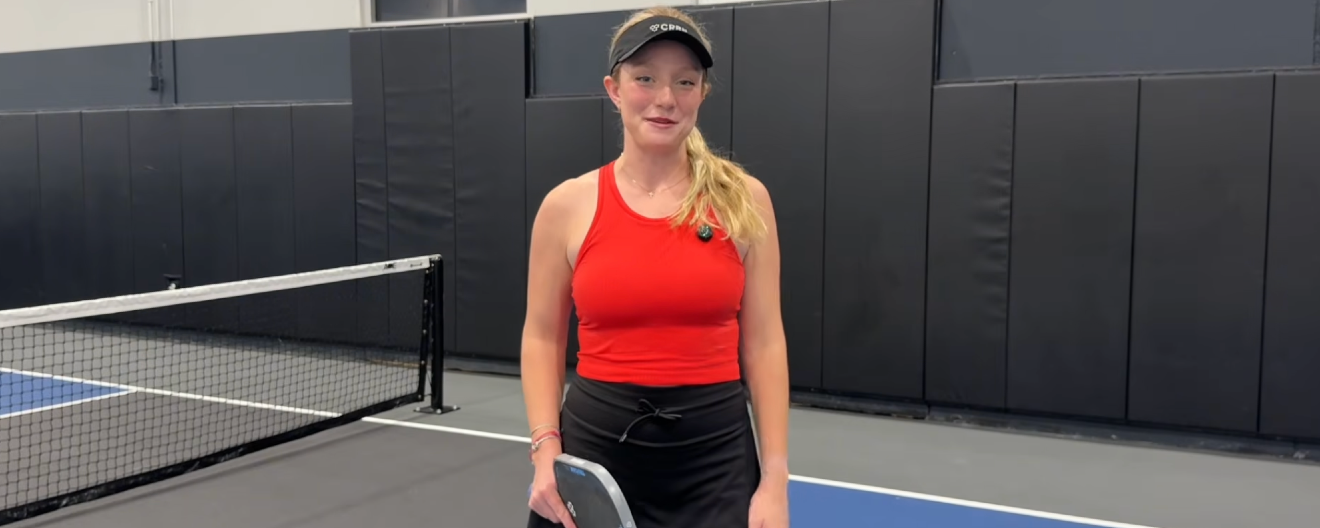
Five pickleball drills every player should master, according to a PPA pro
If a professional pickleball player could only practice five drills for the rest of their career, these would be the ones.
PPA Tour professional Ashley Griffith has narrowed down the drills she believes are the most effective for improving every part of your game—from soft touch and consistency to fast hands and competitive match situations.
Whether you’re a beginner looking to build a strong foundation or an experienced player trying to sharpen your skills, these drills are designed to help you become a more complete pickleball player.
1. The 100-Ball Dink Rally: Build Consistency and Control
The first drill focuses on one of the most important skills in pickleball: the dink.
The goal is simple: rally 100 consecutive dinks with a partner without making a mistake.
Players can perform this drill straight ahead or crosscourt, but the emphasis remains the same: control, patience, and consistency.
The goal is not to hit an aggressive shot or force a winner. Instead, players should focus on hitting a neutral dink that stays low, doesn’t pop up, and cannot easily be attacked.
This drill helps develop:
- Ball control
- Soft hands
- Patience during rallies
- Reliable dink technique
A consistent dink game is essential because not every point is won with an aggressive attack. Being able to repeat a quality shot over and over is what separates great players.
2. The Slinky Drill: Master the Transition Zone
The transition from the baseline to the kitchen line is one of the toughest parts of pickleball.
The slinky drill helps players improve their ability to move forward while hitting drops and resets.
Here’s how it works:
- One player starts at the kitchen line.
- The other player starts at the baseline.
- The baseline player slowly works their way forward using drops and resets.
- Once they reach the kitchen line, the other player works their way back.
Players continue switching roles, creating a back-and-forth movement pattern.
This drill teaches players how to:
- Reset difficult shots
- Hit controlled drops
- Move through the transition zone
- Stay patient while advancing
The key is not rushing. Players should focus on making quality shots from every position on the court.
3. Dead Dink Hands Drill: Improve Your Speed-Ups and Reaction Time
Pickleball can change in an instant when a dink turns into a hands battle.
The dead dink hands drill prepares players for those fast exchanges at the kitchen line.
To start:
- Two players exchange neutral dinks.
- One player intentionally hits a slightly higher “dead dink.”
- The other player attacks the ball.
- Both players then engage in a fast hands battle until someone wins the point.
This drill is competitive, fast-paced, and extremely useful for improving:
- Speed ups
- Reaction time
- Hand battles
- Finishing points at the net
Adding scoring to this drill can make it feel even more like a real match.
4. Figure Eight Drill: Develop Power, Movement, and Conditioning
The figure eight drill is designed to challenge both your physical and technical skills.
Players start at the baseline and rally crosscourt, but with a twist:
- One player hits every ball down the line.
- The other player hits every ball crosscourt.
- Players switch roles throughout the drill.
The result is a constant movement pattern that requires players to cover the court while maintaining quality shots.
This drill helps improve:
- Footwork
- Drive consistency
- Conditioning
- Singles movement
- Offensive ability
It’s also a great way to raise your heart rate while getting valuable repetitions.
5. The 7-Eleven Drill: The Ultimate Match Simulation
Ashley Griffith’s favorite drill is the 7-Eleven drill—and it’s the one she would choose if she only had 10 minutes to practice before a tournament.
The setup:
- One player starts at the kitchen line.
- One player starts at the baseline.
- The net player tries to score 11 points.
- The baseline player tries to score 7 points.
The point begins with a feed, and players compete until someone wins.
This drill creates realistic match pressure because each player has a different challenge.
The player at the net must:
- Stay aggressive
- Finish points
- Control attacks
The player at the baseline must:
- Work their way forward
- Use resets and drops
- Find a way to win from defense
The result is a competitive drill that mimics real match situations.
Improving at pickleball doesn’t always require complicated training. Sometimes, the best progress comes from consistently practicing the fundamentals.
From building a reliable dink to improving your hands and learning how to win points from different positions, these five drills cover every major part of the game.
Add them into your practice routine, and you’ll be on your way to becoming a more confident and complete pickleball player.
Related articles
Five pickleball tips to improve your game from beginner to 4.0
Coach Jess breaks down concepts that can help players win more points, improve consistency, and avoid common mistakes on the court.
9 hours ago
-Pickleball.com Staff
How to completely change your pickleball serve in 10 minutes
A few simple adjustments could help you add power, improve accuracy and eliminate the yips.
6 days ago
-Pickleball.com Staff
.png?width=592&height=237&optimizer=image)
Five ways to elevate your dink game like a pro
These strategies can help you make smarter decisions and gain the upper hand in kitchen line battles.
6 days ago
-Pickleball.com Staff
Five mindset shifts every pickleball player should know
Michael Lloyd shares lessons that changed the way he approaches the game, from redefining aggression to letting the ball dictate every shot.
7 days ago
-Pickleball.com Staff