Five mindset shifts every pickleball player should know
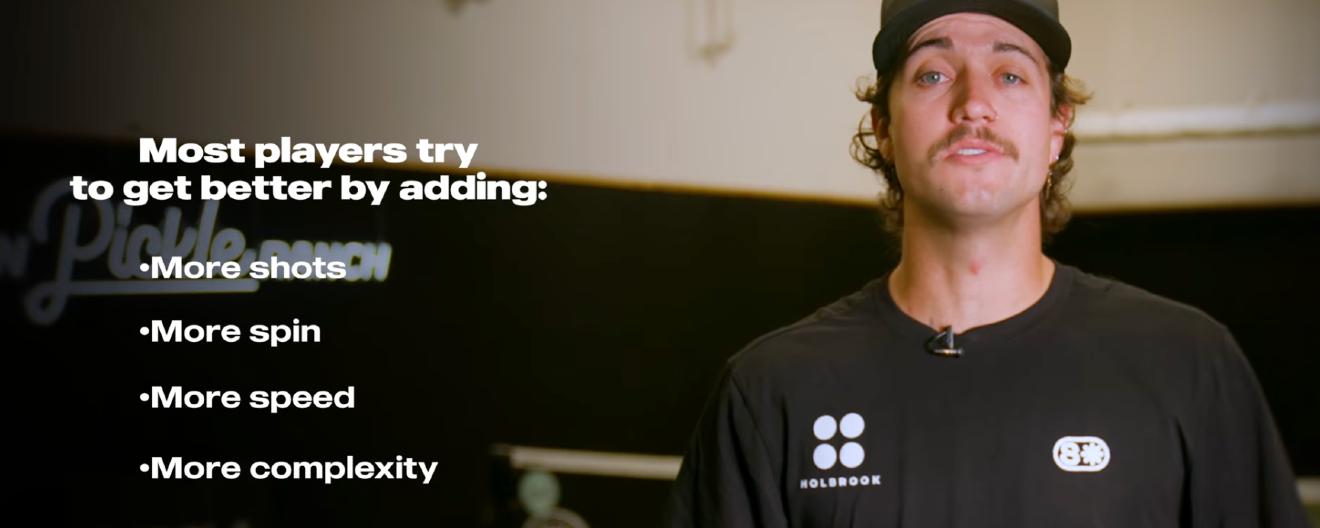
Getting better at pickleball isn't always about adding another shot to your arsenal.
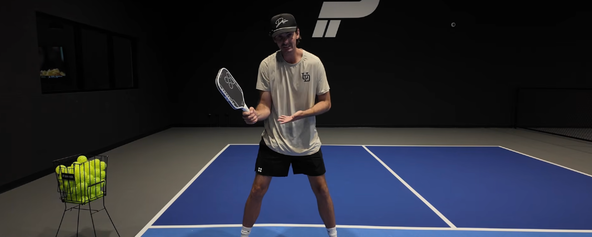
According to pro player and coach Michael Loyd, some of the biggest improvements come from changing the way you think about the game.
After years of competing, coaching and playing at a high level, Loyd identified five mindset and strategy shifts that changed the way he approaches pickleball.
These aren't necessarily new drills or techniques. Instead, they're frameworks that can help players make better decisions on the court.
Michael also gives the complete blueprint on how to reach the 5.0 level in his Pickleball Hub course available online.
1. Redefine what it means to be aggressive
Aggression in pickleball isn't simply about hitting the ball harder or speeding it up.
For Loyd, aggression is pressure.
That pressure can come from a well-placed third-shot drop, a deep return, court positioning, spin or simply moving an opponent around the court.
"If you speed up the wrong ball, you're not being aggressive, you're being reckless," Loyd explained.
One example is an aggressive third-shot drop. Rather than trying to hit the ball as hard as possible, Loyd focuses on placement, angles and spin to create pressure.
But the shot itself isn't enough.
After hitting an aggressive drop, players should look to close the distance and move forward. Staying back allows the opponent to recover and potentially regain control of the point.
The same concept applies to the return.
A hard return isn't necessarily an aggressive return if it isn't deep enough to put the opponent under pressure. Loyd instead emphasizes hitting a deep return and using it to move forward into an offensive position.
At the kitchen, aggression can also mean moving the ball around rather than immediately speeding it up.
Loyd recommends avoiding the same target twice in a row and using dinks to move opponents side to side. The goal is to keep them off balance, create gaps and eventually earn a popup that can be attacked.
Adding topspin can create even more pressure, but the bigger takeaway is simple: aggression is about creating pressure, not simply creating pace.
2. Humanize your opponent
One of Loyd's biggest mindset shifts is learning to see opponents as people rather than as an impenetrable wall.
Every player has strengths, weaknesses, preferences and tendencies.
Maybe an opponent has exceptional backhand counters. Maybe they struggle with low balls. Maybe they don't handle speed well. Maybe they are comfortable taking balls out of the air but struggle to defend a lob.
The key is to identify those patterns.
"If they're really good at hitting consistent forehand counters, maybe I need to switch it up and go to their backhand," Loyd said.
Rather than becoming frustrated when an opponent keeps making good shots, players should ask what else they can test.
This is particularly important in mixed doubles.
Instead of automatically targeting the woman because that's the traditional strategy many recreational players use, Loyd encourages players to evaluate both opponents.
If one player is consistently making excellent thirds, try exploring what the other player has to offer.
The same concept works when identifying an opponent's strengths.
If a player is exceptionally good at leaning forward and taking balls out of the air, perhaps they are less comfortable defending a lob behind them. If they're an excellent driver and banger, they may be less effective when forced to reset softer shots.
Don't just identify what your opponent does well. Look for the weakness that may exist on the other side of that strength.
And don't panic when an opponent gets hot.
Even if someone wins several points in a row, Loyd says players should remain patient and recognize that good stretches eventually come back down to earth.
3. Pay attention to the first five shots
Many players spend most of their attention on what happens at the kitchen line.
But Loyd believes a large portion of points are determined much earlier.
The sequence is simple:
Serve. Return. Third shot. Fourth shot. Fifth shot.
Those first five shots establish the tone of the rally.
A short serve can put you on defense. A weak return can give the serving team an easy path to the kitchen. A poor third shot can leave you stuck at the baseline.
That means players shouldn't overlook the importance of practicing the beginning of the point.
Loyd recommends spending more time working on serves, returns, thirds and transition shots rather than exclusively focusing on kitchen-line exchanges.
The fourth and fifth shots are especially important.
For the team hitting the fourth shot, the goal isn't necessarily to hit a winner. Instead, players should keep the ball difficult to attack and prevent the opponents from getting an easy path to the kitchen.
For the team hitting the fifth shot, the objective is to recognize whether there is an offensive opportunity or whether the priority is simply getting established at the kitchen.
Sometimes the right play is to stay neutral.
A deep return and defensive third may mean the fifth shot needs to be conservative as well. In that situation, trying to force an offensive play can make a difficult situation even worse.
The goal isn't to win the point with one of the first five shots. It's to use those shots to create a better position.
4. Let your practice evolve as you improve
The way a beginner practices shouldn't look the same as the way an advanced player practices.
Early on, players need repetition, consistency and basic ball control.
That means plenty of reps on fundamental shots such as dinks, drops, third-shot drives, serves and returns.
Once a player becomes more advanced, however, practice needs to become more realistic.
Instead of simply repeating the same shot over and over, players should introduce decision-making, pressure and live-ball situations.
Loyd demonstrated this progression with dinking.
A beginner might simply dink cooperatively with a partner, focusing on making as many balls as possible. As the player improves, the drill can become more dynamic, with players moving each other around the court.
Eventually, advanced players can introduce specific constraints and scenarios.
For example, one team might be allowed to speed up and attack while the other team is limited to countering and resetting. That creates a realistic situation in which players have to defend against an aggressive team.
The same philosophy can be applied to individual weaknesses.
If you're known for having a strong drive and aggressive speed-up, don't spend every practice session doing exactly what you're already good at.
Work on the inverse.
Practice your resets. Practice your counters. Practice your soft game.
And if those shots eventually become strengths, shift your focus again.
Your practice should evolve with your game, and it should constantly address the areas that need the most work.
5. Let the ball tell you what shot to hit
Perhaps Loyd's most important lesson is also one of the simplest:
Let the ball dictate your decision.
Players often decide what they're going to do before the ball even arrives.
"I'm speeding this up."
"I'm going down the line."
"I'm attacking this ball."
But the situation can change by the time the ball reaches you.
If the ball is high, you may have an opportunity to attack. If it's low, you may need to reset or play a neutral shot. If you're pushed wide and off balance, trying to hit an aggressive angle may be the worst possible decision.
"If you make up your mind before reading the ball, you're just guessing," Loyd said. "And guessing loses points. Reading wins them."
That means players need to constantly evaluate the ball they're receiving.
During a dink rally, Loyd recommends staying patient until an actual offensive opportunity presents itself. Rather than forcing an attack because you've decided it's "time" to speed up, wait for the right ball.
The same applies to returns.
A player might enter a point planning to return down the line, but a wide serve can make that shot significantly more difficult and risky. In that situation, the ball has provided new information, and the decision should change.
Loyd's approach is ultimately about becoming more adaptable.
Don't force the shot you wanted to hit. Hit the shot the situation gives you.
Think better, not just more
Improving at pickleball isn't always about adding more spin, more speed or more complicated shots.
Sometimes the biggest breakthrough comes from making better decisions with the shots you already have.
For Loyd, that means redefining aggression as pressure, recognizing the strengths and weaknesses of opponents, focusing on the first five shots, evolving practice as your skill level changes and allowing the ball to dictate your decisions.
The result isn't necessarily a simpler game.
But it can make the game clearer.
And that clarity can help players compete with more confidence and purpose.
Pickleball Hub features instructional courses from many of the top pros, including Ben Johns, Jack Munro, Michael Loyd, and John Cincola.
Related articles
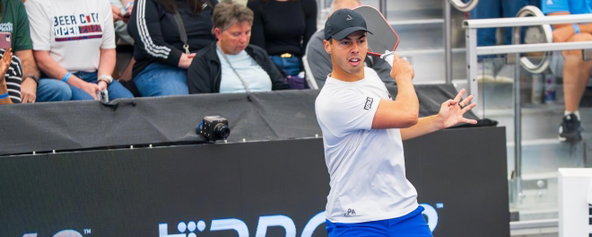
What makes Ben Johns so good at pickleball?
Zane Navratil breaks down the G.O.A.T.'s game to identify exactly what makes Ben Johns so tough to beat.
4 days ago
-Pickleball.com Staff
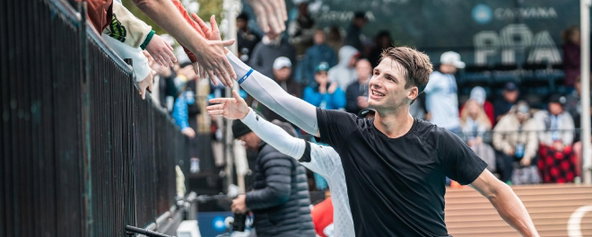
Who is Elliott Schupp? The next up-and-comer pickleball athlete you need to watch
He just won his first title on the PPA Tour, here's how he got there.
6 days ago
-Victoria Radnothy
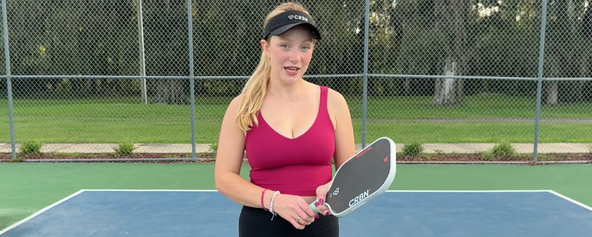
Five ways to add power and consistency to your pickleball drives
Ashley Griffith explains how better spacing, body rotation and topspin can help players attack with confidence without sacrificing control.
7 days ago
-Pickleball.com Staff
Five tips to improve your pickleball game quickly
Dr. Michael Oakson shares advice on ready position, kitchen line defense, serve returns, counterattacks, and targeting opponents’ weaknesses.
7 days ago
-Pickleball.com Staff