Winning the kitchen battle: pickleball tips to reach the next level
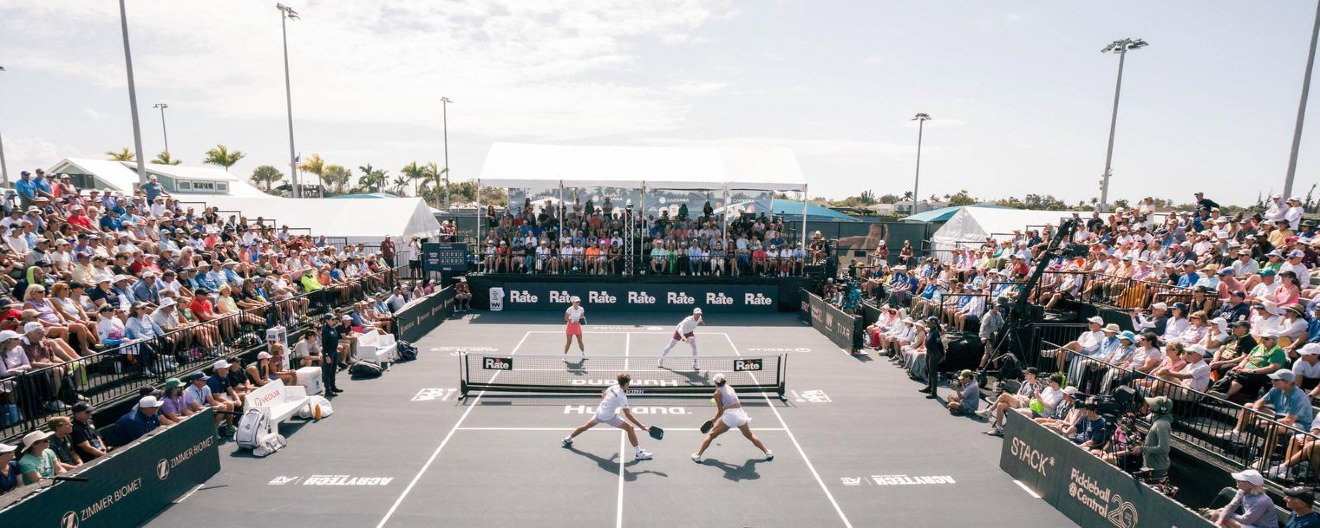
Improving your pickleball game requires more than developing a powerful serve or consistent groundstrokes. As players approach the 4.5 skill level, success increasingly depends on anticipation, efficient positioning, quick hands, and smart shot selection. In a recent coaching session, pro pickleball athlete Zane Navratil worked with a competitive rec player to improve their speed-up defense, kitchen-line positioning, and hybrid third shot.
The lesson highlighted several practical techniques that players of all skill levels can incorporate into their training.
1. Developing Better Speed-Up Defense
Most players' biggest challenge is anticipating opponents' speed-ups at the kitchen line. Rather than relying on instinct or guessing, Navratil recommended a repetition-based drill to develop pattern recognition.
The drill starts with one player feeding an easy dink. The other player then attempts speed-ups from different positions and angles. The defending player must recognize the attack, react, and continue the rally.
The objective is to experience these situations repeatedly until recognizing common patterns becomes more natural.
Navratil noted that most speed-ups still travel straight ahead, although crosscourt attacks are becoming increasingly common. Understanding these tendencies helps players prepare without becoming overly predictable.
2. Fixing the Chicken Wing Problem
A major focus of the lesson was a player’s tendency to get caught in the chicken wing position. This happens when a ball is directed toward the body, making it difficult to execute a clean forehand or backhand counter.
Players frequently default to their backhand, attempting to redirect the ball toward their opponent. However, this often produced weak counters that popped up and created opportunities for another attack.
Navratil introduced an alternative: instead of forcing the ball straight back, pull it crosscourt.
By sliding the body behind the ball and punching slightly across it, players can generate a more controlled counter without awkwardly maneuvering the paddle around their body.
This is primarily a recovery technique. Ideally, good anticipation prevents the chicken wing, but knowing how to escape it can save valuable points.
3. Creating a More Neutral Ready Position
Another important adjustment involves the ready position. For players who favor their backhand, it’s difficult for them to transition to their forehand.
Navratil recommended bringing the elbows closer to the sides of the body rather than keeping them extended outward.
This naturally encourages a more neutral paddle position and makes switching between forehand and backhand counters easier.
Players should still extend their arms when making contact. The key is returning to the compact ready position after each shot.
Although this will initially feel uncomfortable, players will quickly notice that switching to their forehand requires less movement and that he was more effective during extended hands battles.
4. Track the Ball Instead of Guessing
One of the most interesting tips involved visual concentration.
Players often try to predict an opponent's speed-up by reading paddle positioning. However, experienced players can disguise their intentions, making this approach unreliable.
Navratil suggested focusing on a specific detail of the ball, such as its logo or one of its holes.
Rather than simply telling yourself to watch the ball, give your eyes a specific target.
This encourages more concentrated tracking and prevents the mind from jumping ahead and guessing where the opponent will hit.
Players will immediately notice an improvement in their concentration. By focusing on a specific detail, they’ll feel better able to react to the incoming shot.
5. Mastering the Hybrid Third Shot
Now what about this new hybrid third shot called the drip?
The drip combines elements of a drive and a drop. It uses moderate pace to force opponents to hit upward from below net level, ideally landing three to four feet behind the kitchen line.
The most important technical adjustment is keeping the backswing compact. Players should prepare similarly to a drop but accelerate forward more like a drive.
This allows them to maintain control while moving through the shot and advancing toward the kitchen.
The hybrid is particularly effective when opponents are transitioning forward and have not yet established themselves at the kitchen line. It can also exploit opponents moving laterally across the court.
6. Practice with the 30-60-90 Drill
To develop consistency, Navratil introduced the 30-60-90 drill:
-
30%: A soft drop.
-
60%: A hybrid drip.
-
90%: A full drive.
Repeating this sequence teaches players to control paddle acceleration and vary their shot selection.
The hybrid is most effective when opponents are caught in transition. Against players already established at the kitchen line, a soft drop or powerful drive is generally the better option.
Final Thoughts
Reaching the next level in pickleball is often about improving small technical details rather than simply hitting harder. Better anticipation, neutral positioning, efficient counters, and focused ball tracking can transform a player's performance during hands battles.
Adding a well-timed hybrid third shot provides another offensive weapon.
Ultimately, deliberate practice is what turns these techniques into reliable skills that win points.
To keep up to date on all things pickleball, follow us on Instagram.
Related articles
The Yips: how Connor Garnett overcame his biggest mental hurdle on the court
"Sports is one of the truest forms of who you are. When you have insecurites, it comes out in sports," said Connor Garnett.
4 days ago
-Victoria Radnothy

The unspoken rules of pro pickleball: how to interact with the pros at tournaments
Zane Navratil shares his advice for meeting pro pickleball athletes on the PPA Tour.
14 days ago
-Pickleball.com Staff
Anna Bright is a weightlifter now and yes, it’s improving her game
AB is in her "muscle mommy era."
15 days ago
-Victoria Radnothy
Pickleball attacking combos: how to turn your first speed-up into a winning point
Top pro player, Roscoe Bellamy, shares a few tips.
16 days ago
-Pickleball.com Staff