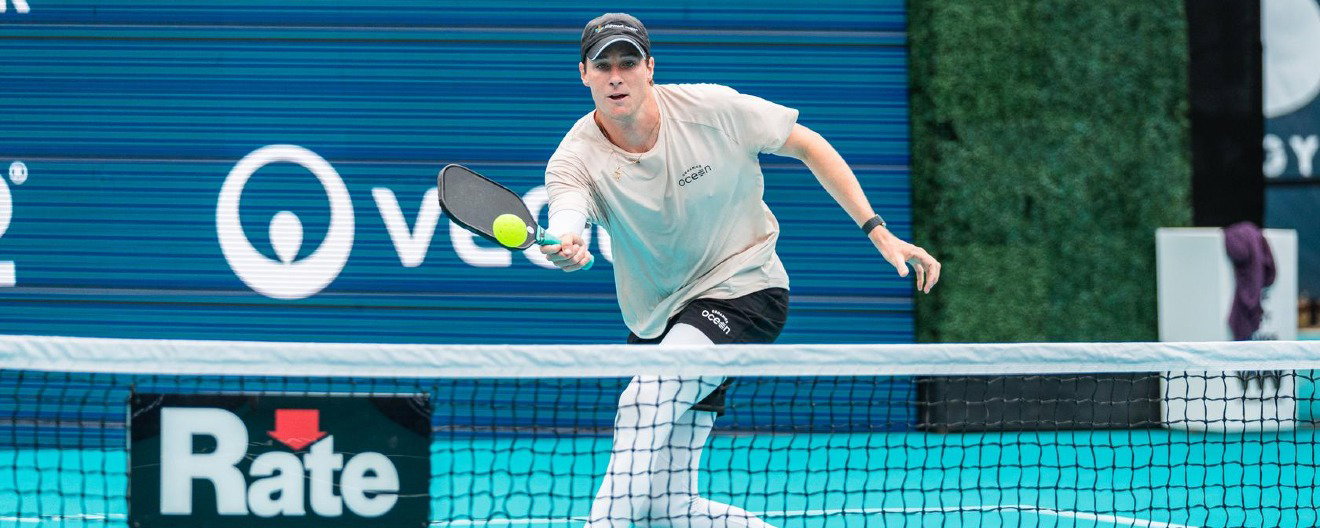
Pickleball attacking combos: how to turn your first speed-up into a winning point
In pickleball, many players believe winning an attacking exchange means hitting one powerful speed-up that their opponent cannot return. However, effective attackers know that the first shot does not always need to win the point. Instead, it should create an opportunity for the next shot. By learning to play attacking combinations, players can anticipate their opponents’ responses, maintain control, and finish points more consistently.
Top pro pickleball athlete, Roscoe Bellamy, broke this down in his latest video on YouTube.
1. Choose the Right Ball to Attack
Before attempting a speed-up, players must recognize whether they have a genuine attacking opportunity. Four factors help determine whether a ball is suitable for an effective attack.
Ball height: Ideally, the ball should be at or near net height, allowing you to hit forward rather than upward. Attacking a ball that is too low forces you to lift it, giving your opponent an opportunity to counter downward.
Ball speed: Slow, dead dinks that sit up are easier to attack than fast-moving balls. These provide more control over timing, placement, and execution.
Body position: Even a tempting ball can be a poor attacking opportunity if you are reaching or positioned too far away. Getting behind the ball creates a stronger, more balanced position and makes recovery for the next shot easier.
Court position: Whenever possible, attack from the kitchen line, or non-volley zone line. Attacking from the midcourt leaves more room for opponents to drive the ball downward toward your feet. Staying near the kitchen line provides better attacking angles and helps you prepare for the return.
2. Attack With Control, Not Maximum Power
Once you identify the right ball, your next objective is to hit an attack that sets up a favorable response.
Rather than swinging at 100% power, aim for approximately 60–70% effort. A controlled attack gives you time to recover, maintain balance, and prepare for the next shot. It can also surprise opponents who expect a powerful drive.
The goal is not simply to hit hard but to create a counterattack that is easier to anticipate and punish.
Trajectory matters, too. Attack forward in a relatively linear path instead of lifting the ball high toward your opponent. A high attack gives the defender a better opportunity to redirect the ball downward toward your feet.
Placement is equally important. Opponents are often strongest when the ball comes directly toward their bodies, where they can counter aggressively.
Instead, target the wings. An attack down the sideline forces your opponent to reach and extend their arm. A crosscourt attack toward the outside of the body can produce an awkward, weaker response, often called a chicken-wing shot.
These placements limit your opponent’s power, making the next ball easier to attack.
3. Use the Rebound Effect to Anticipate the Return
One of the most valuable concepts in attacking combinations is the rebound effect.
When opponents face a fast attack, they often have limited time to change the ball’s direction. Their response is usually reactive rather than deliberate, meaning your attack’s direction can help predict where the return will go.
For example, if you attack down the line, your opponent may block the ball back along a similar path. You can prepare for this by keeping your paddle ready in that direction.
The same principle applies to crosscourt attacks. Sending the ball diagonally across the court may encourage a return along that same trajectory.
Although skilled opponents can redirect the ball, anticipating the most likely response gives you an advantage.
After your first attack, keep your paddle in front of your body and position it toward the expected return. Avoid a large backswing or unnecessary repositioning. A compact, prepared stance allows you to react quickly and attack again.
4. Hunt the Second Ball and Finish the Combo
The final step is turning the anticipated return into a winning opportunity.
After the first speed-up, stay aggressive and prepare for another ball. Look to take the return early and as high as possible, allowing you to hit downward and put your opponent under greater pressure.
This second attack is often the shot that wins the point. The first attack may have forced a defensive response, leaving the return weaker, slower, or less controlled.
If your opponent returns the second attack, remain balanced and continue tracking the ball. Do not assume the rally is over until the point is won.
The key is maintaining pressure without sacrificing positioning. Every shot should prepare you for the next, allowing you to remain in control of the exchange.
Think in Combinations, Not Individual Shots
Improving your attacking game requires a shift in mindset. Instead of trying to win every point with one speed-up, focus on creating opportunities through smart placement, controlled power, and anticipation.
Choose the right ball, target your opponent’s weaker areas, use the rebound effect to predict the return, and stay ready to finish the next shot.
With practice, these principles can help you recognize patterns faster, make better decisions under pressure, and become a more effective attacker at the kitchen line.
Remember: your first attack does not have to win the point. Its real purpose may be to create the perfect opportunity for the shot that follows.
To keep up to date on all things pickleball, follow us on Instagram.
Related articles
Pickleball Line Call Etiquette: the importance of fairness and sportsmanship
Zane Navratil shares what to do (and not to do) with line calls on the court.
19 hours ago
-Pickleball.com Staff
Elliott Schupp’s secret to success? Wall drills on a fridge
The youngster found the perfect surface to practice wall drills... his Frigidaire.
1 day ago
-Victoria Radnothy
What makes Ben Johns so good at pickleball?
Zane Navratil breaks down the G.O.A.T.'s game to identify exactly what makes Ben Johns so tough to beat.
6 days ago
-Pickleball.com Staff
Who is Elliott Schupp? The next up-and-comer pickleball athlete you need to watch
He just won his first title on the PPA Tour, here's how he got there.
7 days ago
-Victoria Radnothy