Five tips to improve your pickleball game quickly
Looking to take your pickleball game to the next level? Sometimes, the biggest improvements come from making small adjustments to your technique and shot selection.
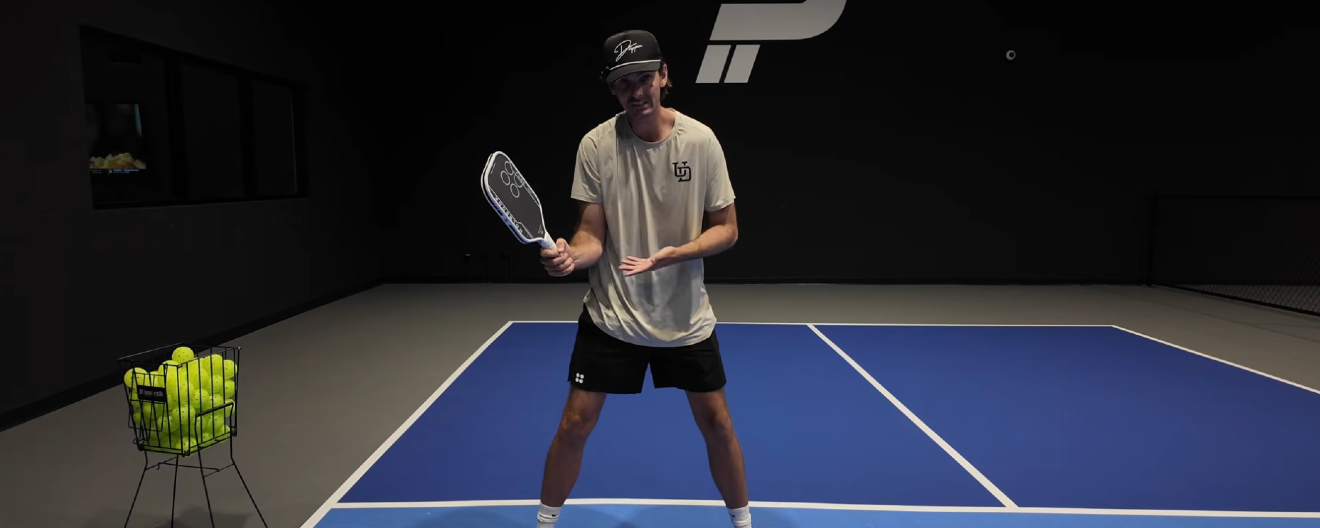
Dr. Michael Oakson, a professional pickleball coach and chiropractor, has worked with players ranging from 3.0 level recreational competitors to professionals. In a recent instructional video, Oakson outlined five key areas players can focus on to become more effective on the court.
Rather than trying to overhaul your entire game at once, Oakson recommends working on one skill at a time, starting with your ready position.
Here are his five tips for improving your pickleball game.
1. Master your ready position
Your ready position affects nearly every shot you hit, particularly when defending against attacks at the kitchen line.
Oakson recommends paying close attention to two things: your dominant-side elbow and your non-dominant hand.
Your paddle-side elbow should sit somewhere between fully extended and tucked tightly against your body. Keeping it in this middle position gives you enough room to react and push through the ball when countering an opponent's attack.
Your non-dominant hand is equally important. Keeping it near the paddle allows you to transition quickly between a one-handed forehand counter and a two-handed backhand counter.
If your off-hand drops too far away from the paddle, reacting to a ball directed toward your backhand becomes more difficult. Conversely, locking both hands together too tightly can limit your ability to defend against attacks aimed at your body.
Oakson suggests incorporating this positioning into your warmup. As you dink, consciously reset your elbow and off-hand after each shot.
The goal is to make the correct ready position second nature before you step into a competitive game.
2. Protect your kitchen line
Giving up too much ground at the kitchen line can make life easier for your opponents.
When players consistently step backward and allow balls to bounce that they could otherwise take out of the air, they effectively give their opponents more court to attack.
Oakson encourages players to establish a strong position at the kitchen line, taking balls out of the air when doing so is comfortable and balanced.
However, there's a difference between protecting your space and overreaching.
Extending your arm too far while leaning onto your toes can leave you off balance and increase the likelihood of unforced errors. Instead, focus on taking balls within a manageable reach while maintaining a stable ready position.
A strong presence at the kitchen line can also force opponents to change their strategy. If deep dinks aren't pushing you backward, they may begin hitting shorter dinks to draw you forward.
That's when you can look to attack.
Oakson highlights the triangle pattern as one opportunity: recognize a shallow ball, attack it off the bounce and prepare for the next shot. By protecting your kitchen line while staying ready to punish shorter balls, you can create more offensive opportunities without sacrificing balance.
3. Improve your serve return
A strong serve return can put you in a much better position to reach the kitchen line and establish control of the rally.
One common mistake, according to Oakson, is standing too close to the baseline when receiving serve.
A deep serve can force players into an awkward half-volley, leaving them little choice but to send the ball upward. To give yourself more time, Oakson recommends starting two to three steps behind the baseline, adjusting your position according to the power of your opponent's serve.
This extra space allows the ball to reach its apex and gives you a better opportunity to move through the shot.
Oakson also emphasizes the importance of maintaining momentum through contact.
Rather than moving toward the ball, stopping and then swinging, use your legs to drive through the return in one controlled motion. Stopping your movement at contact wastes momentum that could help you send the ball deep into your opponent's court.
The objective is a deep, controlled return that gives your team time to transition forward.
4. Counterattack with confidence
When opponents speed up the ball, your goal isn't necessarily to hit a winner. It's to defend effectively, redirect the attack and show that you're difficult to attack.
Oakson connects successful counters directly to a proper ready position. An elbow that's too extended can leave you with little room to push through the ball, while an elbow tucked too close to your body can cause you to get jammed.
From a balanced position, focus on extending your elbow through contact rather than swinging sharply upward or downward.
A downward motion can send the ball into the net, while an upward swing can cause it to sail too high. Instead, aim for a compact, controlled extension that redirects the incoming pace and keeps the ball relatively flat.
Just as importantly, resist the temptation to overswing.
When you're defending against a hard attack, trying to hit the ball harder can make the shot less consistent. Meet the ball where it is, absorb the incoming force and redirect it with control.
Sometimes, the best counter is simply one that keeps you in the rally and forces your opponent to hit another shot.
5. Target your opponent's dominant side
When you're looking for an offensive advantage, start by identifying which side of your opponent is more vulnerable.
Oakson recommends targeting the dominant side, particularly when playing against opponents whose ready position leaves their paddle-side elbow tucked too close to their body.
For a right-handed player, attacking toward the forehand-side shoulder area can force an awkward response, often referred to as a chicken wing. The opponent may struggle to get the paddle into position or may be forced into a weaker counter.
Pay attention to how your opponent responds. If they struggle with these attacks, continue testing that area.
If they adjust by turning toward a forehand counter or shifting into a backhand response, that movement can create openings elsewhere on the court. Their partner may also have to cover more space as the pair adjusts to the pressure.
The key is to observe and adapt rather than repeatedly attacking the same spot without considering the response.
When you don't know your opponents' tendencies, Oakson suggests starting by testing their dominant side and using the results to guide your subsequent attacks.
How to put these tips into practice
Oakson's biggest recommendation is to avoid trying to implement every adjustment at once.
Start with your ready position, focusing on your paddle-side elbow and non-dominant hand. Once that positioning becomes more natural, move on to protecting the kitchen line, improving your serve return and developing more effective counters and attacking patterns.
Small adjustments can make a meaningful difference when they become consistent habits.
Rather than chasing a dramatic change in your game overnight, focus on mastering one skill at a time. The improvements you make in your positioning and decision-making can help you become a more balanced, confident and difficult opponent on the pickleball court.
Related articles
Gabe Tardio embraced the right side
It helped the 21-year-old reach the top of men’s doubles.
2 days ago
-Victoria Radnothy
Five pickleball tips to improve your game from beginner to 4.0
Coach Jess breaks down concepts that can help players win more points, improve consistency, and avoid common mistakes on the court.
5 days ago
-Pickleball.com Staff
How to completely change your pickleball serve in 10 minutes
A few simple adjustments could help you add power, improve accuracy and eliminate the yips.
11 days ago
-Pickleball.com Staff
Five ways to elevate your dink game like a pro
These strategies can help you make smarter decisions and gain the upper hand in kitchen line battles.
12 days ago
-Pickleball.com Staff