Five ways to add power and consistency to your pickleball drives
Powerful drives can put opponents under pressure, but hitting the ball hard is only half the battle. Consistency is just as important, and knowing when to attack can make all the difference.
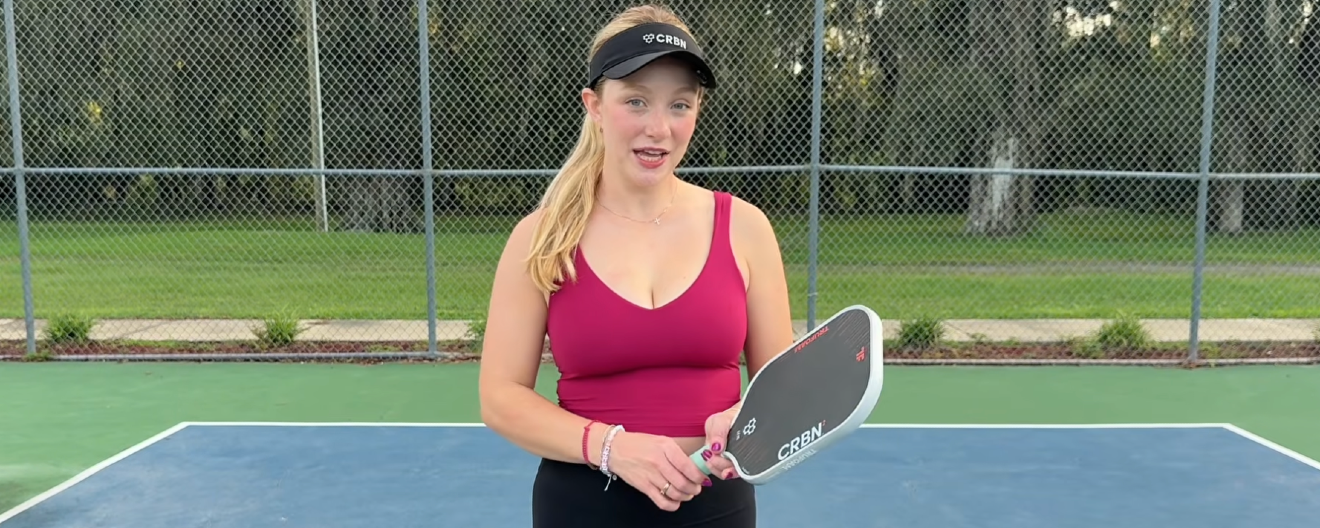
PPA Tour pro Ashley Griffith recently shared five tips to help players develop more aggressive drives while keeping the ball in play.
From creating space at contact to incorporating topspin, these adjustments can help players generate power more efficiently and make smarter decisions on the court.
1. Create space between you and the ball
One of the most common mistakes Griffith sees players make is getting jammed up on their drives. Whether they're contacting the ball too late or allowing it to get too close to their body, poor spacing makes it harder to generate power.
Instead, Griffith recommends contacting the ball out in front on both the forehand and backhand sides.
"Don't let the ball like come to you," Griffith explained. "Really meet the ball out in front."
Getting to the ball early and extending the arm through contact allows players to swing freely rather than feeling cramped or rushed.
A simple way to practice this adjustment is to focus on meeting every ball early and out in front during drills.
2. Use your legs and body rotation
Players who rely too heavily on their arms to generate power may be limiting both the strength and consistency of their drives.
Griffith emphasizes using the legs, core and rotation of the body to transfer momentum through the ball.
On a forehand drive, she recommends loading the right foot before rotating and moving forward through contact. On the backhand side, players can load the left foot and use that movement to help drive through the shot.
Griffith compares the motion to throwing a medicine ball: Players load their bodies and then push through to generate force.
"We want to use our big and strong muscles to give us power behind our drives," she said.
Using the body's larger muscle groups can help players hit with more pace without putting excessive strain on their arms.
3. Relax your grip
Holding the paddle too tightly can create unnecessary tension in the arm and wrist, making it harder to swing freely.
Griffith recommends maintaining a firm but relaxed grip, rating the ideal pressure around six or seven out of 10.
Players should have enough control to keep the paddle stable without squeezing so hard that their wrists and arms become tense.
A relaxed grip also complements the previous tip: When the legs and body generate the power, the arm can move more naturally through the ball.
The goal isn't to hold the paddle loosely, but to avoid trying to muscle every drive with the arm and wrist.
4. Add topspin for better control
Generating power is one thing. Keeping those hard drives inside the court is another.
That's where topspin becomes especially valuable.
Griffith recommends brushing up on the ball with a low-to-high swing path. This creates the forward rotation that helps the ball dip as it travels over the net, giving players more margin for error than a flatter shot.
Players should still drive through the ball and make contact out in front, but incorporating that upward brushing motion can help them maintain pace while improving consistency.
Griffith suggests practicing the motion against a wall to develop the feel for topspin on both forehand and backhand drives.
It may take time to master, but adding topspin can allow players to swing more aggressively without sending as many shots long.
5. Choose the right balls to attack
Even a technically sound drive isn't always the right shot.
Griffith's final tip focuses on shot selection, reminding players that aggression works best when the situation calls for it.
When the ball sits up and provides an opportunity to attack, players should take advantage. But when the ball is very low near their feet or they're off balance and out of position, forcing a powerful drive can lead to unnecessary errors.
In those situations, a drop shot or reset is often the smarter choice.
"In pickleball, we want to be aggressive on the attack, not from the defense," Griffith said.
Mixing hard drives with softer shots helps players avoid overattacking and gives them a better chance of staying in control of the rally.
Build your drive one adjustment at a time
Griffith's five tips offer a roadmap for players looking to add power without giving away consistency.
Create space and make contact out in front, generate momentum through the legs and body, maintain a relaxed grip, use topspin to control the ball's trajectory, and recognize when it's time to attack versus reset.
Rather than trying to change everything at once, Griffith recommends choosing one adjustment to focus on during practice before gradually incorporating the others.
With the right technique and smarter shot selection, players can develop a more effective drive that puts opponents under pressure without sacrificing control.
Related articles
Five tips to improve your pickleball game quickly
Dr. Michael Oakson shares advice on ready position, kitchen line defense, serve returns, counterattacks, and targeting opponents’ weaknesses.
6 hours ago
-Pickleball.com Staff
Gabe Tardio embraced the right side
It helped the 21-year-old reach the top of men’s doubles.
3 days ago
-Victoria Radnothy
Five pickleball tips to improve your game from beginner to 4.0
Coach Jess breaks down concepts that can help players win more points, improve consistency, and avoid common mistakes on the court.
6 days ago
-Pickleball.com Staff
How to completely change your pickleball serve in 10 minutes
A few simple adjustments could help you add power, improve accuracy and eliminate the yips.
12 days ago
-Pickleball.com Staff