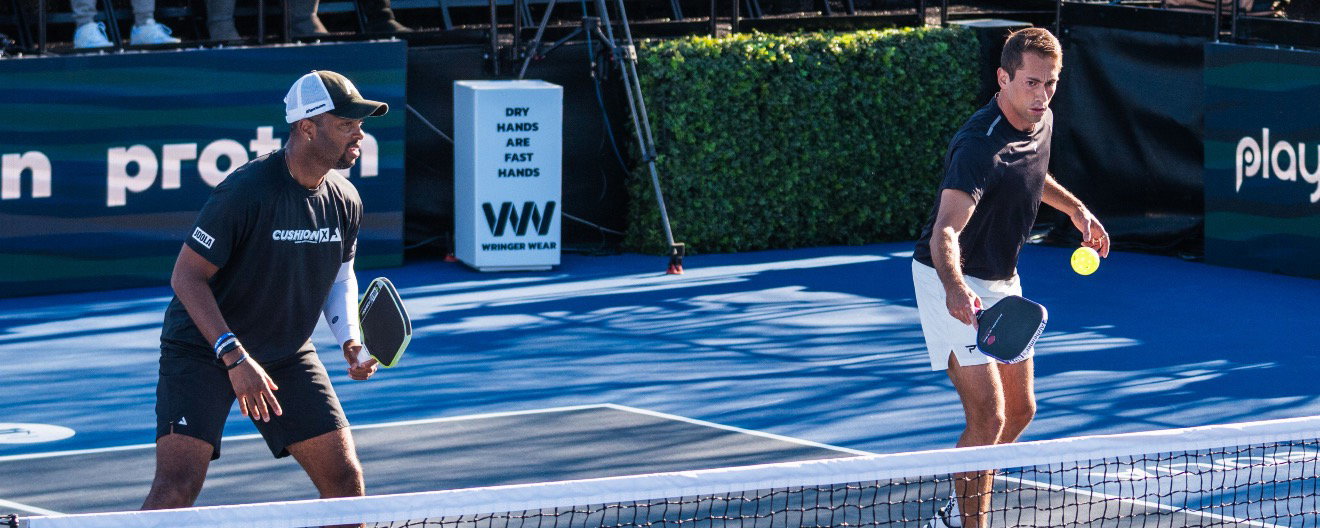
Getting targeted on the pickleball court? Zane Navratil’s strategies to break out of isolation
Getting targeted on the pickleball court can be one of the most frustrating experiences for players of all skill levels. Whether opponents view you as the weaker player or simply want to keep your partner out of the game, being isolated in long dink rallies often leads to mistakes, frustration, and lost points.
In a recent instructional video on YouTube, pro pickleball athlete Zane Navratil explained exactly how players can stop being targeted on the pickleball court and even turn the situation into an advantage. His strategies focused on smart shot selection, court positioning, and tactical decision-making that force opponents out of their comfort zone.
Why Opponents Target Players in Pickleball
Targeting is a common doubles strategy in pickleball. Instead of distributing shots evenly between partners, opponents repeatedly hit to one player. This tactic is designed to:
-
Wear down a player mentally and physically
-
Keep the stronger partner uninvolved
-
Force errors through repetition
-
Control the pace of the rally
Basically, think about how at the Ares Pickleball Slam 4 that Andre Agassi and James Blake hit every ball to Genie Bouchard, and avoided hitting to Anna Leigh Waters. In that case, they were targeting Bouchard.
Nevertheless, you cannot control where your opponents hit the ball. But you can control how you respond.
The Best Right-Side Solutions for Pickleball Isolation
When being isolated on the right side of the court, Navratil recommended several key strategies.
Use Aggressive Crosscourt Dinks
Many players respond to targeting with passive crosscourt dinks. But passive shots allow opponents to continue the pattern indefinitely.
Instead, Navratil suggested using aggressive crosscourt dinks. By increasing pace and pressure, you create opportunities for opponents to pop the ball up, allowing your partner to become involved in the rally.
This strategy not only disrupts the isolation pattern but also shifts momentum back to your team.
Dink Directly at the Diagonal Opponent
Another effective tactic is hitting directly at the opponent across from you.
While this may not immediately end the targeting strategy, it reduces available angles and allows your partner to slide closer to the middle of the court. As a result, your partner becomes better positioned to poach balls and create offensive opportunities.
Attack the Opponent’s Backhand
Navratil also recommended targeting the crosscourt opponent’s backhand.
Although this often funnels the ball back toward you, it can create weaker returns and open the door for more aggressive attacks later in the rally. Think of it as setting up future opportunities rather than seeking an immediate escape.
Using the Middle to Break the Pattern
One of the most effective ways to stop being targeted in pickleball is by using the middle of the court.
When you force the opponent in front of you to move toward the center line, they frequently redirect the ball toward your partner. This naturally breaks the isolation cycle and creates a more balanced rally.
However, Navratil warned that the middle can also be dangerous. If your dink is too high or too attackable, opponents may speed up the ball and put your team on defense.
The key is hitting quality dinks that move opponents without providing easy offensive opportunities.
When to Use the Down-the-Line Dink
The down-the-line dink can be a powerful tool for escaping isolation, but timing is critical.
Many players make the mistake of using this shot as a bailout option when under pressure. According to Navratil, this often leads to opponents executing an erne or attacking the open court.
Instead, players should attack down the line only on neutral or offensive balls. When executed properly, this shot forces movement, creates confusion, and encourages opponents to redirect the ball toward your partner.
As soon as the shot is played, your partner should instinctively move toward the middle to cover the likely return.
Exploiting Predictability When Being Targeted
Navratil shared that targeting can actually benefit the player being isolated.
If opponents consistently hit every ball to the same location, their strategy becomes predictable. Rather than constantly recovering to the middle, players can adjust their positioning and prepare for the expected shot.
This improved anticipation often leads to:
-
Better balance
-
Cleaner contact
-
Faster reactions
-
More aggressive opportunities
When you know where the ball is going, you can begin looking for offensive speed-ups and counterattacks.
Additional Ways to Stop Getting Targeted
If tactical dinking adjustments are not enough, Navratil recommended a few additional options.
Consider Stacking
Stacking allows partners to switch sides strategically, making it more difficult for opponents to continue targeting the same player. This simple adjustment can immediately change the dynamics of a match and force opponents to rethink their game plan.
Play More Aggressively
Another option is preventing extended kitchen rallies altogether.
Navratil suggested:
-
Using third-shot drives instead of always dropping
-
Crashing the net behind drives
-
Playing aggressive fourth and sixth shots
-
Looking for offensive opportunities earlier in rallies
If targeting is causing problems, increasing aggression can help take control of points before isolation patterns develop.
A Simple Drill to Practice Breaking Isolation
To help players improve, Navratil demonstrated a dedicated isolation breakout drill.
In this drill:
-
Four players take the court.
-
Two players intentionally target one opponent.
-
The isolated player focuses on using strategic patterns to involve their partner.
-
Points are played out naturally.
The goal is not simply to win points but to learn how to force opponents into difficult decisions and poor shot selections.
Over time, this drill develops confidence, patience, and tactical awareness during real match situations.
Final Thoughts
Being targeted on the pickleball court is frustrating, but it does not have to be a losing situation. Navratil’s approach emphasizes smart dinking, strategic placement, court awareness, and calculated aggression.
Whether you use aggressive crosscourt dinks, attack the middle, target backhands, or employ stacking strategies, the objective remains the same: make your opponents hit difficult shots and force them out of their preferred pattern.
The next time opponents try to isolate you in a pickleball match, remember that targeting creates predictability. And when you understand how to exploit that predictability, you can turn a defensive situation into a winning advantage.
To keep up to date on all things pickleball, follow us on Instagram.
Related articles
Mojo Energy Pouches Virginia Beach Open: Everything you need to know
With several star players heading overseas, a big opportunity awaits for other players to claim a title.
3 hours ago
-Pickleball.com Staff
Five pickleball tips to improve your game from beginner to 4.0
Coach Jess breaks down concepts that can help players win more points, improve consistency, and avoid common mistakes on the court.
5 hours ago
-Pickleball.com Staff
Virginia Beach features wide open draws
No Anna Leigh Waters and no Ben Johns means it is anyone’s tournament to make a mark.
1 day ago
-Jim Kloss
Anna Leigh Waters' most iconic on-court looks
From vintage FILA fits to iconic Nike gear, she has served up plenty of memorable styles throughout her career.
1 day ago
-Victoria Radnothy