How to hit a bigger serve in pickleball (without just swinging harder)
Everyone wants a bigger serve. More power, more pressure, more free points.
But here’s the truth: the biggest serves in pickleball aren’t just about swinging harder—they’re built on a combination of mechanics, placement, and intention.
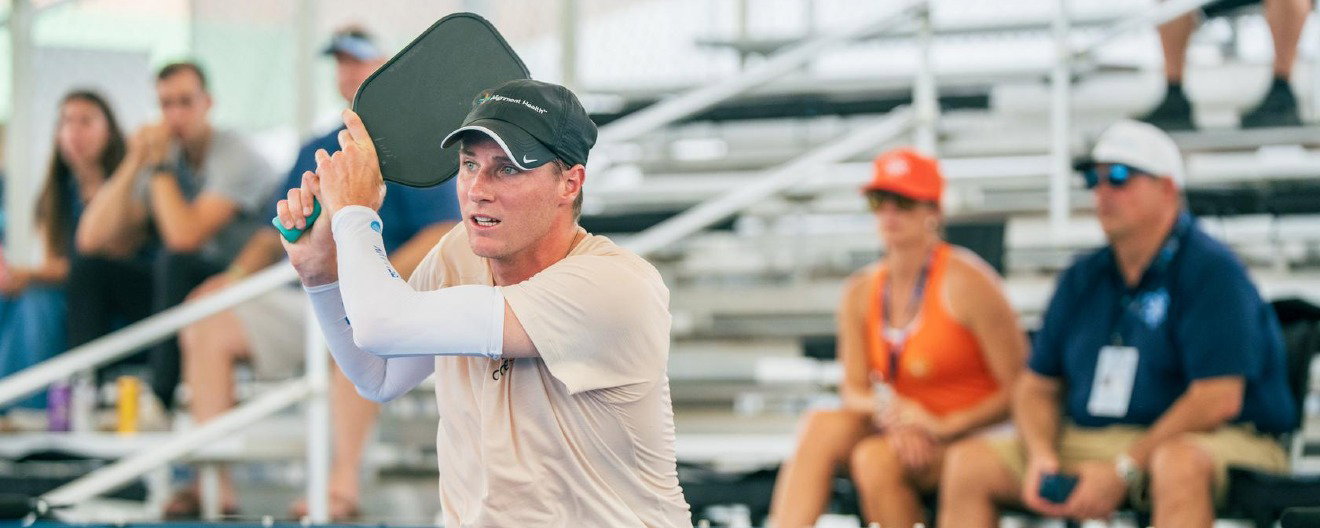
As Roscoe Bellamy explains: “It’s not just because I swing hard… there are a few things I do with my mechanics, depth, spin, and trajectory that make the ball feel way heavier.”
Here’s how Bellamy actually builds a serve that feels heavy—and is way harder to return.
1. Build power from the ground up
If your serve is all arm, you’re leaving power on the table.
The best servers use a kinetic chain—energy starts in the legs and transfers up through the body into the paddle. That’s where real pace comes from.
- - Use your legs to drive upward and forward
- - Keep your arm loose (think “whip,” not “muscle”)
- - Let the energy flow through your body, not stop at your shoulder
If your arm is tight, you’re cutting off your own power.
2. Depth matters more than raw speed
You can absolutely crush a serve—but if it lands short, it loses its bite.
A deep serve:
- - Pushes your opponent back
- - Limits their time to react
- - Makes it harder for them to move forward
The goal is the back third of the court. That’s where serves start to feel heavy and uncomfortable.
There’s also a balance here:
- - Add a little height to help the ball travel deeper
- - Adjust based on conditions (heat, ball type, etc.)
- - Calibrate during warmups
Big serves aren’t just fast—they’re deep and intentional.
3. Add spin + smart trajectory
This is where your serve goes from good to dangerous.
A flat serve can be effective. But when you add topspin and height, the ball starts to jump.
- - Brush up the back of the ball to create topspin
- - Add arc over the net instead of hitting straight line drives
- - Let the ball dip and kick after the bounce
That combination—pace + spin + trajectory—is what creates that “heavy” feel players struggle with.
4. Use variation to win free points
If you hit the same serve every time, good players will figure it out.
Instead, keep your opponent guessing:
- - Change locations (T, wide, body)
- - Mix heights (flat vs. high/heavy)
- - Vary spin and speed
Players are always adjusting. Your job is to stay one step ahead.
Variation isn’t just a bonus—it’s one of the easiest ways to earn free points.
5. Lock in a consistent routine
Even if your serve changes, your routine shouldn’t.
A simple, repeatable setup helps you:
- - Stay calm and controlled
- - Avoid rushing
- - Execute more consistently
It can be as simple as:
- - A breath
- - A few ball bounces
- - Setting your stance the same way every time
Consistency in your routine builds confidence—and confidence leads to better execution.
If you want a bigger serve, stop thinking about swinging harder.
Focus on this instead:
- - Generate power from your legs
- - Hit with depth
- - Add spin and trajectory
- - Mix up your looks
- - Stick to a routine
Put it all together, and your serve won’t just be faster—it’ll be tougher, heavier, and way more effective.
Related articles
Five pickleball tips to improve your game from beginner to 4.0
Coach Jess breaks down concepts that can help players win more points, improve consistency, and avoid common mistakes on the court.
5 hours ago
-Pickleball.com Staff
How to completely change your pickleball serve in 10 minutes
A few simple adjustments could help you add power, improve accuracy and eliminate the yips.
6 days ago
-Pickleball.com Staff
.png?width=592&height=237&optimizer=image)
Five ways to elevate your dink game like a pro
These strategies can help you make smarter decisions and gain the upper hand in kitchen line battles.
6 days ago
-Pickleball.com Staff

Five mindset shifts every pickleball player should know
Michael Lloyd shares lessons that changed the way he approaches the game, from redefining aggression to letting the ball dictate every shot.
7 days ago
-Pickleball.com Staff