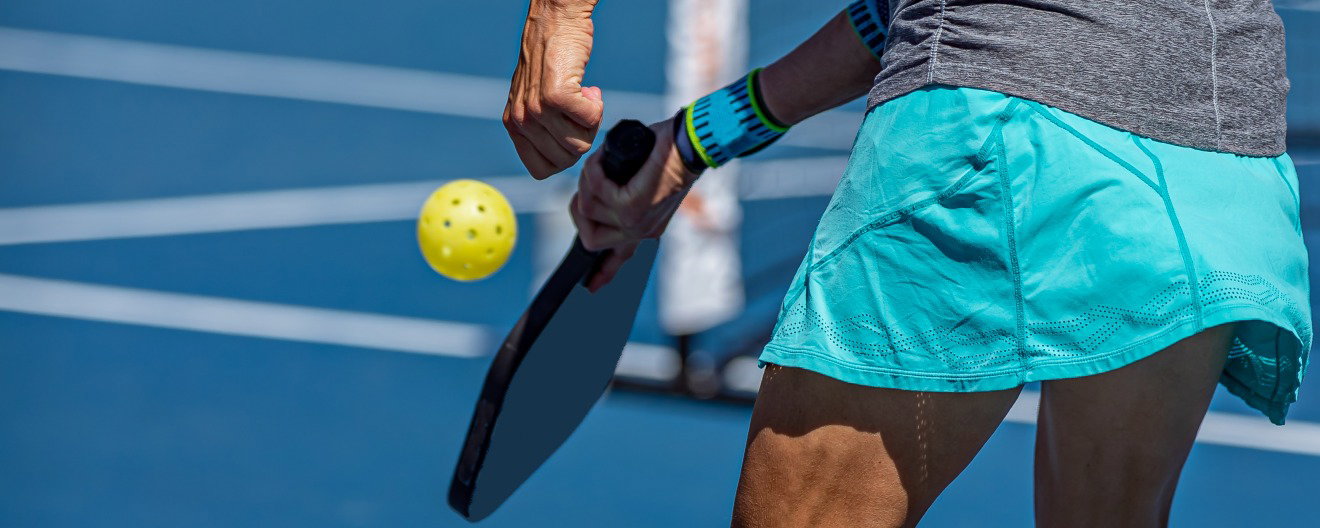
How to turn your forehand dink into a weapon
At higher levels of pickleball, consistency alone isn’t enough. If you want to win more points at the kitchen line, your dink has to do more than just land in—it needs to apply pressure.
That’s exactly what Susannah Barr of The Flying Pickle Academy set out to fix with her student, Thomas. Already a solid player with a reliable forehand dink, Thomas represented a common problem: consistency without offense.
The Problem: Safe, But Not Threatening
Thomas’ dink was technically sound, but it lacked pace and intent. The root issue? His paddle tip was dropping too low.
When the paddle drops straight down, players are forced to lift and roll the ball at the same time—killing both control and aggression.
He was also crowding the ball, short-hopping contact, and limiting his ability to dictate the point.
The First Fix: Don’t Drop the Paddle—Drop Your Knees
One of the biggest breakthroughs came from a simple concept:
If the ball is low, don’t drop your paddle—drop your body.
By lowering through the knees instead of the paddle head, players can keep the paddle more stable and in front, allowing for cleaner, more controlled contact.
This adjustment keeps your paddle visible, your contact point consistent, and your shot more compact.
Spacing and Contact: Let the Ball Work for You
Another key adjustment was spacing.
Instead of crowding the bounce, Thomas was coached to:
- - Let the ball rise after the bounce
- - Catch it just as it begins to fall
- - Make contact out in front of his body
This creates a more optimal strike zone and gives players the ability to control direction and pace.
Paddle Position Matters
Rather than pointing the paddle straight down, Barr emphasized angling it toward the sideline and keeping it slightly open.
This allows for a smoother low-to-high motion and makes it easier to roll the ball with purpose—without overusing the wrist.
Footwork Creates Freedom
A subtle but critical tweak: pulling the right foot back.
This small movement created more space between Thomas and the ball, preventing him from getting jammed and allowing for better extension through contact.
Good dinks don’t come from the hands alone, they come from positioning.
Add Pressure With Acceleration
Once the foundation was in place, the next step was adding pace.
Not with a bigger swing, but with better timing.
By accelerating through contact instead of guiding the ball, Thomas began producing a dink that stayed low while forcing his opponent to react.
When to Attack
An aggressive dink isn’t always the right choice.
Barr emphasized that players should only attack when:
- - They are balanced
- - The ball is out in front
- - They can clearly see the contact point
If off-balance, the smarter play is to reset, aiming middle or at the opponent’s feet to regain control.
The Result: From Neutral to Offensive
With just a few adjustments—knees instead of paddle, better spacing, cleaner paddle position, and improved footwork—Thomas transformed his dink from a neutral shot into a weapon.
“It feels more under control,” he said. “Like I have less to do with the paddle.”
And that’s the goal.
At the highest levels, the difference isn’t learning a new shot, it’s refining the one you already have.
If your dink isn’t creating problems for your opponent, it’s time to upgrade it.
Start with these fundamentals:
- - Drop your knees, not your paddle
- - Create space and contact out front
- - Keep your paddle stable and visible
- - Use your feet to set up the shot
- - Accelerate through contact
Make those changes, and your dink won’t just keep you in rallies, it’ll start winning them.
Related articles
Five pickleball tips to improve your game from beginner to 4.0
Coach Jess breaks down concepts that can help players win more points, improve consistency, and avoid common mistakes on the court.
5 hours ago
-Pickleball.com Staff
How to completely change your pickleball serve in 10 minutes
A few simple adjustments could help you add power, improve accuracy and eliminate the yips.
6 days ago
-Pickleball.com Staff
.png?width=592&height=237&optimizer=image)
Five ways to elevate your dink game like a pro
These strategies can help you make smarter decisions and gain the upper hand in kitchen line battles.
6 days ago
-Pickleball.com Staff
Five mindset shifts every pickleball player should know
Michael Lloyd shares lessons that changed the way he approaches the game, from redefining aggression to letting the ball dictate every shot.
7 days ago
-Pickleball.com Staff