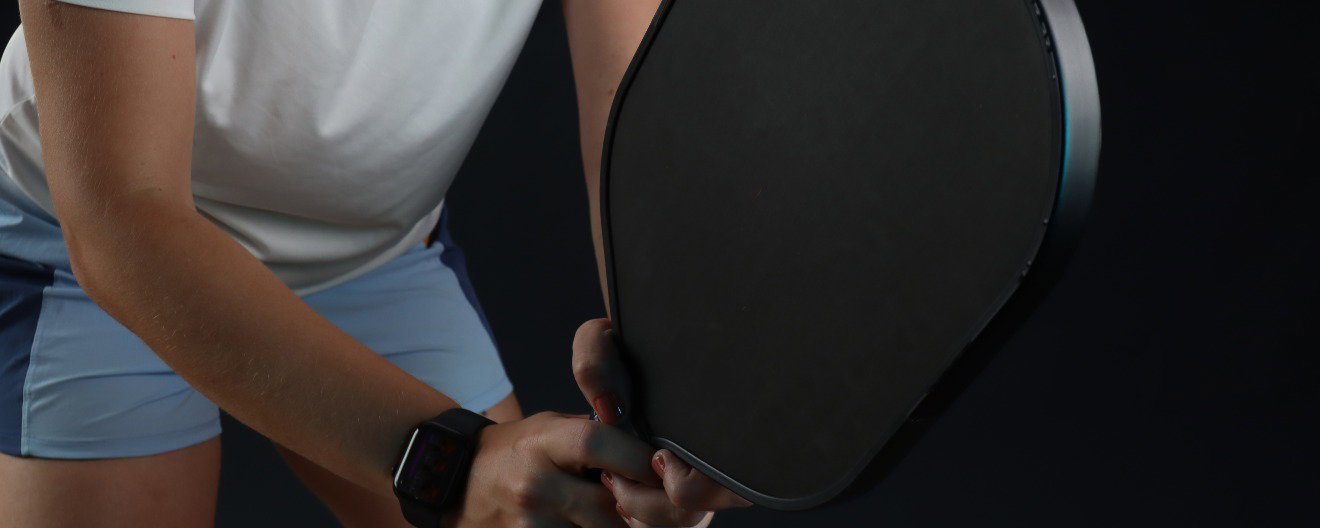
Master the forehand speed-up: The shot that changes everything
Some shots win points, but others completely change the way a rally unfolds. The forehand speed-up is one of those shots. When executed correctly, it can put opponents in uncomfortable positions and quickly turn defense into offense.
In this breakdown, one of the game’s most effective attackers, John Cincola, explains how to execute a forehand speed-up off the bounce and, just as importantly, when to use it.
The foundation of this shot starts with proper setup. Before attempting a speed-up, players should go through a simple three-step checklist. First, they must get behind the ball so that it stays within their stance rather than drifting too far outside their body. Second, they should keep the paddle tip down, which naturally happens when they are positioned correctly. Third, they need to wait for the right ball, typically a “dead dink” that sits up slightly and provides enough time to attack. If any of these elements are missing, it is better not to speed up the ball.
Creating space is another critical component. Many players feel jammed when trying to attack because they remain too square to the ball. By turning their hips and shoulders, they create space between their body and the ball. This unit turn allows them to generate both control and power without feeling cramped.
The technique itself is simpler than many players expect. Instead of taking a large swing, the motion should feel more like a controlled push, similar to a dink but with greater acceleration. The direction of the shot determines small adjustments. When hitting down the line, players should keep the paddle steady with minimal wrist involvement. When going crossbody, they can add a slight upward roll of the wrist to change the direction of the ball.
Wrist control is essential to executing this shot effectively. Many players make the mistake of overusing their wrist or flipping it excessively in an attempt to generate topspin. Instead, the motion should be compact and controlled, moving from a tip-down position to a slightly tip-up finish. The elbow should remain stable throughout the motion, which helps maintain consistency and accuracy.
Placement is more important than power. At higher levels, there are rarely large openings to hit into, so players must be precise with their targets. Even a small difference in placement can determine whether the shot is successful. A common and effective target is the opponent’s dominant hip, which can be difficult to defend.
Deception adds another layer to the shot. By holding the same setup for longer, players can delay their decision and even change direction mid-swing. This ability to disguise intent makes the speed-up far more difficult for opponents to read and react to.
Pace selection should be based on the ball that is received. Lower balls require more lift and less power, while higher balls allow for a more aggressive, linear attack. In some cases, players may even choose to hit directly at their opponent’s body to force a difficult reaction, rather than aiming for a clean winner.
Recovery is just as important as the attack itself. After making contact, players should focus on moving forward and preparing for the next shot. Even if the speed-up is well executed, the point is not over, and being ready for a counterattack is crucial.
While this shot is most commonly used by players at the 4.0 level and above, it is not overly complex from a technical standpoint. Any player who can control a dink, get behind the ball, and maintain a stable paddle position can begin to experiment with it.
Ultimately, the forehand speed-up is not about hitting the ball as hard as possible. It is about preparation, precision, and deception. Players who can master these elements will not only win more points, but they will also take control of rallies and dictate play on their terms.
Related articles
Five pickleball tips to improve your game from beginner to 4.0
Coach Jess breaks down concepts that can help players win more points, improve consistency, and avoid common mistakes on the court.
5 hours ago
-Pickleball.com Staff
How to completely change your pickleball serve in 10 minutes
A few simple adjustments could help you add power, improve accuracy and eliminate the yips.
6 days ago
-Pickleball.com Staff
.png?width=592&height=237&optimizer=image)
Five ways to elevate your dink game like a pro
These strategies can help you make smarter decisions and gain the upper hand in kitchen line battles.
6 days ago
-Pickleball.com Staff

Five mindset shifts every pickleball player should know
Michael Lloyd shares lessons that changed the way he approaches the game, from redefining aggression to letting the ball dictate every shot.
7 days ago
-Pickleball.com Staff