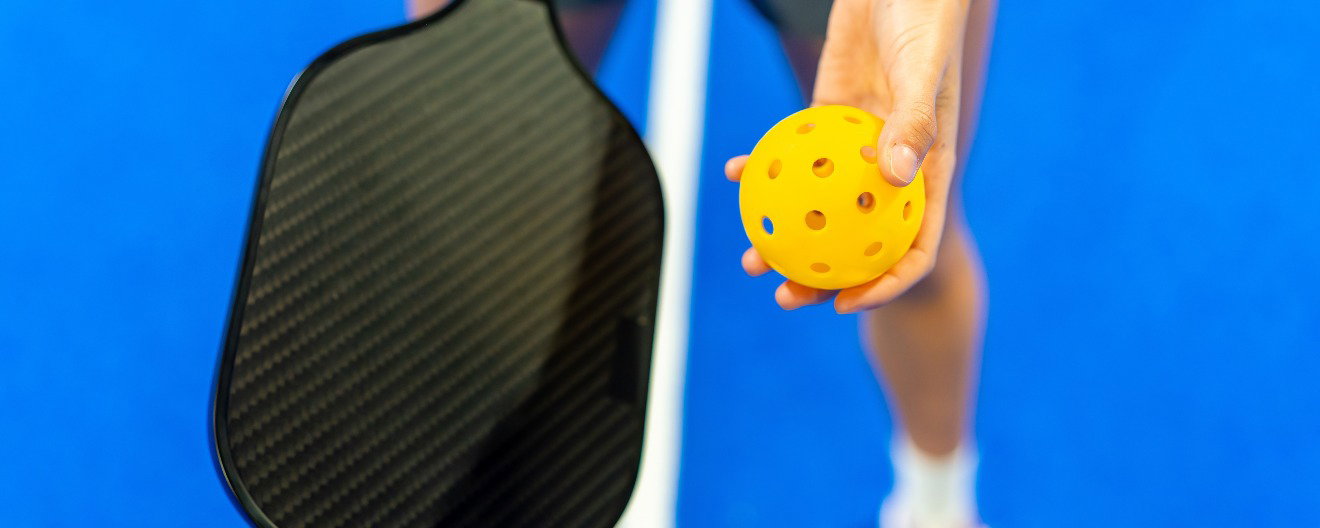
Practicing alone? Best solo pickleball drills to improve fast
If you’re practicing pickleball alone, the key is to build consistency, control, and footwork over time.
You obviously won’t get real rally dynamics, but you can certainly sharpen the fundamentals that actually matter in games.
Here are seven of the most effective solo drills to improve your skills fast.
1. Wall Rally Drill
A simple wall becomes your best training partner.
Hit forehands and backhands continuously against a wall, focusing on:
- Clean contact
- Low, controlled shots (Just above net height)
- Rhythm and consistency
To progress:
- Move closer (Faster reflexes)
- Move farther (More power control)
- Alternate forehand/backhand for realism
This drill builds hand speed, reaction time, and paddle control.
2. Dink Control Drill (Soft Game Mastery)
Dinking wins games, and you can train it solo.
How to do it:
- Use a wall or mark a “net line” on it
- Hit soft shots that land just above that line
- Focus on touch, not power
Goal:
- Keep the ball “unattackable”
- Develop patience and feel at the kitchen
This is one of the most valuable solo skills for match play.
3. Serve Target Practice (High ROI Drill)
Serving is fully under your control, so repetition pays off quickly.
Setup:
- Place cones, towels, or bottles in service boxes
- Aim for corners, deep middle, and wide serves
Focus on:
- Consistency over speed
- Depth (Push opponents back)
- Reducing faults
Try hitting 10–20 perfect serves in a row to build confidence.
4. Drop Feed Groundstroke Drill
Great for mechanics and timing.
How:
- Drop the ball in front of you
- Let it bounce once
- Hit controlled forehands and backhands
What it builds:
- Proper swing path
- Balance and foot positioning
- Clean contact under pressure
5. Footwork Shadow Drill (No Ball Needed)
This is underrated, but huge for improvement.
Do court movements without hitting a ball:
- Split step (Move forward to kitchen)
- Lateral shuffles side-to-side
- Simulate dink, drive, reset positions
This builds court awareness and movement efficiency.
6. Ghosting Drill (Game Simulation)
Pretend you're playing a real point.
- Move as if returning a serve
- Transition to kitchen
- Simulate dinks, volleys, and resets
This helps connect movement patterns into real match situations.
7. Third Shot Drop Practice (Advanced Solo Drill)
If you have a court:
- Start at baseline
- Hit soft arcing shots into the kitchen
- Focus on height + landing control
Goal:
- Learn patience instead of rushing attacks
- Build transition consistency
A simple solo pickleball routine that takes about 30–40 minutes starts with 10 minutes of wall rallies to build consistency and hand speed, followed by 10 minutes of dinks to develop soft touch and control at the kitchen.
Next, spend 10 minutes practicing serves to improve accuracy, depth, and reliability, and finish with 10 minutes of footwork and drop drills to strengthen movement, balance, and transition play.
The most effective solo practice isn’t about hitting harder, but about repetition, control, clean technique and smart movement that carries over into real matches.
Related articles
Pickleball speed-ups explained: How to improve your kitchen line attacks
It really comes down to timing, not power.
1 day ago
-Pickleball.com Staff
How to build a reliable forehand drive in pickleball
It's a combination of compact mechanics with full-body rotation and controlled acceleration.
2 days ago
-Pickleball.com Staff
Best pickleball sets on Amazon: Top picks for every player
Choosing the best pickleball set comes down to a few key factors.
2 days ago
-Pickleball.com Staff
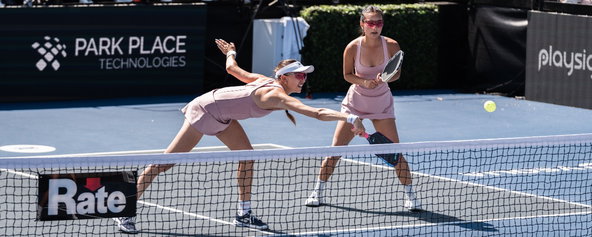
Rise of the backhand flick in pro women’s pickleball
Alix Truong shares her tips for developing this pivotal shot.
2 days ago
-Victoria Radnothy