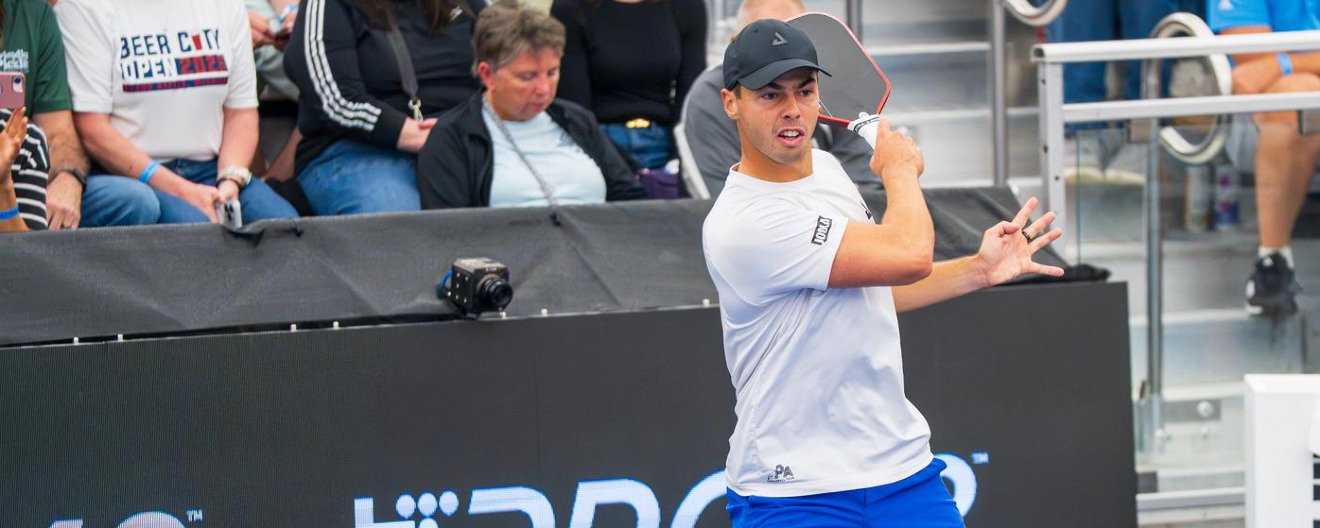
What makes Ben Johns so good at pickleball?
Ben Johns has established himself as one of the greatest players in pickleball history. Since the PPA Tour began in 2020, he has dominated the sport through an extraordinary combination of technical skill, strategic intelligence, and consistency.
But what truly separates Johns from other professionals? According to fellow pro player Zane Navratil, it’s not one spectacular shot or an overwhelming physical advantage. Itis his ability to adapt, recognize patterns, and execute his game plan so consistently that opponents struggle to find a weakness.
1. His Ability to Adapt
One of Johns's greatest strengths is his ability to learn new techniques and incorporate them into his game.
He didn’t invent every shot he uses. Kyle Yates was hitting the backhand roll before Johns made it famous, and JW Johnson helped popularize the backhand flick. However, Johns adopted these innovations and refined them into reliable weapons.
This ability to adapt has helped him remain competitive as paddle technology and playing styles have evolved. When opponents discover a weakness, Johns often adjusts his technique before they can exploit it consistently.
Rather than relying on one signature skill, he continually improves his game to stay ahead of the competition.
2. The Backhand Roll and Flick
The backhand roll was one of the shots that initially propelled Johns to the top of professional pickleball. By getting his paddle below the ball and brushing upward, he generates topspin that allows him to attack balls that would otherwise be difficult to hit aggressively.
The shot relies on coordinated body movement, particularly the legs and shoulder, rather than excessive wrist action.
As the game evolved, Johns added the backhand flick to his arsenal. The roll offers controlled placement, while the flick provides greater pace and additional attacking angles.
Having both options makes him difficult to defend against. Opponents know he can attack with his backhand, but predicting exactly how he will do it is much harder.
3. Dinking That Forces Opponents Into Mistakes
Johns's dinking ability is another major reason for his success. His shots are precise, consistent, and rarely sit high enough for opponents to attack comfortably.
This creates a frustrating dilemma. Opponents must either continue dinking patiently or attempt an aggressive shot without a clear opportunity.
When impatience takes over, players often speed up a ball that is too low or poorly positioned. Johns is ready to counter these attacks and turn the exchange in his favor.
His dinking game demonstrates that winning does not always require hitting spectacular shots. By limiting opponents' options and making very few mistakes, he encourages them to take unnecessary risks.
Over an entire match, those risks can make the difference between winning and losing.
4. Exceptional Court IQ
Perhaps Johns's greatest advantage is his ability to read the game.
He recognizes familiar patterns, anticipates opponents' shots, and understands which attacks are likely to succeed consistently. This often makes his reactions appear faster than they actually are.
Rather than relying entirely on quick hands, he positions himself based on what he expects to happen next.
Johns also understands probability. He may allow an opponent to win a point with a difficult, low-percentage shot because he knows that shot is unlikely to succeed repeatedly throughout a match.
This strategic awareness helps him stay disciplined and avoid overreacting. Even when opponents know his preferred patterns, executing an effective counterstrategy is another challenge entirely.
5. A Complete Game With Few Weaknesses
Many professionals rely on a particular weapon, such as a powerful drive, an exceptional backhand, or unpredictable speed-ups.
Johns stands out because his game is remarkably balanced. He combines reliable serves and returns with excellent drops, elite dinking, effective attacks, and strong defense.
His weaknesses are generally less pronounced than those of other players, making it difficult for opponents to identify a consistent target.
When a strategy does work against him, he often adjusts quickly. This forces opponents to continually develop new approaches instead of relying on the same successful tactic.
His dominance comes not from being unbeatable in one area, but from having very few areas that opponents can exploit consistently.
6. Strategic Partner Selection
Doubles success also depends on choosing the right partner. Johns has competed alongside elite players, including his brother Collin Johns, Matt Wright, and Gabe Tardio in men's doubles, and Simone Jardim and Anna Leigh Waters in mixed doubles.
Strong partnerships allow players to complement each other's abilities, cover the court effectively, and maintain pressure on opponents.
Navratil highlights Johns's ability to recognize emerging talent and partner with players who match his competitive ambitions. This is another advantage that has contributed to his sustained success.
While partner selection cannot explain everything, it helps create the conditions for consistent results.
7. His Weaknesses and How He Fixes Them
Johns is not without weaknesses. Aggressive speed-ups can trouble him when he is caught out of position or forced to cover too much of the court. His defense often relies on anticipation, and unexpected attacks can leave him scrambling to reset the ball.
He has also faced challenges when opponents attack certain balls after the bounce rather than allowing him to control the rally with passive dinks.
However, his ability to adapt often limits how long these weaknesses remain effective targets. After opponents exploited his forehand off the bounce, for example, he began using more topspin-oriented dinks that allowed him to defend or disguise an attack.
Finding a weakness in Johns is one thing. Taking advantage of it consistently before he makes an adjustment is another.
8. Predictability Can Be a Strength
Johns's game is built around recognizable patterns. He often works his way to the kitchen line, pressures an opponent's backhand, looks for an opportunity to attack a ball out of the air, and then tries to finish the rally.
Opponents can study his matches and anticipate these strategies. Yet knowing what is coming does not mean they can stop it.
Johns executes his preferred patterns with exceptional consistency and understands when they offer the best chance of winning a point.
Occasionally, he may stick with a familiar strategy longer than he should. But more often, his disciplined execution makes predictability an advantage rather than a weakness.
9. What Recreational Players Can Learn
Players of all skill levels can apply several principles from Johns's approach:
-
Prioritize consistency: Avoid unnecessary errors instead of trying to hit winners on every shot.
-
Improve your dinking: Keep the ball low and force opponents to earn their attacking opportunities.
-
Recognize patterns: Pay attention to your opponents' positioning and preferred shots.
-
Attack selectively: Look for high-percentage opportunities rather than forcing aggressive shots.
-
Adapt your strategy: If an opponent repeatedly exploits a weakness, change your positioning or shot selection.
-
Practice patience: Staying disciplined can force opponents to become frustrated and make mistakes.
Building a complete game is often more valuable than mastering one impressive shot.
Conclusion
Ben Johns is so good at pickleball because he combines technical precision, exceptional court IQ, patience, and an extraordinary ability to adapt. His backhand roll and flick provide powerful attacking options, while his dinking and consistency force opponents to take risks.
Ultimately, his greatest strength is how effectively he brings these skills together. He understands the percentages, recognizes patterns, and executes a reliable game plan with remarkable discipline.
Ben Johns does not need to surprise his opponents to beat them. He can show them exactly what he plans to do, and still execute it better than they can stop it.
To keep up to date on all things pickleball, follow us on Instagram.
Related articles
What makes Ben Johns so good at pickleball?
Zane Navratil breaks down the G.O.A.T.'s game to identify exactly what makes Ben Johns so tough to beat.
1 hour ago
-Pickleball.com Staff
McGuffin reflects on career at Hong Kong Slam: ‘I never thought I’d be in the position that I am now’
After ten years in pickleball, there are still moments that compel Tyson McGuffin to pause and reflect on just how far the sport has come.
20 hours ago
-Will Daughton

Ready for her close-up: Anna Leigh Waters partners with L'Oreal Paris
ALW is only getting more iconic.
22 hours ago
-Victoria Radnothy
Who is Elliott Schupp? The next up-and-comer pickleball athlete you need to watch
He just won his first title on the PPA Tour, here's how he got there.
1 day ago
-Victoria Radnothy