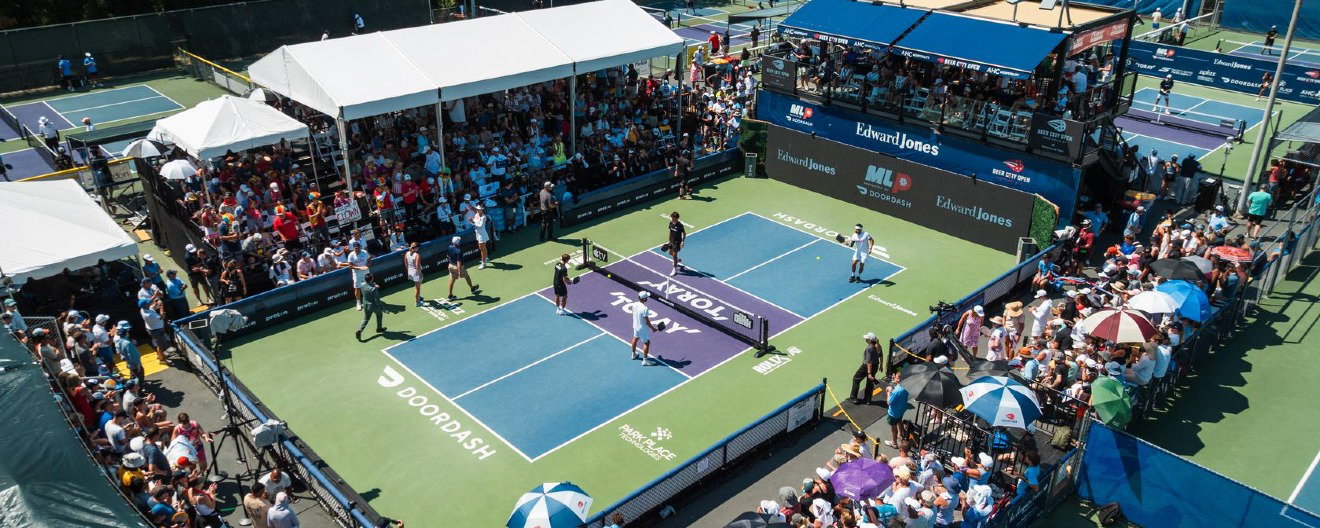
Big changes coming in 2027 to MLP draft process
Jim Kloss
Jul 21 2026 7:15 PM ET
The original MLP player draft was in 2024, with teams eligible to keep players a maximum of three years. With 2026 being the last of the three keeper years for players drafted in 2024, it makes 2027 a very important year. A large number of players currently on the 20 MLP teams were drafted in 2024, including just about all of the top 10 women and men. All of these 2024 drafted players have to be released after the 2026 season, becoming eligible to being drafted by any team in 2027.
A big topic has been whether the strength of MLP teams have become unbalanced and if the 2027 rules should be adjusted to promote more parity among teams. From 2024 to 2026, some teams have spent a lot of money on players, while others not so much. Reasonable arguments have been made that teams should have a cap on spending so we avoid super teams, while the need has become apparent for a floor as well, requiring every team to spend a certain amount on player acquisition. There will always be teams that do a better job of player evaluation, so there will always be good teams and bad. But evening out the player acquisition spending should promote more parity among the 20 teams, creating a more exciting overall product.
Although the 2027 rules have not yet been finalized, we have obtained a copy of the proposed rules governing the player acquisition process in 2027. We have also been provided information by MLP on the questions that remain to be finalized for those rules. I can tell you that the new draft rules are excellent and should provide for a very exciting 2027 draft. Let’s go over the changes, the questions remaining, and then analyze how the league will be affected.
THE NEW RULES
The biggest change for 2027 is the institution of a cap on how much money teams can spend to acquire players. This is commonly called a salary cap, but that term is not actually accurate for MLP. The money spent to acquire players does not go to the players as salary. Thus, it is more accurate to call it a player acquisition cap. But, as we fans are so used to calling it a salary cap in other sports, I will use the term “salary cap” here. Just understand the numbers involve do not equal money paid to players.
The draft rules for 2027 put in place a $1m salary cap. Importantly, it also includes a salary floor of $500k. These numbers were actually in place originally in 2024. The problem is that after the 2024 draft, teams were not held to the $1m maximum or the $500k minimum. Thus, over the next few years, we saw some teams spend close to $2m on players, while other teams spent well less than $500k. The new rules for 2027 would return MLP to the balanced original approach, leading to a more even distribution of player talent.
The league recognizes that some of the player bids in 2026 got out of line. Thus, the draft rules include a proposal to cap what can be spent on any one player. That cap will be somewhere in the $600k to $800k range. Any player acquired before 2027 would have their keeper price readjusted downward to that new figure. No team could then spend more on any one player in the 2027 draft. Of course, with a hard cap of $1m, will any team want to spend $600k on any single player?
There was much debate about including a franchise player tag. That would have automatically allowed a team to keep one player indefinitely at their original drafted price. A franchise tag is not included in the draft rules, with the league instead choosing to give teams a limited right of first refusal (“ROFR”). Under a ROFR system, before the draft, each team could designate one player on their roster who is released, but with the team retaining the right to match whatever that player is drafted for by another team. For example, suppose St. Louis releases Hayden Patriquin in 2027, as they are required under the rules to do. Suppose Patriquin then in the 2027 auction is drafted by New Jersey for $400,000. St. Louis would then have a limited time within which to exercise their ROFR. If they do so, they get Patriquin at the bid price of $400,000. If they choose not to exercise it, New Jersey gets Patriquin. The ROFR system allows teams a limited ability to keep players for more than three years, without completely stifling player movement between teams.
The salary cap/floor and ROFR rules are the major changes to player acquisition for 2027. Importantly, unlike what was done in 2024, the cap/floor figures would stay in place and continue throughout the year. Thus, if a team is at the $1m cap, they would not be able to trade a player with a lesser cap number for a player with a higher cap number. The rules in effect make it very difficult to “buy” the best team. There are still some details to be finalized, such as what happens if two teams want to spend the max for the same player, what happens if Team A drafts a player for $400,000 but Team B exercises their ROFR; does Team A then just pick a different player? Do they just get their money back? All of these details are important, but are relatively minor to the big picture.
There are additional new rules concerning how each team is run. These include requirements for each team to locally promote their team, and rewarding teams for hosting events and otherwise helping to promote the league.
THE EFFECT OF THE NEW RULES
Now we get to the important question: how is all this going to play out in 2027? The list of high quality players who must be released after 2026 is very, very long. The list is headed by Anna Leigh Waters and Ben Johns. But it includes Hayden Patriquin, Tyra Black, Parris Todd, Andrei Daescu, Gabe Tardio, Catherine Parenteau, and many, many others. Some good teams have to release all four of their starters, like Columbus. Teams will only be allowed to designate one player for right of first refusal, so the lineups of the 20 teams will be changing quite a bit.
Further, and most importantly, the cap and floor will create a much more even talent playing field among the 20 teams. While I am sure only some teams will spend the maximum of $1m, while some teams will stick at the $500k minimum, even so it will be hard for any team to stockpile a roster full of top 10 players. The best players are likely to cost $300k and more. That will make it very difficult for even a high spending team to get more than perhaps two of the top 20 players on their roster. Contrast that with the current rosters, where five teams have 18 or 19 of the top 20 players. Even a low spending team should be able to get at least one very good player on their roster with careful budgeting.
One consequence of the new rules is that the skill of each team’s general manager will really be tested. Up to now, the main deciding factor in how good a team would be was how much money they were willing to spend. The top teams are all high spending teams and the worst teams are all low spending teams. The two best teams are the two highest spending teams. While picking the right players matters under the current system, even a bad GM could assemble a good team, simply by spending more. Under the new rules, the skill of each general manager will be much more important. A team spending more money will have an advantage, but not nearly as big an advantage as under the current rules. Indeed, even a team spending the minimum under the new rules will have a chance to win it all, with careful player selection. That is simply not the case under the current rules. Up to now, most teams have not sought out true professional general managers. Smart teams will now see that player evaluation expertise is paramount, not just throwing money out there.
MLP is a fun, exciting product. A league with more balance in player talent is even more fun and exciting. 2027 should see much more unpredictability in the competition, with more upsets and more variety of winning teams. The proposed 2027 rules are a major positive step forward for MLP.
Follow me on X @pickleball_jim for updates on the 2027 rules.
Related articles
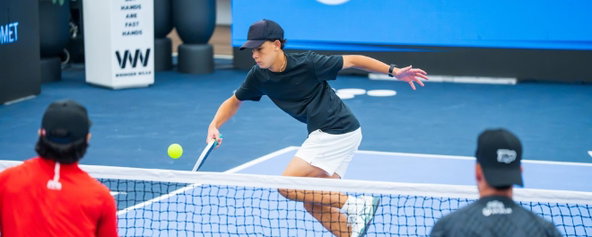
Tama Shimabukuro joins Team Asia International for MLP Nations Cup, replaces Hien Truong
The 15-year-old will join a roster that also includes Rika Fujiwara, Lingwei Kong, Jimmy Liong, Jack Wong, and Macy Ybañez.
1 day ago
-Pickleball.com Staff
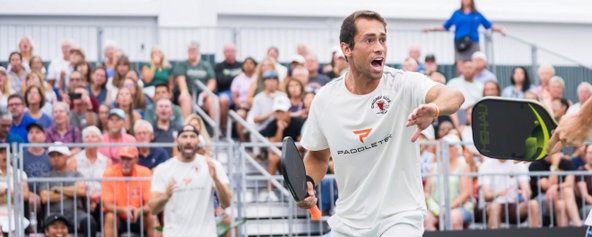
Zane Navratil talks pro pickleball’s taunting debate: ‘Players should be allowed to scream’
He argues that letting pros express themselves freely can make pickleball more entertaining for fans.
2 days ago
-Victoria Radnothy

Rachel Rohrabacher’s wedding takes unexpected turn after Nor’easter forces last-minute change
Her wedding day turned into a rom-com-worthy celebration with two unforgettable ceremonies.
23 days ago
-Victoria Radnothy

Groups, team rosters, and team captains announced for MLP Nations Cup
Texas Ranchers teammates Eric Oncins and Nico Acevedo will represent Team Latin America at the inaugural MLP Nations Cup in late October.
27 days ago
-Pickleball.com Staff