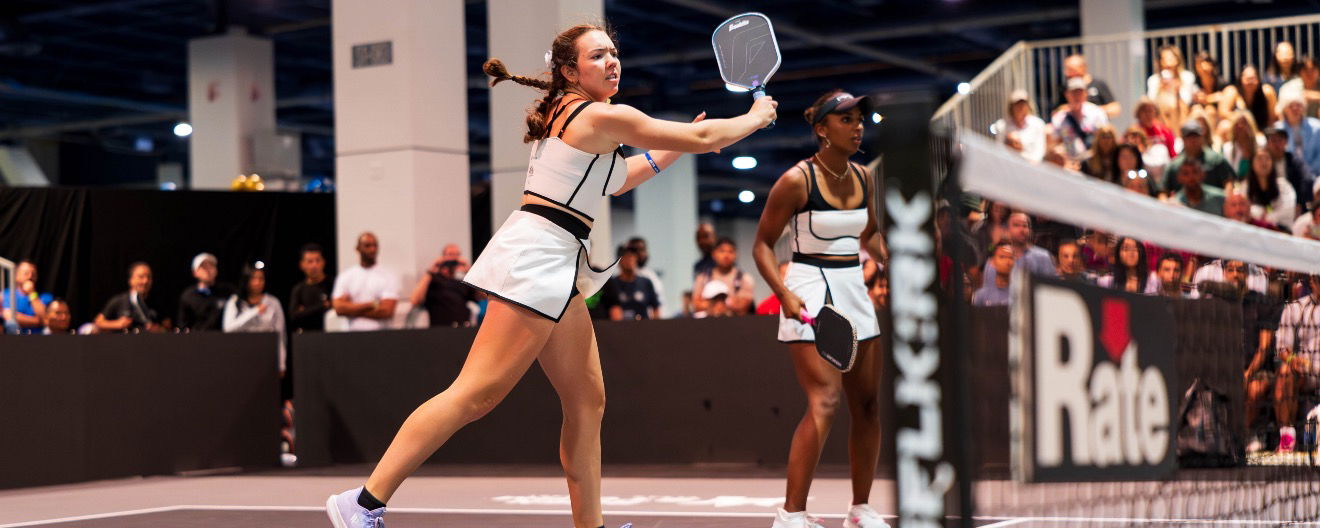
Deep dive: Examining how Johnson and Black defeated Waters and Bright
Jim Kloss
Sep 3 2025 11:30 AM ET
In what was one of the most anticipated matches of the year on the PPA Tour, previously undefeated Anna Leigh Waters and Anna Bright faced Jorja Johnson and Tyra Black in the semifinals of the Walgreens Open at the Las Vegas Strip.
Waters and Bright had been not just undefeated in 2025, but dominant, defeating the competition and not losing a game on their way to gold after gold. However, the one top team they had not previously faced in 2025 was the pairing of Jorja Johnson and Tyra Black.
As I had written when the Waters/Bright combination was announced, the Johnson/Black combo was the one and only pair that I could foresee defeating the Waters/Bright juggernaut. Why were Johnson/Black the potential kryptonite to the super team of Waters and Bright? It has nothing to do with the usual strategies like who to hit the ball to or who to make hit the third shot. Instead, this matchup is all about power and countering power. The tape shows it all quite clearly.
Let’s go through the key statistics from the match and some examples to show what Johnson and Black did right and what Waters and Bright did wrong that led to the result.
1. Game One
Waters and Bright win by using power to overwhelm opponents. They do lots of speedups, start lots of firefights, and use power to steamroll the opponents. Most of their women’s doubles opponents simply do not have the power to counter them.
In game one, Waters and Bright came out firing. That is shown by the statistics on speedups and how successful each player was when speeding the ball up, either off the bounce or in the air.
Bright: 3-4 (three successes out of four speedup tries), 2 unforced errors
Waters: 7-10, 2 errors
Johnson: 2-4, 0 errors
Black: 2-4, 4 errors
As a team, Bright and Waters were 10-14 or .714. Anything over 50% is good, over 60% is very good, and over 70% is stellar. To be over 71% on high volume is top level play, rarely seen except from the very best players. The unforced errors are fairly unremarkable; Waters and Bright will tend to have a relatively high amount of errors as they “go” for a lot of winners. Johnson and Black played decently well, with a speedup success rate of 50%. Black made a few more errors than normal. Based on the statistics, it is easy to see why Waters and Bright took game one 11-5.
Game one was not all sunshine for Bright and Waters and there were rallies that gave insight into how the match might turn around. An instructive point occurred at 3:10 of the match with Waters serving at 1-2-2. Waters, playing the right side, tries a speedup from four feet behind the kitchen line. It is handled easily by Black, leading to a winner from Johnson. In addition, Waters and Bright look a little confused about who will take the middle on Johnson’s backhand drive.
2. Game Two
Once again, the statistics tell the story of game two, and the turnaround in favor of Johnson and Black.
Bright: 5-10, 3 errors
Waters: 2-5, 1 error
Johnson: 1-2, 2 errors
Black: 7-8, 1 error
Bright/Waters drop to 7-15 (.467) on about the same volume of speedups. Except that volume now comes from Bright, not Waters. On the other side of the court, Black becomes much more aggressive in game two, and successfully so. Johnson/Black win 8-10 (.800) of their speedups, an outstanding number. Needless to say, Johnson/Black take game two 11-6.
In game two, Bright was repeatedly speeding up on balls from too far behind the kitchen line and/or that are not high enough to be readily attackable. Here are two good examples, at 17:50 and 18:49 in the match.
3. Game Three
Game three was similar to game two, and the statistics back it up.
Bright: 1-4, 1 error
Waters: 2-3, 4 errors
Johnson: 5-6, 0 errors
Black: 5-6, 1 error
The statistics are massively in favor of Johnson/Black and that was reflected by the 11-3 score in their favor. Bright/Waters dropped to attempting only seven speedups and were successful on only three, for a success rate of .429. Meanwhile Johnson/Black were 10-12 or .833. As in game two, Johnson and Black had a fabulous speedup success rate on fairly high volume.
Black’s offensive play was very judicious. Look at this point, with Waters serving at 0-1-2 at 29:25 in the match. Black has a modestly high backhand and instead of overhitting it, she hits a good backhand roll at the feet of her opponents. Black and Johnson get control of the line, Waters and Bright are backing up, and Black untimely gets a higher ball to hit a winner.
4. Analysis
Ok, we have the statistics, we know that as is true well over 90% of the time, the team that wins the speedup battle wins the game and the match. But what more can we take away from this match? What explains why Johnson and Black can win the speedup battle against Waters and Bright, something no one else could do?
A. Johnson and Black are top level defenders. One reason I thought Johnson and Black were the only ones who could possibly defeat Waters and Bright was because both Johnson and Black are A+ defenders. Speedups that work on other teams will not work against them.
B. Similar to the first point, Johnson and Black can counter with power. Waters and Bright are used to running over opponents with power. If the first speedup does not win the rally, they typically are able to continue with more power as the opponents cannot counter with power. Many opponents will oppose Waters and Bright with resets, which do not work well. Waters and Bright will just respond to the reset with another speedup and will keep the pressure on until they win the rally. Johnson and Black, on the other hand, will counter power with power and will win the rally rather than just defend.
C. Waters must play left side. Johnson and Black stacked the whole match, with Black always on the left. That was 100% correct strategy, as Black is much better on the left and Johnson is an excellent right side player. However, we saw that Waters and Bright by and large did not stack, but instead had Bright on the left much of the match. There are several problems with Waters on the right. First, she is the better player and you generally want the better player on the left so they get more balls. Second, while Bright is a good left side player, she is also a good right side player. So, they lose nothing to put Bright on the right, while they gain by having Waters (the better player) on the left. Third, when Waters plays right side in women’s doubles, she has a tendency to get antsy because she is not getting the ball enough. She then tends to overpoach, going for shots she should leave alone (see 22:43 in game two for an example). Fourth, when Waters is on the right, it creates some conflict as Bright is unsure when to defer to Waters. When Waters is on the left, Bright knows Waters has middle. But, when Waters is on the right, sometimes she takes middle with her powerful backhand and other times she does not. You can see points where Bright hesitates on middle balls when she is on the left.
D. Waters and Bright simply have to be a little more judicious in their speedups when facing Johnson and Black. Waters and Bright so far overmatch most of the field that I believe it gives them the idea they can win by just blasting away. They are right, but not against Johnson and Black. Against Johnson and Black, Waters and Bright need to slow it down a little more, avoid speedups from behind the kitchen line, and more patiently await a better chance to initiate the offense. Further, with Waters on the left, more of that offense will naturally be initiated by Waters. In their game one win, Waters was initiating two-thirds of the offense, but that flip-flopped in games two and three. Bright is used to being the Alpha, but in this partnership, against the best opponents, Waters needs to be the Alpha.
5. Conclusion
Waters and Bright are the best women’s doubles team. They have too much power and offense for their opponents. The one exception is the team of Johnson and Black. Expect Waters and Bright to learn from their loss in Las Vegas and come out with a little more patience the next time they meet. Meanwhile, it was a big win for Johnson and Black. Their games meld well and they should stick together as partners for every event. All in all, I think all of us will look forward to a rematch.
Follow me on X @pickleball_jim.
Related articles

Mojo Energy Pouches Virginia Beach Open: Everything you need to know
With several star players heading overseas, a big opportunity awaits for other players to claim a title.
2 hours ago
-Pickleball.com Staff
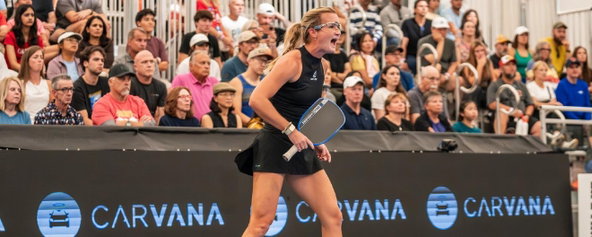
Virginia Beach features wide open draws
No Anna Leigh Waters and no Ben Johns means it is anyone’s tournament to make a mark.
1 day ago
-Jim Kloss
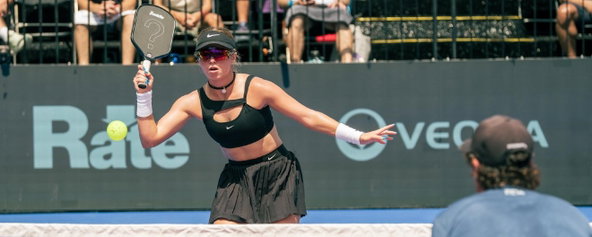
Anna Leigh Waters' most iconic on-court looks
From vintage FILA fits to iconic Nike gear, she has served up plenty of memorable styles throughout her career.
1 day ago
-Victoria Radnothy
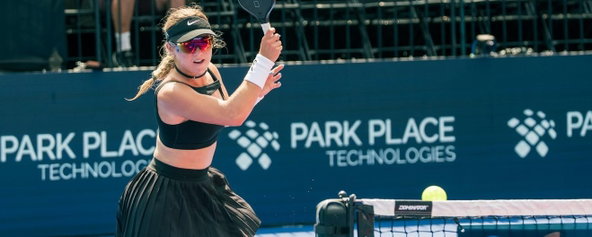
Beyond the court: The moments that shaped Anna Leigh Waters' journey to 200 titles
From welcoming Archer into her life to walking the red carpet at the ESPYs, she has accomplished so much at such a young age.
1 day ago
-Victoria Radnothy