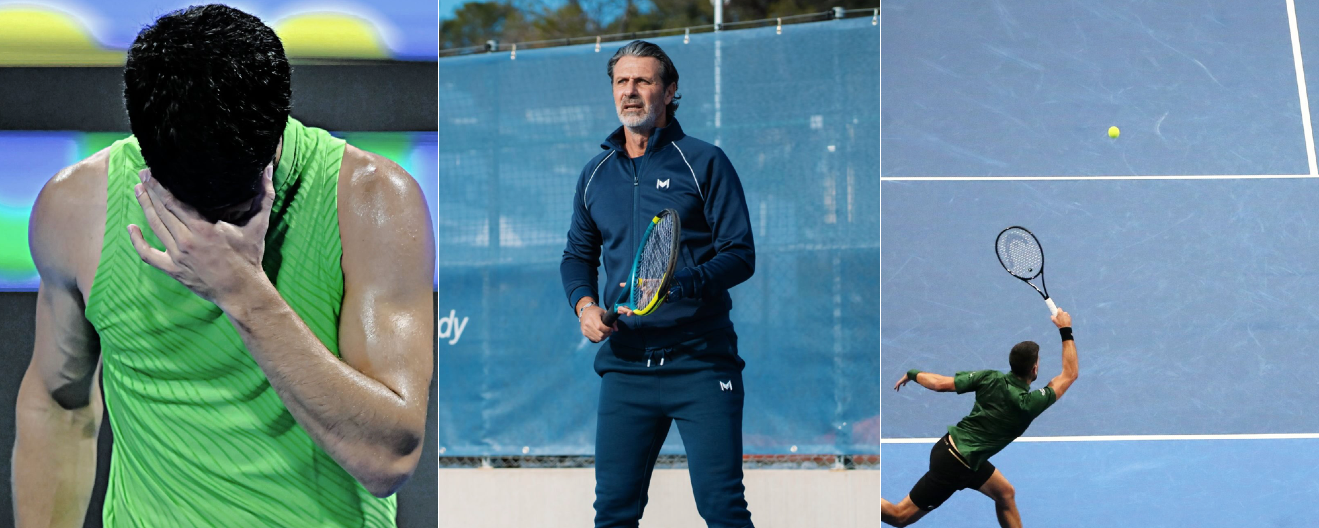
Patrick Mouratoglou urges tennis to evolve as pickleball participation surges
One of the most influential voices in global tennis is taking notice of pickleball and sounding the alarm. His message is clear: changes for tennis are no longer optional if the sport wants to survive.
Patrick Mouratoglou, the longtime coach of Serena Williams and founder of the world-renowned Mouratoglou Academy, recently shared a candid take on the future of tennis in a viral social media video. Known for shaping champions and pushing innovation in the sport—including launching the disruptive Ultimate Tennis Showdown (UTS) format—Mouratoglou isn’t prone to overreaction.
But this time, his tone carried weight.
“Will tennis change if we don’t change anything? It already is,” he said.
A Warning From Inside Tennis
Mouratoglou stops short of declaring tennis “dead,” but he makes it clear the sport faces real pressure if it doesn’t evolve. He has made similar remarks in the past, warning that tennis “could be in deep trouble” if it fails to address key challenges.
That pressure isn’t theoretical—it’s coming from a fast-rising competitor that’s capturing attention across generations: pickleball.
Why Pickleball Is Winning People Over
Pickleball’s rise isn’t just about participation—it’s about accessibility, energy, and cultural momentum.
The sport is:
-
Easy to learn — players can rally within minutes, removing the steep learning curve that often deters new tennis players
-
Affordable and space-efficient — smaller courts and minimal equipment lower the barrier to entry
-
Appealing across demographics — from retirees to elite junior athletes, the player base is diverse and growing rapidly
-
Fueled by pro tours and media innovation — leagues like the PPA Tour and Major League Pickleball are embracing fast-paced formats, innovative filming, and fan-first broadcasts.
-
Built for the social era — highlight-heavy rallies, hands battles, and ATP winners thrive on Instagram, TikTok, and YouTube
Even longtime tennis skeptics have acknowledged pickleball’s explosive growth, with participation skyrocketing in recent years and drawing in celebrities, investors, and crossover athletes.
The Next Generation Shift
Perhaps most telling—and most concerning for tennis insiders—is where younger players are investing their time.
More juniors are picking up a paddle first instead of a racquet.
They’re drawn to the immediacy of pickleball: quicker rallies, faster gratification, and a clearer path to competitive success. While tennis often requires years of technical development before players feel competent, pickleball delivers fun—and confidence—almost instantly.
That shift in entry point could have long-term implications for the entire racquet sports ecosystem.
Tennis at a Crossroads
Mouratoglou’s message isn’t anti-tennis—it’s pro-evolution.
He has long advocated for innovation in tennis, whether through shortened formats, fan engagement tweaks, or rethinking how the sport is presented to modern audiences. But the urgency behind his latest comments reflects a changing landscape.
Pickleball isn’t just growing—it’s reshaping expectations.
More dynamic points. Faster matches. Personality-driven storytelling. Accessible entry points. Constant content.
In contrast, tennis—with its traditions, longer formats, and higher barriers—can feel increasingly out of step with how younger audiences consume sports.
A New Era of Racquet Sports
Padel is also gaining traction globally, adding another layer to the competition. But in the United States especially, pickleball has become the clear disruptor.
And now, even tennis’ most respected voices are acknowledging it.
Mouratoglou’s warning isn’t about replacement—it’s about relevance.
Because if tennis doesn’t evolve, the next generation may not wait around.
They’re already on the pickleball court.
Related articles
Pool standings and latest storylines going into Day 3 of the PPA Finals
Friday's matches will determine who advances to Semifinal Saturday at the final event of the 2025-2026 PPA Tour season.
9 hours ago
-Will Daughton
Pool standings going into Day 2 of the Toys “R” Us PPA Finals
Two more days of pool play will determine who advances to Semifinal Saturday.
1 day ago
-Will Daughton
Everything you missed in pickleball in April
This month had some of the craziest moments in pickleball history.
1 day ago
-Victoria Radnothy
Groups, partnerships announced for Toys "R" Us PPA Finals
Group play will run Wednesday-Friday before the semifinals and finals close out the season.
2 days ago
-Will Daughton